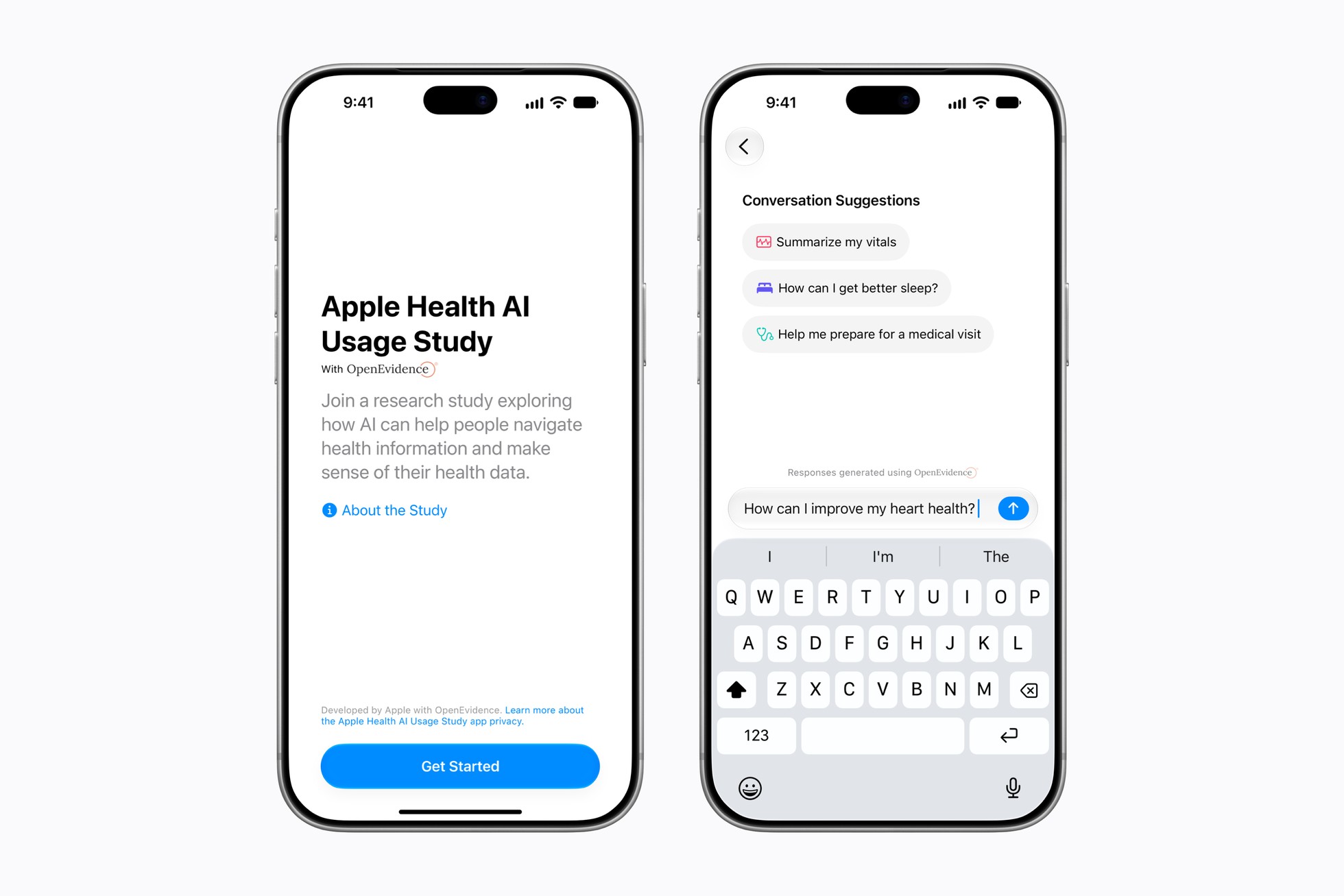
Apple Health AI Usage Study 시작
현지 시간 11월 15일, Apple은 Apple Health AI Usage Study를 시작한다고 발표했습니다. 임상 AI 플랫폼 OpenEvidence와 협력하여 미국에서 21세 이상 사용자 최대 20만 명을 모집하여 사람들이 대화형 건강 AI 도구와 어떻게 상호작용하는지 평가할 예정입니다.
이번 연구는 전용 iOS 앱을 통해 진행됩니다. 참가자들은 앱에서 일상적인 건강 질문을 하고, 동료 심사를 거친 임상 문헌을 기반으로 한 답변을 받으며, 답변의 정확성, 세부 사항 및 관련성에 대해 평가합니다.
참가 조건
- 미국 거주
- 만 21세 이상
- Apple Intelligence를 지원하는 iPhone (iPhone 15 Pro 또는 후속 모델) 소유
- iOS 26 이상 버전 실행
관련 앱은 App Store에 출시되었으며, 모집은 즉시 시작됩니다.
연구 설계 및 기술 지원
이 연구는 Apple이 연구 설계 경험을 담당하며, 연구 기간은 12개월 이상입니다. OpenEvidence는 의료 AI 기술을 제공하며, 답변의 출처로는 《뉴잉글랜드 의학 저널》, 《미국 의학 협회 저널》, 《네이처》 등이 포함됩니다.
데이터 공유 및 활용
참가자들은 휴식기 심박수, 활동량, 수면 또는 검사 결과와 같은 HealthKit 데이터를 공유할 수 있으며, 이는 개인 데이터 통합이 답변의 관련성 및 이해도에 미치는 영향을 관찰하기 위함입니다. 연구는 또한 건강 AI가 참가자들이 진료 준비를 돕는 데 기여할 수 있는지 탐색합니다.
캘리포니아 대학교 샌프란시스코 의과대학 교수이자 학과장인 Robert M. Wachter는 발표에서 환자와 의사 모두 AI로 전환하고 있지만, 사용되는 도구들이 "서로 분리된 세계에서 구축되고 테스트되고 있다"고 언급했습니다. 그는 양측이 동일한 신뢰할 수 있는 도구를 기반으로 할 때 환자가 더 잘 준비되고, 대화의 질이 향상되며, 후속 절차가 더 원활해진다고 덧붙였습니다.
OpenEvidence는 의료 전문가를 위한 임상 AI 질의응답 플랫폼으로, 확립된 의학 문헌 출처를 기반으로 답변을 생성합니다.
Apple 건강 및 피트니스 부사장 Sumbul Desai는 건강은 매우 개인적인 문제이며, 전문적인 연구를 수행하는 것이 사람들이 건강 AI를 접하고, 이해하고, 평가하는 방식을 이해하는 "가장 신중한 방법"이라고 말했습니다.
개인 정보 보호 및 안전 장치
The Verge는 이 연구 앱이 Siri 또는 Apple Intelligence와 통합되지 않으며, 주로 텍스트 입력을 사용한다고 보도했습니다. iOS 키보드 받아쓰기 기능은 사용할 수 있지만 음성 우선 상호작용은 아닙니다.
연구는 개인 정보 보호 설계에 명확한 제한을 두었습니다. 연구 데이터는 AI 모델 훈련에 사용되지 않으며, 참가자는 HealthKit 지표 또는 설문 조사 답변 공유 여부를 스스로 결정합니다. Apple은 자체적으로 유지 관리하는 연구 데이터에 대해 보안 보호 조치를 시행합니다. 앱 내에는 특정 우려되는 질문을 식별하고 참가자에게 의료 서비스 제공자에게 연락하거나 다른 자료를 참조하도록 권장하는 안전 장치가 마련되어 있습니다. 연구 앱 자체는 어떠한 상태도 진단하거나 치료하는 데 사용되지 않으며, 전문적인 의료 조언을 대체하지 않습니다.
총평
Apple은 OpenEvidence와 협력하여 미국에서 최대 20만 명의 사용자를 대상으로 Apple Health AI Usage Study를 시작했습니다. 이 연구는 전용 iOS 앱을 통해 사람들이 대화형 건강 AI 도구와 어떻게 상호작용하는지 평가하며, 답변의 정확성, 세부 사항 및 관련성에 대한 사용자 피드백을 수집합니다. 연구는 개인 정보 보호를 최우선으로 하며, 수집된 데이터는 AI 모델 훈련에 사용되지 않고, 앱은 진단이나 치료를 위한 것이 아닌 정보 제공 목적으로만 활용됩니다.
研究概述与目标
- Apple宣布启动“Apple Health AI Usage Study”,旨在评估用户如何与对话式健康AI工具进行互动。
- 该研究是与临床AI平台OpenEvidence合作进行的,目标是了解人们接触、理解和评估健康AI的“最有分寸的方式”。
参与条件与研究机制
- **招募规模:** 计划在美国招募最多20万名年满21岁的用户。
- **参与方式:** 通过一款专用iOS应用进行,参与者需提出日常健康问题,并对AI给出的回答的准确性、细节和相关性进行评分。
- **硬性要求:** 居住在美国、年龄达到21岁、持有支持Apple Intelligence的iPhone(如iPhone 15 Pro或后续机型),且运行iOS 26或更高版本。
技术支持与数据整合
- **AI来源:** OpenEvidence提供医疗AI技术,其回答引用的专业医学文献包括《新英格兰医学杂志》《美国医学会杂志》和《自然》等权威期刊。
- **数据共享:** 参与者可选择性地共享HealthKit数据,以观察个人健康数据(如静息心率、活动量、睡眠或化验结果)对AI回答相关性和理解度的影响。
- **交互模式:** 研究应用主要采用文本输入为主,虽然iOS键盘听写可用,但并非语音优先的交互模式。
数据隐私与安全保障
- **核心限制:** 研究明确规定研究数据不会被用于训练AI模型。
- **用户控制权:** 参与者自行决定是否共享HealthKit指标或调查回答。
- **安全护栏:** 应用内设有安全机制,用于识别值得关注的提问,并建议参与者联系医疗服务提供者或寻求其他专业资源。
- **免责声明:** 该研究应用本身不用于诊断或治疗任何状况,也不替代专业的医疗建议。
行业专家观点
- 加州大学旧金山分校医学系教授Robert M. Wachter指出,当患者和医生双方基于同一套可信的AI工具时,能提升对话质量、让患者准备更充分,并使后续诊疗步骤更加顺畅。
总结
Apple与OpenEvidence合作启动了大规模健康AI使用研究,旨在评估用户如何安全有效地利用对话式医疗AI。该研究要求参与者提供个人HealthKit数据和反馈,同时在设计上严格限定了隐私保护措施,确保研究数据不会用于模型训练,并明确强调其非诊断、非治疗的定位。
Apple Health AI利用調査の開始
現地時間11月15日、Appleは「Apple Health AI Usage Study(AppleヘルスAI利用調査)」を開始すると発表しました。本研究では、臨床AIプラットフォームOpenEvidenceと協力し、米国在住の21歳以上のユーザーから最大20万人を募集します。参加者は、対話型のヘルスケアAIツールとどのようにやり取りするかを評価することになります。
この調査は専用のiOSアプリを通じて実施されます。参加者はアプリ内で日常的な健康に関する質問を行い、専門家による査読を経た臨床文献に基づいた回答を受け取ります。そして、その回答の正確性、詳細度、関連性について評価を行います。
参加条件
- 米国在住であること
- 21歳以上であること
- Apple Intelligenceに対応したiPhone(iPhone 15 Proまたは後継モデル)を所有していること
- iOS 26以上のバージョンを実行していること
関連アプリはApp Storeでリリースされており、現在募集が開始されています。
研究設計と技術サポート
本研究の設計経験はAppleが担当し、研究期間は12ヶ月以上を予定しています。OpenEvidenceは医療AI技術を提供し、回答の出典元には、『ニューイングランド・ジャーナル』や『米国医学会ジャーナル』、『ネイチャー』などが含まれます。
データ共有と活用
参加者は、安静時心拍数、活動量、睡眠、または検査結果といったHealthKitデータを共有することができ、これは個人データの統合が回答の関連性や理解度にどのような影響を与えるかを観察するためです。また、本研究では、ヘルスケアAIが参加者が診察に備える手助けとなるかどうかも探求します。
カリフォルニア大学サンフランシスコ医科大学教授で学科長のロバート・M・ワフター氏は発表会で、患者も医師もAIへ移行しているものの、使用されるツールが「お互いに切り離された世界で構築され、テストされている」と指摘しました。彼は、両者が同じ信頼できるツールを基盤にすることで、患者の準備がより進み、対話の質が向上し、その後のプロセスが円滑になると付け加えました。
OpenEvidenceは、医療専門家向けに臨床AIによるQ&Aプラットフォームであり、確立された医学文献の出典に基づき回答を生成します。
Appleヘルス&フィットネス担当副社長のスムブル・デサイ氏は、「健康は非常に個人的な問題であるため、専門的な研究を行うことが、人々がヘルスケアAIに接し、理解し、評価する方法を理解するための『最も慎重な方法』だ」と述べています。
プライバシー保護と安全対策
The Vergeによると、この研究アプリはSiriやApple Intelligenceと統合されておらず、主にテキスト入力を利用します。iOSのキーボードによる音声入力機能は使用できますが、音声による優先的なやり取りではありません。
本研究では、プライバシー設計に明確な制限が設けられています。収集された研究データはAIモデルのトレーニングに使用されません。参加者はHealthKit指標やアンケート回答の共有を自身で決定します。Appleは、自前で管理する研究データに対してセキュリティ保護措置を実施しています。アプリ内には、懸念される質問を特定し、参加者に対し医療サービス提供者に連絡するか、他の資料を参照することを推奨する安全装置が組み込まれています。なお、この研究アプリ自体は、いかなる状態も診断したり治療したりするために使用されるものではなく、専門的な医療アドバイスに取って代わるものではありません。
まとめ
AppleはOpenEvidenceと提携し、米国で最大20万人を対象とした「Apple Health AI Usage Study」を開始しました。本研究では専用のiOSアプリを通じて、参加者が対話型のヘルスケアAIツールとどのように関わるかを評価し、回答の正確性や関連性に関するユーザーからのフィードバックを収集します。プライバシー保護が最優先されており、データはAIモデルのトレーニングには使用されず、アプリは診断や治療目的ではなく情報提供のみに利用されます。
Apple Launches Health AI Usage Study
On November 15, Apple announced the start of the Apple Health AI Usage Study. In collaboration with the clinical AI platform OpenEvidence, the study aims to recruit up to 200,000 users aged 21 and older in the United States to evaluate how people interact with conversational health AI tools.
The research will be conducted through a dedicated iOS app. Participants will ask everyday health questions within the app and receive answers based on peer-reviewed clinical literature, allowing them to assess the accuracy, detail, and relevance of the information provided.
Eligibility Requirements
- Must reside in the United States
- Must be 21 years or older
- Must own an iPhone supporting Apple Intelligence (iPhone 15 Pro or later model)
- Must run iOS version 16 or later
The related app has been released on the App Store, and recruitment is currently underway.
Research Design and Technical Support
Apple is responsible for the research design experience, with the study period set for over 12 months. OpenEvidence provides the medical AI technology, drawing answers from established medical literature sources such as The New England Journal of Medicine, JAMA (Journal of the American Medical Association), and Nature.
Data Sharing and Utilization
Participants may share HealthKit data—such as resting heart rate, activity levels, sleep patterns, or test results—to observe how integrating personal data affects the relevance and comprehensibility of AI answers. The study also explores whether health AI can contribute to helping participants prepare for medical consultations.
Robert M. Wachter, Professor and Department Chair at the University of California San Francisco School of Medicine, noted that while both patients and doctors are transitioning to AI, the tools being used are "built and tested in separate worlds." He added that when both parties rely on the same reliable tool, patients are better prepared, conversations improve in quality, and follow-up procedures become smoother.
OpenEvidence functions as a clinical AI Q&A platform for healthcare professionals, generating answers based on established medical literature sources.
Sumbul Desai, Vice President of Health and Fitness at Apple, stated that health is a deeply personal issue, making professional research the "most thoughtful way" to understand how people encounter, understand, and evaluate health AI.
Privacy and Safeguards
The Verge reported that the study app will not integrate with Siri or Apple Intelligence, relying primarily on text input. While the iOS keyboard dictation feature can be used, it is not designed for voice-first interaction.
The research has clear limitations regarding privacy design. Research data will not be used to train AI models, and participants decide whether to share HealthKit metrics or survey responses themselves. Apple implements security protections on the study data it maintains internally. The app includes safety features that identify specific concerning questions and advise participants to contact a healthcare provider or consult other resources. Crucially, the research app itself is not intended to diagnose or treat any condition and does not replace professional medical advice.
Summary
Apple has launched the Apple Health AI Usage Study in collaboration with OpenEvidence, aiming to assess user interaction with conversational health AI tools among up to 200,000 US participants. The study uses a dedicated iOS app to collect user feedback on the accuracy and relevance of answers derived from peer-reviewed medical literature. Privacy is paramount: collected data will not be used for AI model training, and the application is strictly limited to providing information, not diagnosis or treatment.