Nikon Small World in Motion 현미경 영상 공모전, AI 사용으로 1위 작품 자격 박탈
BBC 보도에 따르면, Nikon은 2026년 Small World in Motion 현미경 영상 공모전에서 1등을 차지했던 작품이 "생성형 AI 관련 대회 규정을 준수하지 않았다"는 이유로 수상 자격을 취소했다고 발표했습니다. 업데이트된 대회 순위에 따라 베트남 참가자 Nguyen Nam Nhat의 작품이 현재 1위로 올라섰습니다.
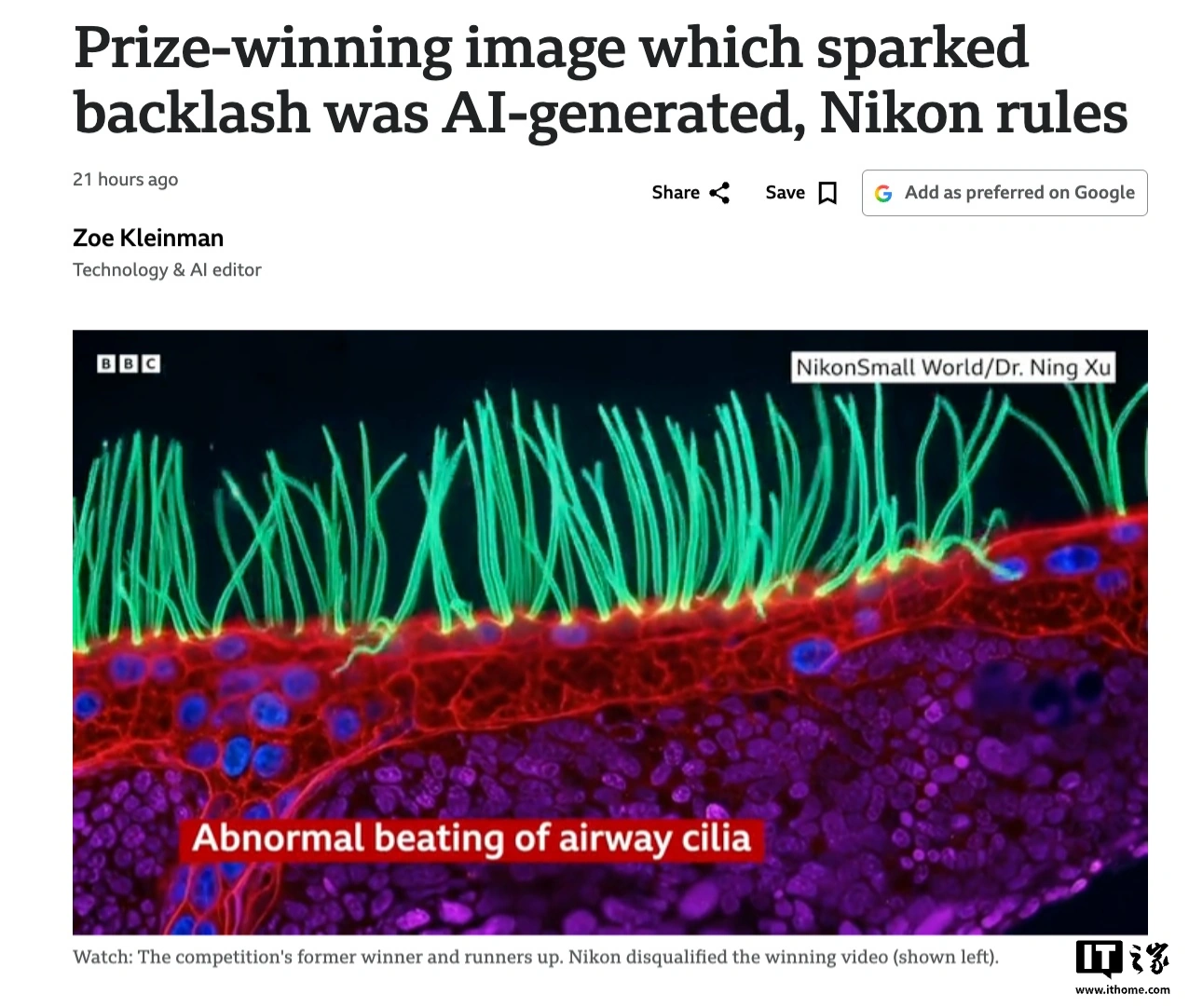
원래 수상작은 중국 칭화대학교의 Xu Ning 박사가 제출한 영상으로, 초고해상도 현미경 이미징 기술을 사용하여 원발성 섬모 운동 이상증(PCD) 환아의 기도 내 섬모의 비정상적인 움직임을 보여준다고 알려졌습니다.
그러나 이후 여러 현미경 이미징 및 섬모 연구 분야 전문가들이 소셜 미디어에서 의문을 제기했습니다. 그들은 영상 속 구조가 실제 PCD 샘플과 일치하지 않는다고 지적했습니다. 영상 속 일부 보라색 구조가 갑자기 나타나거나 사라지고, 일부 녹색 섬모는 마치 허공에서 나타난 것처럼 보였으며, 관련 구조의 크기 또한 알려진 생물학적 구조와 일치하지 않았습니다.
이러한 의문에 직면하여 Xu Ning 박사는 영상 제작 과정에서 AI 기술을 사용했음을 인정했습니다. 그는 AI가 원본 회색조 현미경 이미지에서 특징을 구분하고 시각화하는 데 사용되었으며, 이전에는 이러한 방식이 대회 규칙에 부합한다고 생각했다고 설명했습니다. 그러나 그는 AI를 사용하여 실험 영상 자체, 섬모 구조 또는 섬모 움직임을 생성했다는 사실은 부인했습니다. Nikon은 재조사 후, 최종적으로 Xu Ning의 작품이 생성형 AI 관련 대회 규칙을 준수하지 않는다고 판단하여 그의 우승 자격을 취회하기로 결정했습니다.
Xu Ning 박사의 작품이 자격 박탈됨에 따라, 원래 2위였던 베트남의 Nguyen Nam Nhat이 2026년 Nikon Small World in Motion 우승자가 되었습니다. 그의 작품은 미세한 선충과 단세포 생물 Dileptus가 현미경 세계에서 상호작용하는 모습을 기록한 것으로, 다른 입상작들의 순위도 이에 따라 한 단계씩 상승했습니다.
赛事结果变动与规则判定
- Nikon宣布,原本获得 2026 年 Small World in Motion 显微视频竞赛一等奖的作品因“不符合赛事关于生成式 AI 的相关规定”,取消了获奖资格。
原获胜作品的争议细节
该比赛涉及高精度的生物结构展示,引发了专家对技术合规性的质疑。
- **原冠军提交者:** 来自中国清华大学的徐宁博士(Dr. Ning Xu)。
- **原始视频内容:** 展示了一名原发性纤毛运动障碍(PCD)患儿呼吸道内纤毛的异常运动,并声称采用超分辨率显微成像技术。
- **专家质疑点:** 多位专家指出视频中的结构与真实 PCD 样本不吻合,包括部分紫色和绿色结构出现或消失、尺寸与已知生物结构不符等问题。
- **AI使用情况:** 徐宁博士承认在视频制作过程中使用了 AI 技术来区分和可视化原始灰度显微图像中的特征,但否认使用 AI 生成实验视频本身、纤毛结构或运动过程。
新冠军及作品信息
- 随着原获奖资格的撤销,原本排名第二的参赛者升至第一名。
- **新冠军:** 越南参赛者阮南日(Nguyen Nam Nhat)。
- **新冠军作品内容:** 该视频记录了微小线虫与单细胞生物 Dileptus 在显微世界中的互动过程。
总结
Nikon Small World in Motion 竞赛因技术合规性问题取消了原冠军的获奖资格,原因是其作品涉嫌违反生成式 AI 的使用规定。最终,原本排名第二的越南参赛者阮南日凭借展示微小生物互动的优秀作品,成为 2026 年的新科冠军。
Nikon Small World in Motion顕微鏡映像コンテスト:AI使用により優勝作品の資格が剥奪
BBCの報道によると、Nikonは「Small World in Motion」顕微鏡映像コンテストにおいて、優勝した作品が「生成AIに関する大会規定に違反した」として、受賞資格を取り消したと発表しました。更新された大会ランキングに基づき、ベトナム参加者のNguyen Nam Nhat氏の作品が現在の1位となりました。
不正使用疑惑が浮上した優勝作品について
当初の優勝作品は、中国・清華大学のXu Ning博士が提出した映像でした。この作品は、超高解像度顕微鏡イメージング技術を用いて、原発性繊毛運動異常症(PCD)患者の気道内の繊毛の異常な動きを捉えたものと紹介されていました。
しかしその後、複数の顕微鏡イメージングおよび繊毛研究の専門家がソーシャルメディア上で疑問を呈しました。彼らは、映像内の構造が実際のPCDサンプルと一致していない点を指摘しています。具体的には以下の点が挙げられました。
- 映像内の一部紫色構造が突然現れたり消えたりしている点
- 一部の緑色の繊毛がまるで虚空から出現したかのように見える点
- 関連する構造のサイズが、既知の生物学的構造と一致していない点
AI使用の認可と最終的な資格剥奪
これらの疑問に直面し、Xu Ning博士は映像制作過程でAI技術を使用したことを認めました。彼は、AIをグレーレベルの顕微鏡画像から特徴を識別し、視覚化するために使用したと説明し、以前はこの手法が大会規定に適合していると考えていたとしています。
ただし、自身が実験映像そのもの、繊毛構造、または繊毛の動き自体をAIを使って生成したという事実は否定しました。Nikonは再調査を行った結果、最終的にXu Ning氏の作品が「生成AIに関する大会規定」に違反していると判断し、彼の優勝資格を取り消すことを決定しました。
新たな優勝者:Nguyen Nam Nhat氏
Xu Ning博士の作品の資格剥奪に伴い、元々2位だったベトナムのNguyen Nam Nhat氏が、2026年Nikon Small World in Motionの優勝者となりました。彼の作品は、微細な線虫と単細胞生物である*Dileptus*が顕微鏡の世界で相互作用する様子を記録したものです。この結果、他の入賞作品の順位もそれに伴って一つずつ上昇しました。
まとめ
Nikon Small World in Motionコンテストにおいて、優勝作品が生成AIの使用に関する規定違反により資格剥奪となりました。当初の優勝者であったXu Ning博士はAIを視覚化に用いたことを認めましたが、最終的に大会側は規約違反と判断しました。これにより、元2位だったNguyen Nam Nhat氏(ベトナム)が新たな優勝者となり、彼の作品が表彰されました。
Nikon Small World in Motion Microscopy Video Contest: Winner Disqualified for Use of AI
According to reports from the BBC, Nikon announced that the winner of the 2026 Small World in Motion microscopy video contest had their award status revoked because the submission "did not comply with generative AI competition rules." Following the update to the official rankings, the work by Vietnamese participant Nguyen Nam Nhat was promoted to the top spot.
The original winning entry was submitted by Dr. Xu Ning of Tsinghua University in China. It reportedly used ultra-high-resolution microscopy imaging technology to show the abnormal movement of cilia within the airways of a child suffering from Primary Ciliary Dyskinesia (PCD).
However, several experts in the fields of microscopy imaging and ciliary research raised doubts on social media afterward. They pointed out that structures visible in the video did not match actual PCD samples. Specifically, some purple structures appeared or disappeared suddenly within the video, certain green cilia seemed to materialize out of thin air, and the size of related biological structures did not align with known biological formations.
Facing these doubts, Dr. Xu Ning admitted that he had used AI technology during the video production process. He explained that AI was utilized to differentiate and visualize features from original grayscale microscopy images, stating that he previously believed this method complied with the competition rules. However, he denied using AI to generate the experimental footage itself, the ciliary structures, or the movement of the cilia.
After a re-investigation, Nikon ultimately determined that Xu Ning's work did not comply with the generative AI rules for the contest, leading them to revoke his winning status. Consequently, with Dr. Xu Ning’s disqualification, Vietnam's Nguyen Nam Nhat, who was originally second place, became the winner of the 2026 Nikon Small World in Motion competition. His work documented the interaction between minute nematodes and single-celled organisms like Dileptus in a microscopic world, causing the rankings of other award winners to advance one step.
Summary
Nikon disqualified Dr. Xu Ning from winning the 2026 Small World in Motion contest after discovering that his entry violated generative AI rules. The controversy arose because experts questioned the authenticity of structures and movements shown, leading Dr. Xu Ning to admit using AI for visualization. As a result, Vietnamese participant Nguyen Nam Nhat was promoted to the winner's spot with his footage documenting micro-organisms.