소개
작년에 Google은 개발자에게 가볍고 고품질의 텍스트 임베딩 솔루션을 제공하는 EmbeddingGemma를 출시했습니다. 이 솔루션은 2천만 회 이상의 다운로드를 기록하며 온디바이스 검색 도구 및 개인 정보 보호 우선 RAG(검색 증강 생성) 파이프라인에 널리 사용되었습니다.
이제 Google은 EmbeddingGemma 2를 공식 출시하며 기능을 텍스트에서 코드, 이미지, 비디오, 오디오로 확장하여 이러한 콘텐츠를 동일한 임베딩 공간에 통합 매핑할 수 있도록 했습니다.
기술 사양
Google 블로그 게시물에 따르면, 이 모델은 Gemma 4 아키텍처를 기반으로 개발되었으며, 상업적으로 사용 가능한 Apache 2.0 라이선스로 출시되었습니다. 총 7억 4천만 개의 매개변수를 가지고 있어 온디바이스 추론에 매우 적합합니다.
EmbeddingGemma 2는 Gemini 임베딩 모델과 동일한 기술을 기반으로 구축되었으며, 다음과 같은 여러 핵심 이점을 제공합니다.
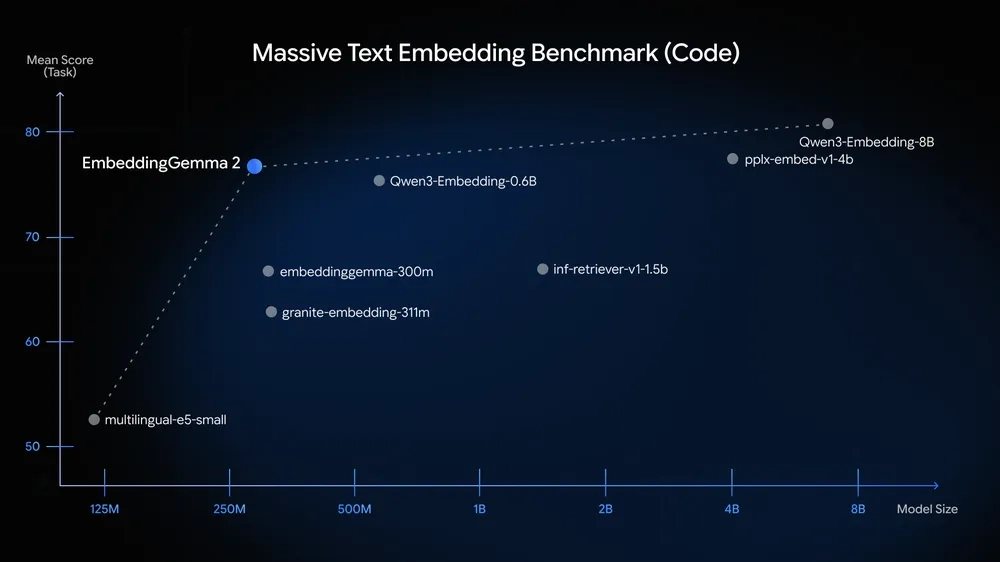
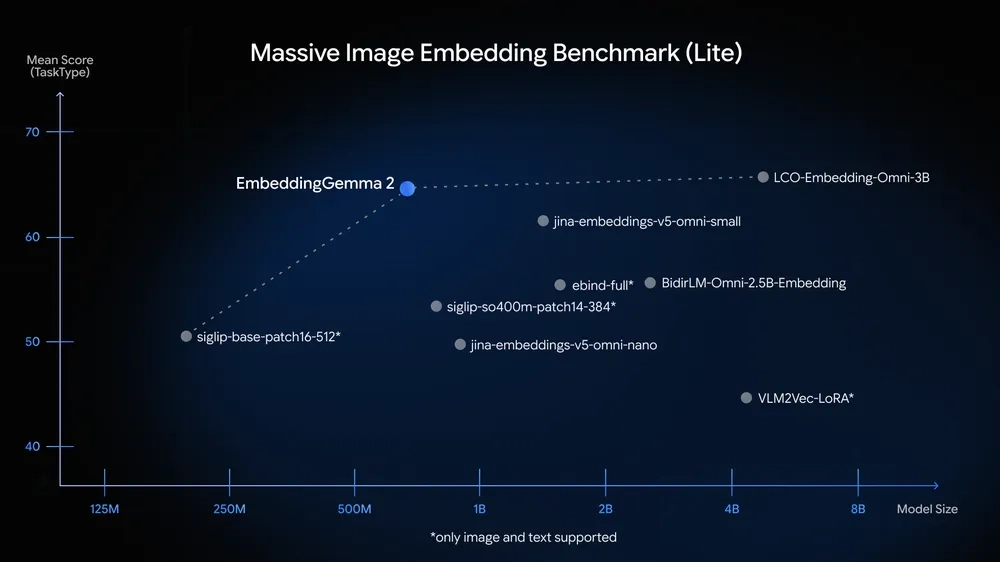
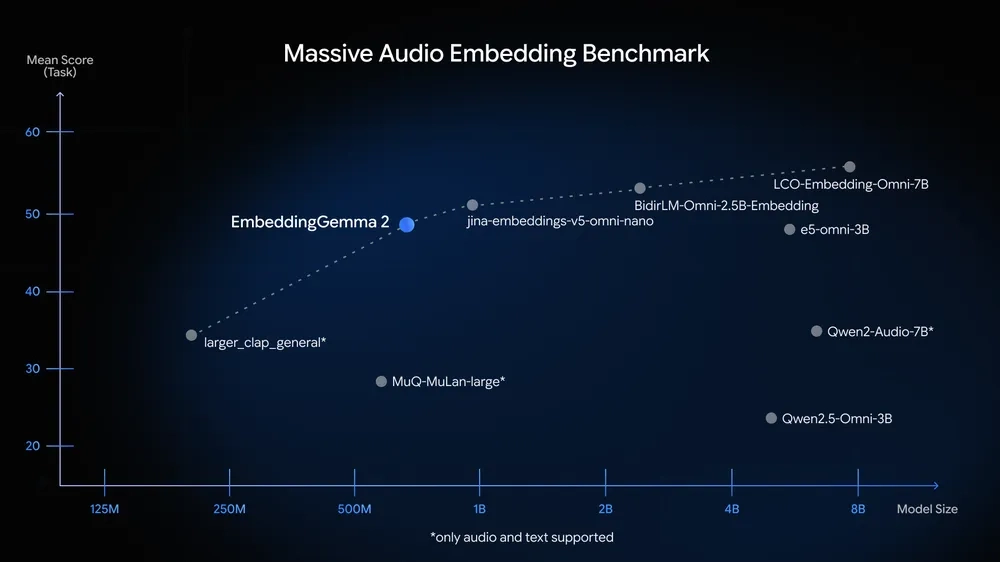
- 동일 크기 최고 성능: 1B 미만 매개변수 멀티모달 임베딩 모델 중 MTEB Code, MAEB 등 벤치마크에서 선두 점수를 기록하며, 많은 더 큰 모델과 견줄 만하거나 능가하는 성능을 보여줍니다.
- 모듈식 설계: 순수 텍스트 작업에는 2억 7천만 개의 매개변수만 필요하며, 필요에 따라 1억 7천만 개의 매개변수 시각 인코더와 3억 개의 매개변수 오디오 인코더를 추가하여 완전한 멀티모달 지원을 구현할 수 있습니다.
- 효율적인 스토리지: MRL(Matryoshka Representation Learning)을 통해 개발자는 출력 벡터를 768차원에서 512, 256 또는 128차원으로 동적으로 잘라낼 수 있어 로컬 벡터 데이터베이스 스토리지 및 메모리 사용량을 최대 6분의 1로 줄일 수 있습니다.
- 온디바이스 성능 최적화: 리소스가 제한된 환경에서도 효율적으로 작동하며, 양자화 후 Google Pixel 11 Pro에서 순수 텍스트 가중치는 약 191MB의 RAM만 필요하고, 완전한 멀티모달 모델은 약 567MB가 필요합니다.
- 확장된 컨텍스트 지원: 8K 토큰 컨텍스트 창을 갖추고 있어 초기 EmbeddingGemma보다 4배 더 크며, 로컬 하드웨어에서 최대 5.5분 길이의 오디오, 29개의 이미지, 58개의 비디오 프레임 또는 이러한 콘텐츠의 교차 조합을 직접 처리할 수 있습니다.
성능
성능 측면에서 EmbeddingGemma 2는 이전 세대의 뛰어난 다국어 텍스트 성능을 유지하면서 코드 성능을 9.92점(MTEB Code 테스트에서 68.76점에서 78.68점으로 향상) 크게 향상시켰습니다. 이는 로컬 코드 라이브러리 인덱싱, 의미론적 코드 검색 및 프로그래밍 에이전트 검색에 매우 적합합니다.
이미지, 비디오, 문서 및 오디오 작업에서 이 모델은 1B 미만 매개변수 모델에 대한 단위 매개변수 품질의 새로운 기준을 세웠으며, 심지어 크기가 두 배인 많은 전문 모델보다 뛰어난 성능을 보여줍니다.
활용
EmbeddingGemma 2는 강력한 기능을 온디바이스 하드웨어로 직접 가져와 로컬에서 임베딩을 생성하여 데이터 프라이버시를 보장하고 파이프라인 지연 시간을 줄이며, 개발자가 완전히 오프라인으로 실행되는 크로스모달 검색 및 검색 시스템을 구축할 수 있도록 지원합니다.
Gemma 4와 같은 생성 모델과 함께 사용하면 복잡한 멀티모달 데이터를 이해하는 온디바이스 RAG 파이프라인을 구현할 수 있습니다. 두 모델은 아키텍처가 동일하고 텍스트 토크나이저 및 오디오 인코더를 공유하므로 통합 파이프라인에서 동시에 실행할 수 있으며 총 메모리 사용량이 더 낮습니다.
가용성
개발자는 Hugging Face 및 Kaggle에서 모델 가중치를 다운로드할 수 있으며, 곧 Gemini Enterprise Agent Platform Model Garden에도 출시될 예정입니다.
Google AI Edge MediaPipe를 통해 크로스 플랫폼 애플리케이션을 개발하거나 LiteRT를 사용하여 사용자 지정 모델 통합을 수행할 수 있으며, transformers.js, WebGPU와 같은 브라우저 개발 솔루션도 지원합니다. 또한 transformers, Ollama, LMStudio 등 다양한 일반적인 개발 도구와도 호환됩니다.
총평
Google의 EmbeddingGemma 2는 텍스트를 넘어 코드, 이미지, 비디오, 오디오를 아우르는 멀티모달 임베딩 모델로, 온디바이스 환경에 최적화된 성능과 효율성을 제공합니다. 1B 미만 매개변수 모델 중 최고 수준의 성능을 자랑하며, 모듈식 설계와 효율적인 스토리지, 확장된 컨텍스트 지원을 통해 개발자들이 다양한 온디바이스 AI 애플리케이션을 구축할 수 있도록 돕습니다.
产品概述与核心能力
- 谷歌正式发布 EmbeddingGemma 2,将原有的文本嵌入功能扩展至代码、图像、视频和音频等多种模态。
- 该模型能够将所有不同类型的内容统一映射到同一个嵌入空间,支持跨模态的搜索和检索任务。
- EmbeddingGemma 2 基于 Gemma 4 架构开发,采用商业友好的 Apache 2.0 许可发布,总参数量为 7.4 亿,特别适合端侧推理应用。
技术架构与资源优化
- 模块化设计: 模型具备高度可扩展性,纯文本任务仅需 2.7 亿参数;用户可按需添加 1.7 亿参数的视觉编码器和 3 亿参数的音频编码器。
- 存储效率提升: 利用 Matryoshka 表示学习(MRL)技术,开发者可以动态将输出向量从 768 维截断至 512、256 或 128 维,本地向量数据库的内存占用可降至原来的六分之一。
- 端侧性能优化: 在资源受限环境下仍能高效运行;量化后在 Google Pixel 11 Pro 上,纯文本权重仅需约 191 MB 运行内存,完整多模态模型约需 567 MB。
跨模态性能与代码增强
- 顶尖的泛化性能: 在子 1B 参数的多模态嵌入模型中,EmbeddingGemma 2 在 MTEB Code、MAEB 等基准测试中取得领先分数,性能可媲美甚至超越更大尺寸的模型。
- 代码能力大幅提升: 代码性能在 MTEB Code 测试中从 68.76 分显著提升至 78.68 分,极大地增强了本地代码库索引和语义搜索的能力。
- 多模态新标杆: 在图像、视频、文档和音频任务中,该模型为子 1B 参数模型树立了新的行业标准,性能甚至超过了许多尺寸是其两倍的专业模型。
上下文处理与应用场景
- 扩展上下文窗口: 模型配备了 8K Token 的上下文窗口,比初代 EmbeddingGemma 大 4 倍。
- 长内容支持: 可在本地硬件直接处理最长 5.5 分钟的音频、29 张图像或 58 个视频帧,以及上述内容的交错组合。
- 隐私与离线能力: 将嵌入生成能力带到端侧硬件,确保了数据隐私和低延迟,支持构建完全离线的跨模态搜索系统。
生态集成与开发工具
- RAG管线优化: 可搭配 Gemma 4 等生成模型,实现理解复杂多模态数据的端侧 RAG 管线;由于架构同源,可在统一管线中运行,降低总内存占用。
- 兼容性广: 支持 Google AI Edge MediaPipe、LiteRT 进行跨平台应用开发,同时兼容 transformers.js、WebGPU 等浏览器方案,并与 transformers、Ollama、LMStudio 等主流工具链兼容。
- 获取渠道: 开发者可在 Hugging Face 和 Kaggle 下载模型权重,并将很快登陆 Gemini Enterprise Agent Platform Model Garden。
总结
Google推出的EmbeddingGemma 2是一款强大的多模态嵌入模型,其核心优势在于将文本、代码、图像、视频和音频等多种数据类型统一映射到同一个嵌入空间。该模型在保持高性能的同时,通过模块化设计和MRL技术实现了极高的资源效率,特别适合要求数据隐私和低延迟的端侧设备部署场景。
概要
Googleは昨年、開発者向けに軽量かつ高品質なテキスト埋め込みソリューション「EmbeddingGemma」をリリースしました。このソリューションは2000万回以上のダウンロードを記録し、オンデバイス検索ツールやプライバシー重視のRAG(Retrieval-Augmented Generation:検索拡張生成)パイプラインで広く利用されてきました。
今回、Googleは「EmbeddingGemma 2」を正式にリリースしました。本モデルは機能をテキストだけでなく、コード、画像、動画、オーディオにも拡張し、これら多様なコンテンツを単一の埋め込み空間に統合マッピングすることが可能になりました。
技術仕様
Googleの公式ブログによると、このモデルはGemma 4アーキテクチャに基づいて開発され、商用利用可能なApache 2.0ライセンスで提供されています。総パラメータ数は7億4千万個であり、オンデバイスでの推論に非常に適しています。
EmbeddingGemma 2はGeminiの埋め込みモデルと同じ技術を基盤として構築されており、以下の複数の主要な利点を提供します。
- 同等サイズでの最高性能:1B未満のパラメータを持つマルチモーダル埋め込みモデルの中でMTEB CodeやMAEBなどのベンチマークでトップスコアを獲得し、より大規模な多くのモデルに匹敵するか凌駕する性能を示します。
- モジュール式設計:純粋なテキストタスクには2億7千万のパラメータのみが必要であり、必要に応じて1億7千万のビジュアルエンコーダーと3億のオーディオエンコーダーを追加することで、完全なマルチモーダル対応を実現できます。
- 効率的なストレージ:MRL(Matryoshka Representation Learning)を採用しているため、開発者は出力ベクトルを768次元から512、256、または128次元に動的に削減でき、ローカルのベクトルデータベースのストレージおよびメモリ使用量を最大で6分の1に抑えることができます。
- オンデバイス性能最適化:リソースが限られた環境でも効率的に動作します。量子化後、Google Pixel 11 Proでは、純粋なテキストウェイトのみで約191MBのRAMしか必要なく、完全なマルチモーダルモデル全体でも約567MBに抑えられています。
- 拡張されたコンテキストサポート:8Kトークンのコンテキストウィンドウを備えており、初期のEmbeddingGemmaよりも4倍も大きくなっています。ローカルハードウェア上で最大5.5分間のオーディオ、29枚の画像、58フレームの動画、またはこれらのコンテンツの複合的な組み合わせを直接処理できます。
性能
性能面では、EmbeddingGemma 2は、以前世代から受け継いだ優れた多言語テキスト性能を維持しつつ、コード性能が大幅に向上しました(MTEB Codeテストにおいて68.76点から78.68点へ、9.92点の改善)。これはローカルのコードライブラリインデックス作成、意味論的なコード検索、プログラミングエージェントの検索などに非常に適しています。
画像、動画、ドキュメント、オーディオタスクにおいて、本モデルは1B未満のパラメータを持つモデルにおける単位パラメータあたりの品質の新たな基準を打ち立てており、サイズが2倍に及ぶ多くの専門モデルよりも優れた性能を発揮します。
活用方法
EmbeddingGemma 2は、強力な機能をオンデバイスハードウェアに直接持ち込むことで、ローカルでの埋め込み生成を実現し、データプライバシーの確保とパイプライン遅延の削減を可能にします。これにより、開発者は完全にオフラインで動作するクロスモーダル検索およびRAGシステムを構築できます。
Gemma 4のような生成モデルと組み合わせて使用することで、複雑なマルチモーダルデータを理解するオンデバイスRAGパイプラインの実装が可能です。これら2つのモデルはアーキテクチャが同一であり、テキストトークナイザーおよびオーディオエンコーダーを共有するため、統合されたパイプライン内で同時に実行でき、全体のメモリ使用量を抑えることができます。
利用可能性
開発者はHugging FaceやKaggleからモデルウェイトをダウンロードすることができ、まもなくGemini Enterprise Agent Platform Model Gardenでもリリースされる予定です。
Google AI Edge MediaPipeを通じてクロスプラットフォームアプリケーションを開発したり、LiteRTを使用してカスタムモデルの統合を実行したりできます。また、transformers.jsやWebGPUといったブラウザ開発ソリューションもサポートしています。さらに、transformers、Ollama、LMStudioなど、様々な一般的な開発ツールとも互換性があります。
まとめ
GoogleのEmbeddingGemma 2は、テキストに留まらずコード、画像、動画、オーディオを網羅するマルチモーダル埋め込みモデルであり、オンデバイス環境に最適化された性能と効率を提供します。1B未満のパラメータを持つモデル群の中で最高水準の性能を誇り、モジュール式設計や拡張されたコンテキストサポートにより、開発者が多様なオンデバイスAIアプリケーションを構築するための強力な基盤となります。
Introduction
Last year, Google released EmbeddingGemma, a solution providing developers with a lightweight and high-quality text embedding solution. This solution achieved over 20 million downloads and was widely used in on-device search tools and privacy-first RAG (Retrieval Augmented Generation) pipelines.
Google has now officially launched EmbeddingGemma 2, expanding its capabilities from text to include code, images, video, and audio. This allows developers to map these diverse content types into a single embedding space.
Technical Specifications
According to a Google blog post, the model is built on the Gemma 4 architecture and has been released under the commercially usable Apache 2.0 license. With a total of 740 million parameters, it is highly suitable for on-device inference.
EmbeddingGemma 2 is constructed using the same technology as the Gemini embedding model and offers several key advantages:
- State-of-the-Art Performance at Similar Size: It achieves leading scores on benchmarks like MTEB Code and MAEB among multimodal embedding models with less than 1B parameters, demonstrating performance comparable to or exceeding many larger models.
- Modular Design: Only 270 million parameters are required for pure text tasks. Full multimodal support can be implemented by optionally adding a 170 million parameter visual encoder and a 300 million parameter audio encoder as needed.
- Efficient Storage: Through Matryoshka Representation Learning (MRL), developers can dynamically slice the output vector from 768 dimensions down to 512, 256, or 128 dimensions, reducing local vector database storage and memory usage by up to one-sixth.
- On-Device Performance Optimization: It operates efficiently even in resource-constrained environments. After quantization, the pure text weights require only about 191MB of RAM on a Google Pixel 11 Pro, while the full multimodal model requires approximately 567MB.
- Expanded Context Support: Featuring an 8K token context window—four times larger than the initial EmbeddingGemma—it can directly process audio up to 5.5 minutes long, 29 images, 58 video frames, or cross-combinations of this content on local hardware.
Performance
In terms of performance, EmbeddingGemma 2 significantly improves code capabilities while maintaining the excellent multilingual text performance of its predecessor. Specifically, it boosts MTEB Code scores from 68.76 to 78.68 (a jump of 9.92 points). This makes it highly suitable for local code library indexing, semantic code search, and programming agent retrieval.
For image, video, document, and audio tasks, the model sets a new standard for unit-parameter quality among models under 1B parameters, demonstrating superior performance even compared to many specialized models that are twice its size.
Use Cases
EmbeddingGemma 2 brings powerful functionality directly to on-device hardware. By generating embeddings locally, it ensures data privacy and reduces pipeline latency, allowing developers to build cross-modal search and retrieval systems that run entirely offline.
When used with generative models like Gemma 4, it enables the implementation of on-device RAG pipelines capable of understanding complex multimodal data. Because both models share the same architecture, text tokenizer, and audio encoder, they can run simultaneously in an integrated pipeline while maintaining lower total memory consumption.
Availability
Developers can download the model weights from Hugging Face and Kaggle, and it will soon be available in the Gemini Enterprise Agent Platform Model Garden. Furthermore, developers can build cross-platform applications using Google AI Edge MediaPipe or perform custom model integration with LiteRT. It also supports browser development solutions like transformers.js and WebGPU, and is compatible with various common development tools such as transformers, Ollama, and LMStudio.
Summary
Google's EmbeddingGemma 2 is a multimodal embedding model that extends beyond text to encompass code, images, video, and audio, offering optimized performance and efficiency for on-device environments. It boasts top-tier performance among models under 1B parameters, while its modular design, efficient storage methods, and expanded context support empower developers to build diverse on-device AI applications.