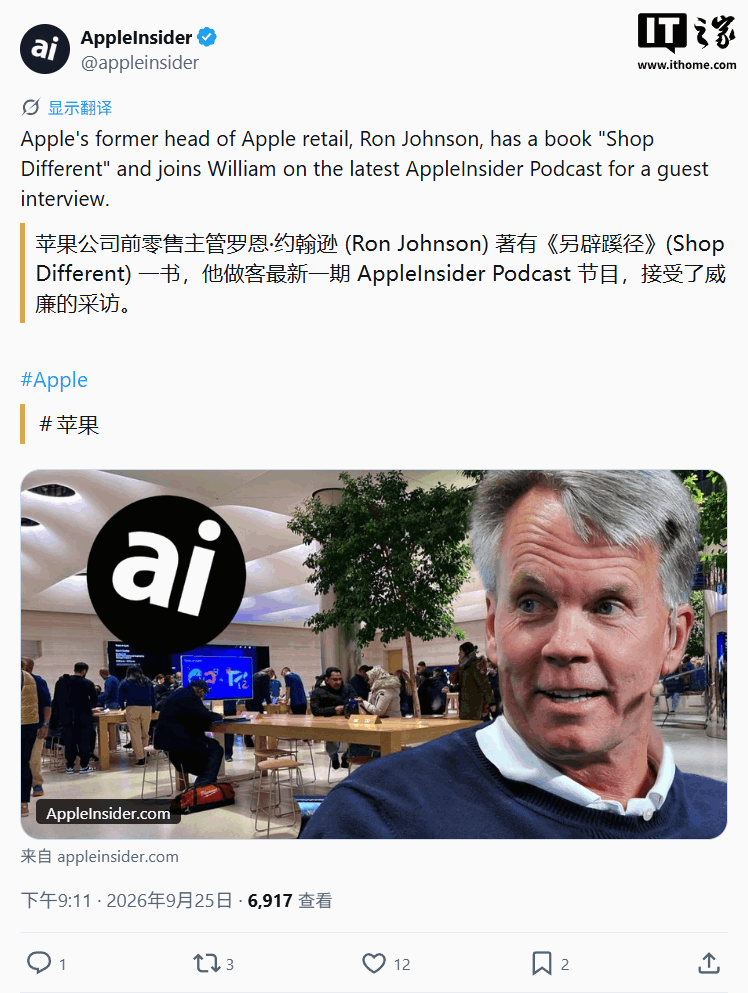
IT之家 9월 26일 소식에 따르면, IT 매체 AppleInsider는 어제(9월 25일) 론 존슨(Ron Johnson)과의 인터뷰를 게재하며 Apple Store 등 여러 주제에 대해 논의했습니다.
IT之家가 공개 자료를 확인한 바에 따르면, 1959년생인 존슨은 2000년 스티브 잡스에게 고용되어 Apple 소매 사업 부문 수석 부사장으로 재직하며 Apple Store를 처음부터 구축하는 책임을 맡았습니다. 그는 Apple 소매 시스템의 진정한 "총설계자"라고 할 수 있습니다.
존슨은 2000년 전후로 Apple 제품이 훌륭했지만 가격이 더 비쌌고, 대형 소매점에서 더 저렴한 PC와 함께 진열되는 경우가 많아 "관심은 있지만 구매로 이어지기 어려웠다"고 말했습니다.
존슨은 Apple이 "제품 경험"을 소비자에게 직접 전달하고, 자체 공간에서 브랜드 스토리를 전달하며, 기능을 시연하고, 서비스(나중에 Genius Bar와 같은)를 제공해야만 관심을 구매로 전환할 수 있다고 생각했습니다.
잡스가 복귀했을 때 Apple은 한때 약 30일치의 현금만 남아 있었습니다. 소매점은 자산 집약적이고 고정 비용이 높은 사업으로, 당시 Apple에게는 엄청난 위험이었습니다.
그럼에도 불구하고 존슨과 잡스는 "매년 25개 매장을 오픈"하기로 결정했고, 4년 안에 상징적인 5번가 플래그십 스토어를 포함해 거의 100개 매장으로 확장했습니다. 존슨은 인터뷰에서 당시 Apple은 선택의 여지가 없었으며, 현금 흐름이 빠듯한 상황에서 수백만 달러를 들여 소매점을 개설하는 도박을 할 수밖에 없었다고 말했습니다.
존슨은 잡스를 처음 만났을 때 제품 라인이 4가지밖에 없다는 사실에 놀랐지만, 이것이 오히려 장점이 되었다고 회상했습니다. 매장에 재고를 쌓아둘 필요 없이 사용자가 깊이 경험할 수 있는 공간을 확보할 수 있었기 때문입니다.
또한 Apple Store의 상징적인 서비스 중 하나는 "Genius Bar"입니다. 이 서비스의 기능적 포지셔닝은 "판매가 아닌 도움"을 강조하며, 내부적으로는 한때 "Geek Bar"라는 이름도 고려했지만, 결국 최고의 인재를 유치할 수 있는 이름을 선택했습니다. 정보 과부하 시대에는 명확한 제품 설명과 접근 가능한 서비스가 "더 많은 선택"보다 의사 결정 비용을 줄이는 데 더 효과적입니다.
존슨은 소매업의 길이 어렵고, 성공은 입지 선정, 공간 디자인, 인력의 자질, 서비스 프로세스 등 복합적인 요소에 달려 있으며, Microsoft는 Apple의 경험 핵심을 완전히 복제하지 못했다고 지적했습니다.
인터뷰에서 언급된 바와 같이, 온라인 발표회 시청자 수는 엄청나지만, iPhone Duo와 같은 신제품은 사용자가 차이점을 이해하기 위해 "직접 만져보고 현장에서 시도"해야 합니다. 존슨은 오프라인 매장이 구식화되지 않았으며, 신제품 경험 전환에 있어 여전히 대체 불가능하다고 생각합니다.
총평
Apple Store의 "총설계자" 론 존슨은 Apple Store가 단순히 제품을 판매하는 곳이 아니라, 소비자가 제품을 직접 경험하고 브랜드 스토리를 이해하며 서비스를 받을 수 있는 공간이라고 강조했습니다. 그는 Apple이 현금 흐름이 빠듯한 상황에서도 소매점 확장에 과감히 투자한 것이 성공의 핵심이었다고 밝혔습니다. 존슨은 온라인 발표회의 중요성에도 불구하고, 신제품 경험 전환에 있어 오프라인 매장의 역할은 여전히 대체 불가능하다고 주장했습니다.
Apple零售战略的奠基人
- 罗恩 · 约翰逊(Ron Johnson)是 Apple 零售业务高级副总裁,被誉为 Apple Store 的“总设计师”。
- 他于 2000 年被史蒂夫 · 乔布斯聘用,负责从零搭建 Apple Store。
早期市场痛点与战略转变
约翰逊指出,在 2000 年前后,Apple 产品虽然优秀但价格较高,且在大型零售商处常与更便宜的 PC 摆放在一起,导致消费者“有兴趣却难转化成交”。
- 为解决这一问题,Apple 需要将“产品体验”直接带到消费者面前,通过自有空间讲述品牌故事、演示功能并提供服务。
高风险下的商业扩张
尽管当时 Apple 现金流紧张(一度仅剩约 30 天的现金储备),但公司仍决定进行重资产投入。
- 约翰逊和乔布斯豪赌开设零售店,每年计划开业 25 家店。
- 在四年内,Apple 的门店网络扩展到近 100 家,包括标志性的第五大道旗舰店。
实体店的体验内核与优势
约翰逊认为 Apple 早期产品线只有四款,反而成为一种优势,使得门店不必堆积大量商品,而是留出空间让用户进行深度体验。
- **天才吧(Genius Bar):** 这是 Apple 零售店的标志性服务之一,其功能定位强调“帮助而非推销”。
- **产品叙事:** 在信息过载时代,清晰的产品叙事和可触达的服务,比提供“更多选择”更能降低消费者的决策成本。
实体门店在新品转化中的不可替代性
尽管线上观看量巨大,但约翰逊强调,对于像 iPhone Duo 这类新产品,用户仍需要“亲手摸、现场试”才能真正理解其差异。
- 他认为,实体店并未过时,在新产品的体验转化环节中,依然是不可替代的。
- Apple 零售成功的关键在于选址、空间设计、人员素质和服务流程等综合因素,这也是微软未能完全复制的核心壁垒。
总结
本文回顾了 Apple Store 的创立历程与战略核心。文章指出,Apple 通过将产品体验从大型零售商带入自有空间,成功解决了早期产品转化率低的问题。实体店的价值在于提供可触达的服务和深度体验,这在信息过载时代是无法被线上观看量取代的关键环节。
Apple Storeの構築と戦略
IT之家が確認した情報によると、ITメディアAppleInsiderは9月25日、ロン・ジョンソン氏へのインタビュー記事を公開しました。この記事では、Apple Storeをはじめとする様々なトピックについて議論されています。
1959年生まれのジョンソン氏は、2000年にスティーブ・ジョブズ氏に雇用され、Appleの小売事業部門のシニアバイスプレジデントとして勤務し、Apple Storeをゼロから構築する責任を負いました。彼は、まさにAppleの小売システムの「総設計者」と呼べる人物です。
ジョンソン氏は、2000年頃のApple製品は優れていたものの価格が高すぎたことや、大型小売店ではより安価なPCと一緒に陳列されることが多く、「関心はあるが購入には繋がりにくい状況だった」と語っています。
「体験」を売る場所としての店舗
ジョンソン氏は、Appleが単に製品を販売するだけでなく、以下の要素を通じて消費者に直接「製品体験」を提供し、ブランドストーリーを独自の空間で伝える必要があると考えました。それによって初めて、関心を購買へと転換できると指摘しています。
- 機能のデモンストレーション
- サービス(後にGenius Barのようなもの)の提供
ジョブズ氏が復帰した当時、Appleは手元の現金が約30日分しか残っていませんでした。小売店事業は資産集約的で固定費が高いため、当時のAppleにとって大きなリスクを伴うものでした。
それにもかかわらず、ジョンソン氏とジョブズ氏は「毎年25店舗の開店」を決定し、4年間で象徴的なマンハッタンのフラッグシップストアを含め、ほぼ100店舗へと拡大しました。ジョンソン氏はインタビューの中で、当時Appleには選択肢がなく、キャッシュフローが逼迫した状況下で数百万ドルを投じて小売店を開設するという「賭け」をするしかなかったと述べています。
デザイン哲学とサービス
ジョンソン氏は、ジョブズ氏に初めて会ったとき、製品ラインナップがわずか4種類しかなかったことに驚いたものの、それがむしろ利点になったと回想しています。店舗に在庫を積み込む必要がなく、利用者が深く体験できる空間を確保できたためです。
また、Apple Storeの象徴的なサービスの一つである「Genius Bar」は、「販売ではなく支援」という機能的ポジショニングが強調されています。内部ではかつて「Geek Bar」という名称も検討されましたが、最終的に最高の才能を引きつける名前が選ばれました。
情報過負荷の時代において、明確な製品説明とアクセスしやすいサービスは、「選択肢の多さ」よりも意思決定コストを下げ、より効果的であるとしています。
小売業におけるオフラインの価値
ジョンソン氏は、小売業界は難しく、成功が立地選定、空間デザイン、人材の質、サービスプロセスといった複合的な要素に左右されると指摘し、Microsoft社はAppleの「体験」の中核を完全に模倣することはできなかったと述べています。
インタビューで触れられているように、オンライン発表会の視聴者数は膨大ですが、iPhone Duoのような新製品については、利用者が違いを理解するために「実際に触れて現場で試す」ことが不可欠です。ジョンソン氏は、オフラインの店舗が時代遅れになるどころか、新しい製品体験への移行において依然として代替不可能であると確信しています。
まとめ
Apple Storeの「総設計者」ロン・ジョンソン氏によると、Apple Storeは単なる販売拠点ではなく、消費者が製品を直接体験し、ブランドストーリーを理解し、サービスを受けるための空間です。彼は、資金繰りが厳しい状況下で小売店拡大に大胆に投資したことが成功の鍵であり、オンライン発表会の重要性にもかかわらず、新製品体験への移行においてオフライン店舗の役割は依然として不可欠であると主張しています。
Ron Johnson on Building the Apple Store Experience
According to IT之家 news from September 26th, the tech media outlet AppleInsider published an interview yesterday (September 25th) discussing various topics, including the Apple Store, with Ron Johnson.
Based on materials obtained by IT之家, Johnson, who was born in 1959, was hired by Steve Jobs in 2000. He served as the Senior Vice President of Apple's retail division and was responsible for building the Apple Store from scratch. He can be called the true "master architect" of the Apple retail system.
The Need for a Dedicated Brand Experience
Johnson noted that around 2000, while Apple products were excellent, they were expensive and often displayed alongside cheaper PCs in large department stores. This setup meant that consumers had "interest but it was difficult to convert into purchases."
He believed that for Apple to convert interest into sales, the company needed a dedicated space where it could directly deliver the "product experience" to consumers, tell its brand story, demonstrate features, and provide services (such as what later became the Genius Bar).
Navigating Financial Risk and Expansion
When Jobs returned, Apple had only about 30 days of cash. Retail is a capital-intensive business with high fixed costs, posing immense risk to Apple at the time.
- Johnson and Jobs decided to "open 25 stores every year," expanding to nearly 100 locations within four years, including the iconic Fifth Avenue flagship store.
In the interview, Johnson stated that at the time, Apple had no choice but to take a gamble by opening retail stores that cost millions of dollars, given their tight cash flow.
Core Retail Philosophy and Services
Johnson recalled being surprised when he first met Jobs because the product line was limited to only four items. However, he viewed this as an advantage, as it allowed them to secure spaces focused on deep user experience rather than needing to store massive amounts of inventory.
One of Apple Store's signature services is the "Genius Bar." Its functional positioning emphasizes "help, not sales." While the internal name was previously considered "Geek Bar," they ultimately chose a name that could attract top talent. In an era of information overload, clear product explanations and accessible service are more effective at reducing decision-making costs than offering "more choices."
Johnson pointed out that running a retail business is challenging, requiring complex elements such as location selection, space design, staff quality, and service processes—areas where Microsoft failed to fully replicate Apple's core experience.
The Irreplaceable Role of Physical Stores
As mentioned in the interview, while online launch event viewership numbers are massive, new products like the iPhone Duo require users to "touch and try them out in person" to understand the differences. Johnson believes that offline stores have not become obsolete and remain irreplaceable for converting new product experiences.
Summary
Ron Johnson, the "master architect" of the Apple Store, emphasized that the store is not merely a place to sell products but an environment where consumers can directly experience the products, understand the brand story, and receive services. He stated that Apple's bold investment in retail expansion, even during periods of tight cash flow, was key to its success. Despite the importance of online events, Johnson maintains that the role of physical stores remains irreplaceable for converting new product experiences.