서론
IT之家 9월 21일 소식에 따르면, 중국 지진대망(中国地震台网)에 따라 최근 Honor 휴대폰 지진 조기 경보 애플리케이션이 중국 지진대망 센터의 기술 평가를 전면 통과하여 공식적으로 중국 지진 조기 경보망에 연결되었습니다. 이로써 Huawei, vivo, OPPO, Xiaomi, Honor 등 5대 주요 중국 휴대폰 제조업체가 모두 공식 승인을 받아, 통일된 공공 서비스 모델 알고리즘과 서비스 규범을 바탕으로 수억 명의 사용자에게 권위 있는 지진 조기 경보 서비스를 무료로 제공하게 되었습니다. 이는 중국 지진 조기 경보 공공 서비스가 모바일 단말기 분야에서 주요 중국 브랜드 전체를 포괄하게 되었음을 의미하며, 국가 지진 조기 경보 프로젝트의 재난 경감 효과가 더 많은 대중에게 확대될 것입니다.
국가 지진 조기 경보 시스템
IT之家는 공식 소개를 통해 국가 지진 조기 경보 프로젝트가 2024년 7월 완공된 후, 사회 대중을 위한 지진 조기 경보 정보 서비스 역량 구축이 빠르게 추진되고 있음을 확인했습니다. 현재까지 중국은 조기 경보 단말기, 방송 TV, 위챗 미니 프로그램, 모바일 단말기 등을 포함하는 지진 조기 경보 공공 서비스 시스템을 구축하여 '광범위한 커버리지, 빠른 도달, 정밀화'된 서비스 체계를 점진적으로 형성했으며, 여러 차례의 지진 재해 대응에서 긍정적인 사회적 효과를 발휘했습니다.
다양한 서비스 채널 중 모바일 단말기는 현재 가장 중요하고 편리하며 효과적인 조기 경보 수단입니다. 중국 지진대망 센터는 관련 업무 배치에 따라 주요 중국 휴대폰 제조업체와의 심층 협력을 빠르게 추진하고, 통일된 기술 규범에 따라 지진 조기 경보 공공 서비스에 연결하여 광범위한 커버리지, 초 단위 도달, 정밀 서비스의 업무 적용 능력을 갖추었습니다. 사용자는 어떠한 애플리케이션도 다운로드할 필요 없이, 휴대폰 설정에서 "지진 조기 경보" 기능을 검색하여 서비스를 활성화하기만 하면 됩니다. 각 제조업체가 운영 체제를 반복적으로 업그레이드함에 따라 지진 조기 경보 기능을 활성화하는 사용자가 빠르게 증가하고 있으며, 그중 Huawei와 vivo는 이미 1억 명 이상의 사용자를 돌파했습니다.
지진 조기 경보 시스템 작동 방식
기사에 따르면 지진 발생 후 대중에게 주어지는 비상 대피 시간은 매우 제한적이며, 진원지에서 멀리 떨어진 지역이라 할지라도 불과 십여 초에서 수십 초의 반응 시간만 주어집니다. 대중이 휴대폰으로 조기 경보 알림을 받을 때 파괴적인 지진파는 아직 도달하지 않은 경우가 많습니다. 이 초를 다투는 알림은 서로 연결되고 고도로 자동화된 지진 조기 경보 공공 서비스 시스템(이하 시스템)에서 비롯됩니다. 전체 시스템은 릴레이 경주처럼 지진파와 경쟁하며, 조기 경보 정보를 진원지 주변 대중의 휴대폰으로 빠르게 전달합니다. 이 정밀하게 작동하는 서비스 프로세스는 다섯 가지 핵심 단계로 나눌 수 있습니다.
1단계: 사용자 위치 파악
중국은 국토가 넓고 휴대폰 사용자가 수십억 명에 달하며, 매일 많은 사용자가 빈번하게 이동합니다. 정확한 조기 경보를 실현하기 위해 이 기술 시스템은 먼저 각 휴대폰 사용자의 실시간 지리적 위치를 알아야 합니다.
사용자 동의를 전제로 법규에 따라 최소한의 지리적 위치 정보를 사용하여 지진 발생 시 정확한 조기 경보 서비스를 제공합니다. 지진 조기 경보가 개별 사용자에게는 발생 확률이 낮은 이벤트임을 고려하여 휴대폰 배터리 소모를 늘리지 않기 위해 시스템은 이 기능을 사용자가 일상적으로 자주 사용하는 애플리케이션에 통합했습니다. 서비스 측면에서 시스템은 지리적 구역 관리 모델을 형성하여 지진 발생 시 조기 경보가 필요한 사용자를 초 단위로 잠글 수 있도록 하는 것이 목표이며, 이는 지진 조기 경보가 정확하게 도달할 수 있는 전제 조건입니다.
2단계: "위험 구역" 설정
중국 지진 조기 경보망에서 조기 경보 정보가 생성되면 시스템은 진원지 위치, 조기 경보 규모 등의 매개변수에 따라 영향 범위를 빠르게 계산하고, 예상 진도 2도 이상의 지역을 백엔드 위치 서비스 관리의 방대한 사용자와 일치시켜 이번 지진에 대한 조기 경보가 필요한 범위를 자동으로 설정합니다. 조기 경보 범위 밖의 휴대폰은 조기 경보 정보를 수신하지 않아 조기 경보 정보의 정확한 푸시를 실현합니다.
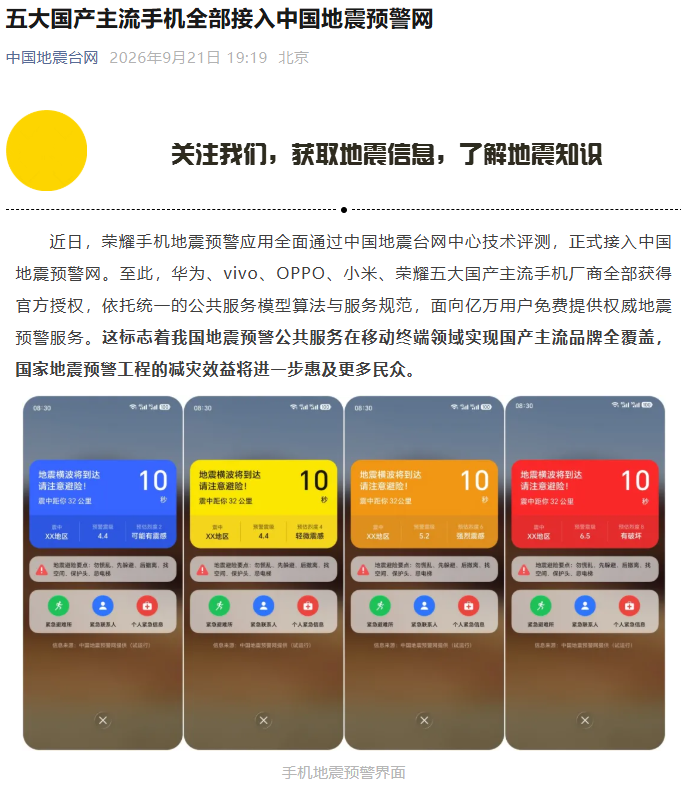
영향 정도에 따라 지진 조기 경보는 파란색, 노란색, 주황색, 빨간색의 네 가지 등급으로 나뉘며, 이 네 가지 등급의 조기 경보는 다른 자연재해 조기 경보와도 일치하여 대중이 가장 빠르게 적응하고 학습 비용을 줄이는 것을 목표로 합니다.
왜 2도 이상의 지역부터 조기 경보를 시작하는가? 이는 2도 이상은 진동을 느낄 수 있음을 의미하며, 지진이 해당 지역에 일정한 영향을 미칠 수 있기 때문입니다. 반면 2도 미만의 지역에는 영향이 없습니다. 지진 조기 경보는 좋은 일이지만, 과도한 조기 경보는 방해를 유발하고 조기 경보의 권위도 떨어뜨릴 수 있습니다.
3단계: 수억 명 사용자를 위한 "클라우드 푸시"
영향 범위가 확정되면 시스템은 설정된 범위 내의 모든 휴대폰 사용자를 빠르게 찾아 사용자 동의를 전제로 푸시 식별자를 통해 대상 사용자에게 조기 경보 정보를 보냅니다. 영향 정도와 거리 우선 원칙에 따라 시스템은 휴대폰 제조업체의 클라우드 푸시 기능을 활용하여 지진 조기 경보 정보의 대량 전송과 초 단위 도달을 실현할 수 있습니다.
4단계: 휴대폰 알림 방식
조기 경보 정보가 휴대폰에 도달하면 시스템에 내장된 조기 경보 서비스가 즉시 휴대폰 조기 경보 알림을 트리거하고, 규범에 따라 정보 팝업, 조기 경보 등급, 휴대폰 벨소리, 음성 알림, 지진파 카운트다운 및 대피 지침 등을 포함한 조기 경보 프로세스를 시작합니다.
이는 지진 조기 경보 공공 서비스가 사용자에게 직접 제공되는 단계로, 기술팀은 이를 위해 세심하게 설계했으며, 향후 각 단계의 응답 전략을 지속적으로 최적화하여 정확한 서비스를 제공하고 사용자가 이해하고 활용하여 지진 조기 경보의 재난 경감 효과를 발휘할 수 있도록 노력할 것입니다.
5단계: 서비스 품질 보장을 위한 전 과정 감독
엄격한 공공 서비스로서 지진 조기 경보는 단순히 푸시 전송에 그치지 않고, 서비스의 실제 효과를 추적하고 알고리즘 모델을 지속적으로 최적화하여 서비스를 더욱 정확하고 효율적이며 재난 경감 효과를 높여야 합니다. 매번 지진 조기 경보가 끝난 후 시스템은 자동으로 서비스 추적 통계 및 분석을 수행하며, 이는 성능 평가를 통해 지진 조기 경보 서비스 품질을 지속적으로 최적화하는 것을 목표로 합니다.
총평
Huawei, vivo, OPPO, Xiaomi, Honor 등 주요 중국 휴대폰 제조업체들이 중국 지진 조기 경보망에 공식적으로 연결되어, 수억 명의 사용자에게 무료 지진 조기 경보 서비스를 제공하게 되었습니다. 이 시스템은 사용자 위치 파악, 위험 구역 설정, 클라우드 푸시, 휴대폰 알림, 전 과정 감독의 5단계로 작동하며, 지진 발생 시 초 단위로 정확한 정보를 전달하여 재난 경감에 기여합니다. 사용자는 별도의 앱 설치 없이 휴대폰 설정에서 기능을 활성화할 수 있으며, Huawei와 vivo는 이미 1억 명 이상의 사용자를 확보했습니다.
行业合作与覆盖范围
- 主流品牌全覆盖:Honor手机地震预警应用已通过中国地震台网中心技术评测,正式接入中国地震预警网。目前,Huawei、vivo、OPPO、Xiaomi、Honor五大国产主流手机厂商均获得官方授权提供免费权威地震预警服务。
- 公共服务体系建设:我国初步建成包括预警终端、广播电视、微信小程序和移动终端等在内的全方位地震预警公共服务体系,已形成“广覆盖、快触达、精准化”的服务格局。
移动端预警服务的优势与普及
- 便捷性:移动终端被认为是当前最重要、最便民的预警途径。用户无需下载任何应用程序,只需在手机设置中搜索并开启“地震预警”功能即可使用。
- 用户规模:随着服务推广,开通地震预警功能的用户快速增长,其中Huawei和vivo均已突破1亿用户大关。
地震预警系统的工作流程(五步法)
该高度自动化的公共服务系统通过五个关键环节实现从信息获取到用户提醒的全过程:
- 第一步:实时定位识别(知道你在哪儿):在用户授权和最小必要使用地理位置信息的前提下,系统利用服务端地理分区管理模式,确保在震时能够秒级锁定需要预警的精确用户群体。
- 第二步:划定影响范围(危险圈):系统根据震中位置和预警震级快速计算影响区域,将预估烈度达到2度及以上的区域与海量用户进行匹配,自动划定精准预警范围。
- 第三步:云端推送下发(亿级用户的触达):确定范围后,系统通过手机厂商的云推送能力,利用推送标识向目标用户群快速、海量地下发预警信息。
- 第四步:终端提醒机制(大声“提醒”你):预警信息到达手机后,内置服务会即刻触发多重提示,包括信息弹窗、预警等级展示、手机响铃、语音提醒、地震波倒计时以及避震指引等。
- 第五步:全流程监管与优化:系统在每次预警结束后会自动进行服务跟踪统计和效能评估,持续迭代算法模型,确保服务的精准性和减灾实效。
关键技术参数与标准
- 预警等级划分:地震预警信息分为四级,包括蓝色、黄色、橙色和红色预警,与其他自然灾害预警保持一致性,以降低民众学习成本。
- 最小预警门槛:系统设定对烈度达到2度及以上区域开始预警,确保预警具有实际意义,避免超范围过度干扰。
总结
国家地震预警公共服务已实现国产主流品牌全覆盖,构建了“广覆盖、快触达、精准化”的移动端预警体系。该系统通过结合用户实时地理定位、科学划定影响区域(≥2度),并利用云推送和多重终端提醒机制,确保在极短的应急窗口期内将权威信息快速送达亿万民众,显著提升了地震灾害应对的减灾实效。
はじめに
IT之家によると、中国地震台網(China Earthquake Network)の最新情報として、Honor製の携帯電話向け地震早期警報アプリケーションが、中国地震台網センターによる技術評価を完全にクリアし、正式に国家地震早期警報網に接続されました。これにより、Huawei、vivo、OPPO、Xiaomi、Honorといった主要な5大中国携帯電話メーカーすべてが公式承認を得ました。これらは統一された公共サービスモデルアルゴリズムとサービス規範に基づき、数億人のユーザーに対し、権威ある地震早期警報サービスを無料で提供することになります。これは、国家の地震早期警報公共サービスが国内主要ブランド全体を網羅したことを意味し、国家レベルの地震早期警報プロジェクトによる災害軽減効果がより多くの大衆に拡大することを意味します。
国家地震早期警報システムについて
IT之家は公式紹介を通じて、国家地震早期警報プロジェクトが2024年7月に完成した後、一般市民向けの地震早期警報情報サービス能力の構築が急速に進められていることを明らかにしました。現在までに、中国は地震早期警報公共サービスシステムを確立しており、これには以下の要素が含まれます。
- 地震早期警報端末
- 放送(テレビ)
- WeChatミニプログラム
- モバイル端末
このシステムにより、「広範囲なカバレッジ」「迅速な到達」「精度向上」というサービス体制が段階的に形成され、これまでに数度の地震災害対応において肯定的な社会的効果を発揮してきました。
様々なサービスチャネルの中で、モバイル端末は現在最も重要で便利かつ効果的な早期警報手段となっています。中国地震台網センターは、関連業務の配置に伴い、主要な中国携帯電話メーカーと深く協力し、統一された技術規範に基づいて地震早期警報公共サービスに接続しました。これにより、広範囲なカバレッジ、秒単位での到達、精度の高いサービス適用能力が備わっています。ユーザーはどのアプリケーションもダウンロードする必要はなく、単にスマートフォンの設定から「地震早期警報」機能を検索してサービスを有効化するだけで利用可能です。各メーカーがOSのアップデートを繰り返すにつれて、この機能を利用するユーザーは急速に増加しており、特にHuaweiとvivoはすでに1億人以上のユーザーを突破しています。
地震早期警報システムの動作プロセス
記事によると、地震発生後、一般市民に与えられる避難時間は非常に限られており、震源地から離れた地域であってもわずか数秒から数十秒の反応時間しかありません。人々が携帯電話で早期警報通知を受け取る際、破壊的な地震波はまだ到達していない場合が多いのです。この時間を争う通知は、相互に連携し高度に自動化された地震早期警報公共サービスシステム(以下、本システム)によって発信されます。全体システムは、まるでリレー競争のように地震波と競い合いながら、早期警報情報を震源地周辺の人々の携帯電話へ迅速に伝達します。この精密に作動するサービスプロセスは、以下の5つの核心的な段階に分けられます。
1. ユーザー位置の特定
中国は国土が広く、数億人の携帯電話ユーザーが日常的に移動するため、正確な早期警報を実現するには、まず各携帯電話ユーザーのリアルタイム地理的位置を知る必要があります。
本システムは、ユーザーの同意を前提とし、法規制に基づき最小限の地理位置情報を使用することで、地震発生時に正確な早期警報サービスを提供します。早期警報が個々のユーザーにとって発生確率の低いイベントであることを考慮し、バッテリー消耗を抑えるため、この機能は日常的に使用するアプリケーションに統合されています。サービス面では、システムは地理的エリア管理モデルを構築し、地震発生時に早期警報が必要なユーザーを秒単位で特定することを目指しており、これが正確な早期警報到達の前提条件となります。
2. 「危険区域」の設定
中国地震早期警報網で早期警報情報が生成されると、システムは震源地の位置や警報規模などのパラメータに基づき影響範囲を迅速に計算し、予想震度2度以上の地域をバックエンドの位置サービス管理上の膨大なユーザーデータと照合することで、今回の地震で早期警報が必要な範囲を自動的に設定します。これにより、警報範囲外の携帯電話には情報が届かず、正確なプッシュ通知が実現されます。
影響度に応じて、地震早期警報は青色、黄色、オレンジ色、赤色の4つのレベルに分類されています。この4段階の警報は他の自然災害の早期警報とも整合性が取れており、一般市民が最も早く適応し、学習コストを低減させることを目的としています。
なぜ震度2度以上の地域から警報を開始するのか?それは、震度2度以上であれば振動を感じられる可能性がある、つまり地震がその地域に一定の影響を与える可能性があるためです。一方、それ未満の地域には影響はありません。早期警報は有益ですが、過剰な警報は迷惑となり、警報自体の権威を低下させる可能性があります。
3. 数億人規模の「クラウドプッシュ」
影響範囲が確定すると、システムは設定された範囲内の全携帯電話ユーザーに対し、ユーザー同意を前提としてプッシュ識別子を通じて早期警報情報を送信します。影響度と距離優先の原則に基づき、本システムは携帯電話メーカーのクラウドプッシュ機能を利用することで、地震早期警報情報の大量伝送と秒単位での到達を実現しています。
4. 携帯電話への通知方法
早期警報情報が携帯電話に到達すると、システム内蔵の早期警報サービスが即座に警報をトリガーし、規定に基づき以下の要素を含むプロセスを開始します。
- 情報ポップアップ
- 早期警報レベル表示
- 携帯電話の着信音と音声通知
- 地震波のカウントダウンおよび避難指示など
これは、地震早期警報公共サービスがユーザーに直接提供される段階であり、技術チームはこれを細心の注意を払って設計しました。今後は、各段階の対応戦略を持続的に最適化し、正確なサービスを提供するとともに、ユーザーが理解し活用することで、地震早期警報による災害軽減効果を発揮できるように努めていきます。
5. サービス品質を保証するための全過程の監視
厳格な公共サービスであるため、地震早期警報は単なるプッシュ送信で終わるわけではありません。サービスの実際の効果を追跡し、アルゴリズムモデルを持続的に最適化することで、より正確で効率的であり、災害軽減効果を高める必要があります。毎回地震早期警報が終了した後、システムは自動的にサービス追跡統計と分析を実行します。これは性能評価を通じて、地震早期警報サービスの品質を継続的に最適化することを目的としています。
まとめ
主要な中国携帯電話メーカー(Huawei, vivo, OPPO, Xiaomi, Honorなど)が国家地震早期警報網に公式接続され、数億人のユーザーに対し無料の早期警報サービスを提供します。このシステムは、「位置特定」「危険区域設定」「クラウドプッシュ」「通知」「全過程監視」という5段階で動作し、地震発生時に秒単位で正確な情報伝達を行うことで災害軽減に貢献します。ユーザーはアプリのインストールなしに設定から機能を有効化でき、Huaweiとvivoはすでに1億人以上の利用者を確保しています。
Introduction
According to news from IT之家 on September 21st, the recent Honor mobile phone earthquake early warning application has successfully passed a comprehensive technical evaluation by the China Earthquake Networks Center (中国地震台网). It has been officially connected to the national Chinese earthquake early warning network. This achievement means that five major Chinese smartphone manufacturers—including Huawei, vivo, OPPO, Xiaomi, and Honor—have all received official approval. They will now provide authoritative earthquake early warning services free of charge to hundreds of millions of users, based on a unified public service model algorithm and service standards. This signifies that the national earthquake early warning public service has encompassed major Chinese brands across the mobile terminal sector, expanding the disaster mitigation effect of the state-level system to a wider populace.
The National Earthquake Early Warning System
IT之家 confirmed through an official introduction that following the completion of the national earthquake early warning project in July 2024, efforts are rapidly underway to build robust earthquake early warning information services for the general public. China has progressively established a comprehensive earthquake early warning public service system—including early warning terminals, broadcast TV, WeChat mini-programs, and mobile devices. This system boasts 'wide coverage, rapid delivery, and high precision,' demonstrating positive social effects during multiple earthquake disaster responses.
Among various service channels, mobile devices are currently the most critical, convenient, and effective means of early warning. The China Earthquake Networks Center is rapidly advancing deep cooperation with major Chinese smartphone manufacturers to implement related services. By connecting these brands to the public service through unified technical standards, the system achieves wide coverage, second-level delivery speed, and operational precision. Users no longer need to download any specific application; they only need to activate the "Earthquake Early Warning" function in their phone settings. As each manufacturer updates its operating system repeatedly, the number of users activating the early warning feature is rapidly increasing, with Huawei and vivo alone already surpassing 100 million users.
How the Earthquake Early Warning System Works
The article notes that the time available for public evacuation after an earthquake is extremely limited, often providing only tens of seconds to mere seconds, even in areas far from the epicenter. When the public receives an early warning notification on their phones, the destructive seismic waves have usually not yet arrived. This critical notification originates from a highly automated and interconnected earthquake early warning public service system (hereinafter referred to as "the System"). The entire system races against the seismic wave, quickly delivering early warning information to users' mobile phones near the epicenter. This precisely functioning service process can be divided into five core stages.
Stage 1: User Location Identification
Given China's vast territory and billions of smartphone users who move frequently, this technical system must first determine the real-time geographical location of each phone user to ensure accurate early warnings. The System provides precise early warning services during an earthquake using minimal geographical location data, adhering to legal requirements and predicated on user consent. Recognizing that an individual early warning is a low-probability event, the System integrates this function into frequently used daily applications to prevent excessive drain on the phone battery. From a service perspective, the goal is for the System to establish a geographical zone management model, allowing it to pinpoint users needing early warnings within seconds—a prerequisite for accurate delivery.
Stage 2: "Risk Zone" Setting
When early warning information is generated on the China Earthquake Networks Network, the System quickly calculates the affected area based on parameters such as the epicenter location and the magnitude of the early warning. It automatically sets the required scope—matching the predicted intensity of 2 degrees or higher with the vast user base managed by backend location services. Phones outside this defined zone will not receive the alert, ensuring accurate push notification delivery. The earthquake early warnings are categorized into four levels based on impact: blue, yellow, orange, and red. These categories align with other natural disaster alerts to help the public adapt quickly and minimize learning costs.
Why start the warning from areas of 2 degrees or higher? Because an intensity of 2 degrees or more means that vibrations can be felt, indicating that the earthquake could have a measurable impact in that area. Areas below 2 degrees are unaffected. While early warnings are beneficial, excessive alerts can cause disruption and diminish the authority of the system.
Stage 3: "Cloud Push" for Millions of Users
Once the affected range is confirmed, the System quickly locates all mobile users within that zone and sends the early warning information to them via push identifiers, based on user consent. Utilizing the cloud push capabilities of phone manufacturers, the System prioritizes impact level and distance to achieve mass transmission and second-level delivery of the earthquake early warning data.
Stage 4: Mobile Phone Notification Method
When the early warning information reaches the mobile phone, the built-in early warning service immediately triggers a notification. According to established protocols, this initiates an early warning process that includes information pop-ups, the alert grade, phone ringtones, voice notifications, seismic wave countdowns, and evacuation guidelines. This is the stage where the public service is directly delivered to the user. The technical team has meticulously designed this phase and plans to continuously optimize response strategies in future stages to ensure accurate service delivery, helping users understand and utilize the system to maximize disaster mitigation effects.
Stage 5: End-to-End Supervision for Service Quality
As a strict public service, earthquake early warning does not merely stop at push transmission. It must track the actual effectiveness of the service and continuously optimize its algorithm model to make it more accurate, efficient, and increase disaster mitigation effects. After every earthquake early warning event, the System automatically performs service tracking statistics and analysis. This aims to continually optimize the quality of the early warning service through performance evaluation.
Summary
Major Chinese smartphone manufacturers—including Huawei, vivo, OPPO, Xiaomi, and Honor—have officially connected to the China Earthquake Early Warning Network, providing free services to hundreds of millions of users. The system operates in five stages: user location identification, risk zone setting, cloud push, mobile phone notification, and end-to-end supervision. By delivering precise information within seconds of an earthquake, the service significantly contributes to disaster mitigation. Users can activate the feature directly through their phone settings without installing a separate app, with Huawei and vivo already securing over 100 million users.