생산 전망
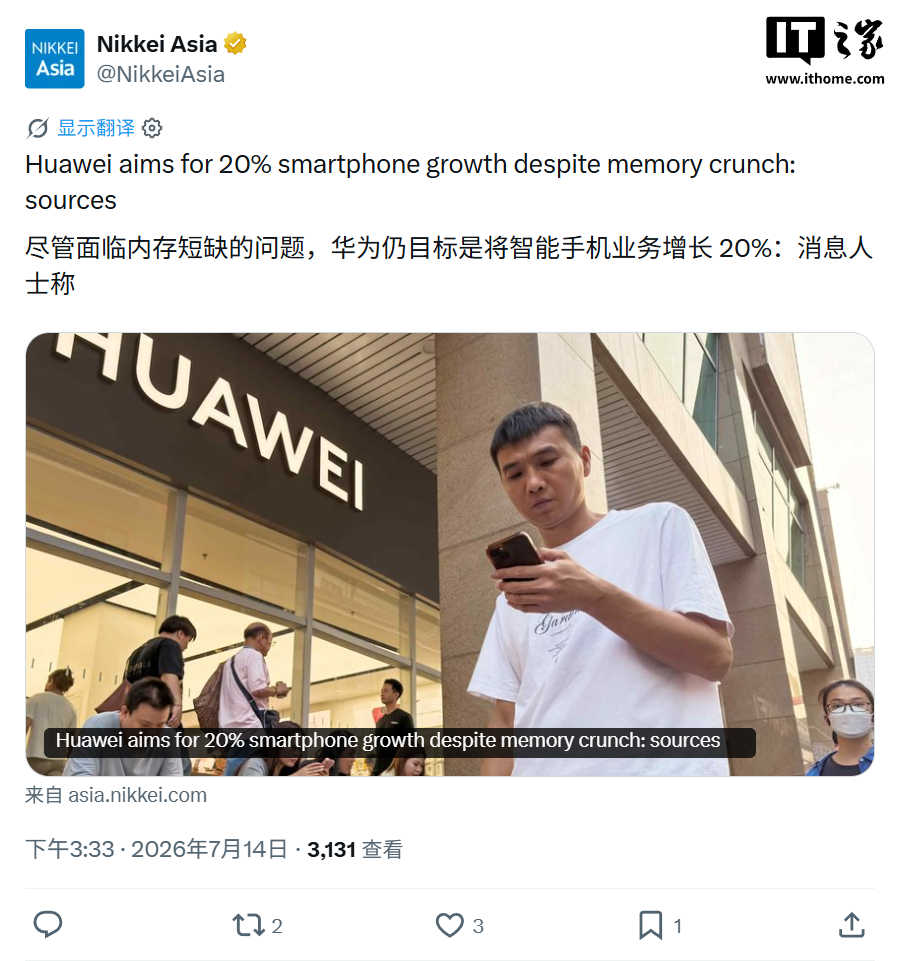
Nikkei Asia는 7월 14일 소식통을 인용해 전 세계적인 메모리 칩 부족 상황에도 불구하고, Huawei가 2026년 스마트폰 출하량 목표를 20% 이상 상향 조정했다고 보도했습니다.
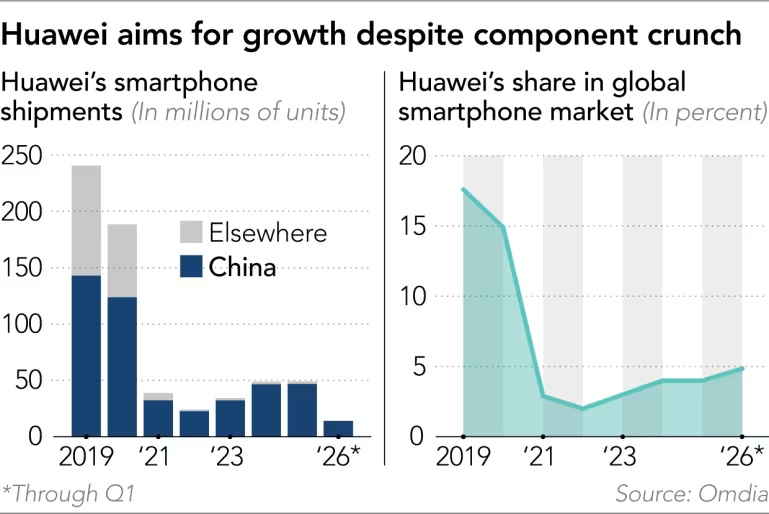
공급망에 따르면 Huawei의 2025년 스마트폰 출하량은 5,000만 대 미만이며, 회사는 2026년 생산량을 약 6,000만 대로 늘릴 계획입니다.
이와 대조적으로 Xiaomi, OPPO, vivo를 포함한 일부 중국 제조사들은 메모리 칩 공급 부족과 전자 부품 가격 상승으로 인해 생산 전망을 여러 차례 하향 조정했습니다.
시장 데이터
시장 조사 기관 Omdia의 데이터에 따르면, 2026년 1분기 중국 스마트폰 시장 출하량은 전년 동기 대비 1% 감소한 6,980만 대를 기록했으며, 비용 압박이 업계에 영향을 미치는 주요 요인 중 하나로 나타났습니다.
구체적인 수치를 살펴보면, Huawei의 2025년 스마트폰 출하량은 약 4,917만 대이며, 글로벌 시장 점유율은 2025년 약 4%에서 2026년 1분기 거의 5%로 상승했습니다.
IDC 데이터에 따르면 2026년 2분기 중국 스마트폰 시장 출하량은 약 6,601만 대로 전년 대비 4.3% 감소하며 5분기 연속 하락세를 보였습니다. 그러나 이러한 침체 속에서도 Huawei와 Apple은 돋보이는 성과를 거두었으며, 2분기 출하량이 전년 대비 각각 약 20% 증가했습니다. 특히 Huawei는 중국 내 시장에서 23%의 점유율로 선두를 차지했습니다.
글로벌 시장 측면에서는 메모리 칩 가격의 지속적인 상승이 업계에 상당한 충격을 주고 있습니다. Omdia는 2026년 전 세계 스마트폰 출하량이 전년 대비 12.2% 감소한 10억 9,300만 대로 예상했습니다. IDC 데이터에 따르면 2026년 2분기 글로벌 스마트폰 출하량은 2억 7,750만 대로 전년 대비 6.7% 감소했습니다.
공급망 및 가격 영향
한 주변 칩 공급업체 경영진은 2026년 1월 이후 중국 고객에 대한 월간 출하량을 바탕으로, Huawei가 주문 전망을 유지하며 성장세를 지속하고 있는 유일한 고객이라고 밝혔습니다. 또 다른 PC 제조업체 경영진은 중국 메모리 칩 제조사로부터 더 많은 DRAM 공급을 원했으나, 일부 생산 능력이 이미 Huawei를 위해 예약되었다는 답변을 받았다고 전했습니다.
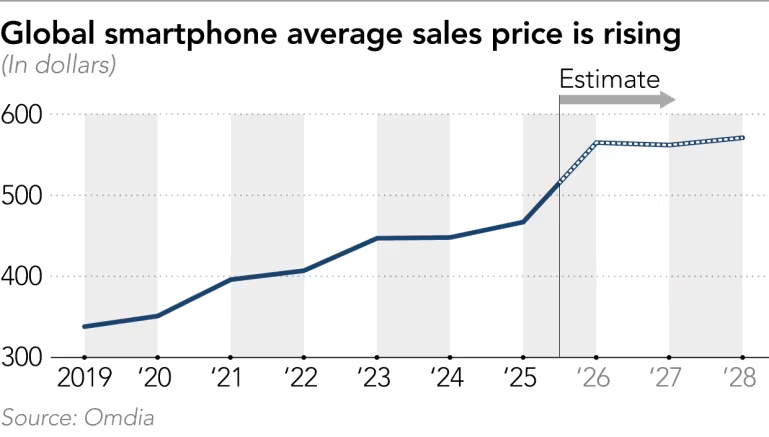
Counterpoint Research는 더욱 비관적인 전망을 내놓으며 연간 약 14%의 감소를 예상했습니다. DRAM 및 NAND 플래시 가격이 전년 대비 최대 200% 상승함에 따라, 스마트폰 평균 판매 가격은 2025년 467달러에서 2026년 565달러로 상승할 것으로 예상됩니다.
Omdia 분석가 Runar Bjoerhovde는 Huawei가 2026년 상반기에 뚜렷한 성장을 기록했으며, 2분기 데이터 발표 후 그 성과가 더욱 명확해질 것이라고 언급했습니다. 그는 현재 Huawei가 경쟁력 있는 가격 전략을 통해 소비자를 유인하며 주로 중국 시장에 의존해 성장을 유지하고 있다고 분석했습니다.
총평
Huawei는 글로벌 메모리 칩 부족과 비용 상승이라는 어려운 환경 속에서도 공격적인 생산 목표 상향과 경쟁력 있는 가격 전략을 통해 중국 시장 내 점유율을 확대하며 견고한 성장세를 보이고 있습니다. 반면, 다른 주요 제조사들은 공급망 압박으로 인해 생산 전망을 하향 조정하는 등 대조적인 행보를 보이고 있습니다.
Huawei 2026 年出货目标
尽管全球存储芯片持续短缺,Huawei 已通知供应商计划在 2026 年将智能手机出货量目标提升 20% 以上。与面临成本压力而下调生产预期的其他厂商不同,Huawei 在供应链中表现出强劲的增长势头。
- 2025 年预计出货量:不足 5,000 万部
- 2026 年计划产量:约 6,000 万部
供应链动态与竞争格局
由于内存芯片供应紧张及电子元器件价格上涨,包括 Xiaomi、OPPO、vivo 在内的部分中国手机厂商已多次下调生产预期。而在外部供应商看来,Huawei 是唯一维持订单预期且增长势头持续的客户,甚至有部分 DRAM 产能被专门为其预留。
市场数据与成本压力
受 DRAM 和 NAND 闪存价格大幅上涨的影响,全球智能手机行业面临显著挑战。尽管整体市场出货量呈下降趋势,但 Huawei 与 Apple 在中国市场的表现依然突出。
- 2026 年 Q1 中国市场出货量:约 6,980 万部(同比下降 1%)
- 2026 年 Q2 中国市场出货量:约 6,601 万台(同比下降 4.3%)
- Huawei 在中国市场的份额:约 23%
- 全球智能手机平均售价预测:从 2025 年的 467 美元上涨至 2026 年的 565 美元
总结
尽管面临严重的存储芯片短缺和成本上升压力,Huawei 仍计划在 2026 年大幅提升智能手机出货量。相比于其他中国品牌因供应链问题减产,Huawei 通过稳固的供应保障和竞争力的定价策略,在低迷的市场环境中实现了显著增长。
生産見通し
Nikkei Asiaは7月14日、独自の情報筋を引用し、世界的なメモリチップ不足にもかかわらず、Huaweiが2026年のスマートフォン出荷目標を20%以上上方修正したと報じました。
サプライチェーンの情報によると、Huaweiの2025年のスマートフォン出荷台数は5,000万台未満であり、同社は2026年の生産量を約6,000万台に増やす計画です。
これとは対照的に、Xiaomi、OPPO、vivoを含む一部の中国メーカーは、メモリチップの供給不足と電子部品の価格高騰により、生産見通しを数回にわたり下方修正しています。
市場データ
調査機関Omdiaのデータによると、2026年第1四半期の中国スマートフォン市場の出荷量は前年同期比1%減の6,980万台を記録しており、コストの圧迫が業界に影響を与える主要な要因の一つとして浮上しています。
具体的な数値を詳しく見ると、Huaweiの2025年のスマートフォン出荷量は約4,917万台であり、世界市場におけるシェアは2025年の約4%から2026年第1四半期にはほぼ5%へと上昇しました。
IDCのデータによれば、2026年第2四半期の中国スマートフォン市場の出荷量は約6,601万台となり、前年比で4.3%減、5四半期連続の減少となりました。しかし、この停滞の中でもHuaweiとAppleは顕著な成果を上げており、第2四半期の出荷量はそれぞれ前年比で約20%増加しました。特にHuaweiは中国国内市場において23%のシェアを獲得し、首位に立っています。
グローバル市場の側面では、メモリチップ価格の継続的な上昇が業界に大きな衝撃を与えています。Omdiaは、2026年の世界的なスマートフォン出荷量を前年比12.2%減の10億9,300万台と予測しています。また、IDCのデータによると、2026年第2四半期のグローバルなスマートフォン出荷量は2億7,750万台となり、前年比で6.7%減少しました。
サプライチェーンおよび価格への影響
ある周辺チップ供給業者の経営陣は、2026年1月以降の中国顧客向けの月間出荷量を基に、Huaweiが注文見通しを維持し成長を続けている唯一の顧客であると明らかにしました。また、別のPCメーカーの経営陣は、中国のメモリチップメーカーからより多くのDRAM供給を求めたものの、一部の生産能力はすでにHuaweiのために予約されているとの回答を受けたと伝えています。
Counterpoint Researchはより悲観的な見通しを示しており、年間約14%の減少を予測しています。DRAMおよびNANDフラッシュの価格が前年比で最大200%上昇する中、スマートフォンの平均販売単価(ASP)は2025年の467ドルから2026年には565ドルに上昇すると予想されています。
OmdiaのアナリストであるRunar Bjoerhovde氏は、Huaweiが2026年上半期に顕著な成長を記録しており、第2四半期のデータ発表後にその成果がより明確になると述べています。彼は現在、Huaweiが競争力のある価格戦略を通じて消費者を惹きつけ、主に中国市場に依存しながら成長を維持していると分析しています。
まとめ
Huaweiは世界的なメモリチップ不足やコスト上昇といった厳しい環境下においても、積極的な生産目標の引き上げと競争力のある価格戦略により、中国市場でのシェア拡大と堅調な成長を見せています。一方で、他の主要メーカーはサプライチェーンの圧迫を受け、生産見通しを下方修正するなど対照的な動きを見せています。
Production Outlook
Nikkei Asia reported on July 14, citing sources, that Huawei has increased its 2026 smartphone shipment targets by more than 20% despite the global shortage of memory chips.
According to supply chain sources, Huawei's smartphone shipments for 2025 are expected to be under 50 million units, and the company plans to increase production to approximately 60 million units in 2026.
In contrast, several Chinese manufacturers, including Xiaomi, OPPO, and vivo, have lowered their production forecasts multiple times due to memory chip shortages and rising costs for electronic components.
Market Data
Data from market research firm Omdia indicates that China's smartphone market shipments in the first quarter of 2026 reached 69.8 million units, a 1% decrease compared to the same period last year, with cost pressures identified as a primary factor impacting the industry.
Specific figures regarding Huawei include:
- 2025 smartphone shipments: Approximately 49.17 million units.
- Global market share: Expected to rise from approximately 4% in 2025 to nearly 5% in the first quarter of 2026.
IDC data shows that China's smartphone market shipments in the second quarter of 2026 were approximately 66.01 million units, a 4.3% decrease year-on-year, marking a decline for five consecutive quarters. Despite this stagnation, Huawei and Apple showed notable performance, with their Q2 shipments increasing by about 20% compared to the previous year. Notably, Huawei led the Chinese market with a 23% share.
On the global scale, the continuous rise in memory chip prices is significantly impacting the industry. Omdia projected global smartphone shipments for 2026 at 1.093 billion units, down 12.2% from the previous year. According to IDC data, global smartphone shipments in the second quarter of 2026 were 277.5 million units, a 6.7% decrease compared to the previous year.
Supply Chain and Pricing Impact
An executive at a peripheral chip supplier stated that based on monthly shipments to Chinese customers since January 2026, Huawei is the only client maintaining growth by sustaining its order outlook. Another PC manufacturer reported that while they sought more DRAM supply from Chinese memory chip manufacturers, they were informed that some production capacity had already been reserved for Huawei.
Counterpoint Research provided a more pessimistic forecast, predicting an annual decline of approximately 14%. As DRAM and NAND flash prices rise by up to 200% compared to the previous year, the average selling price (ASP) of smartphones is expected to rise from $467 in 2025 to $565 in 2026.
Omdia analyst Runar Bjoerhovde noted that Huawei recorded significant growth in the first half of 2026, with its performance becoming even clearer following the release of Q2 data. He analyzed that Huawei is currently maintaining its growth by appealing to consumers through a competitive pricing strategy, primarily relying on the Chinese market.
Summary
While global memory chip shortages and rising costs have forced many Chinese manufacturers like Xiaomi, OPPO, and vivo to lower their production forecasts, Huawei has aggressively increased its targets. By leveraging a competitive pricing strategy and securing reserved manufacturing capacity, Huawei is successfully expanding its market share in China despite industry-wide headwinds. These conditions are expected to drive up the average selling price of smartphones globally through 2026.