시장 현황
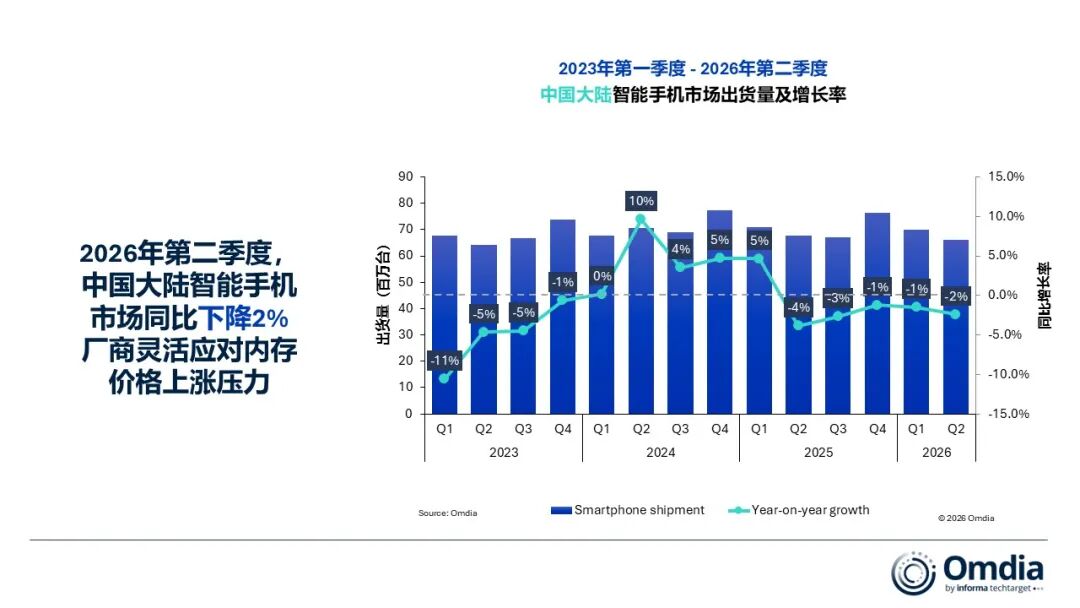
IT홈에 따르면, 조사 기관 Omdia가 7월 14일 발표한 최신 연구 결과에 따르면 2026년 2분기 중국 본토 스마트폰 시장 출하량은 6,610만 대로 집계되었습니다. 이는 전년 동기 대비 2% 감소한 수치로, 글로벌 시장의 하락 폭인 4%보다 완만한 수준입니다.
메모리 비용 상승으로 인한 가격 압박이 부각됨에 따라 시장 양극화가 지속적으로 심화되고 있으며, 프리미엄 제품 경쟁력을 갖춘 주요 제조사들이 선도적인 위치를 더욱 공고히 하고 있습니다.
주요 브랜드 성과
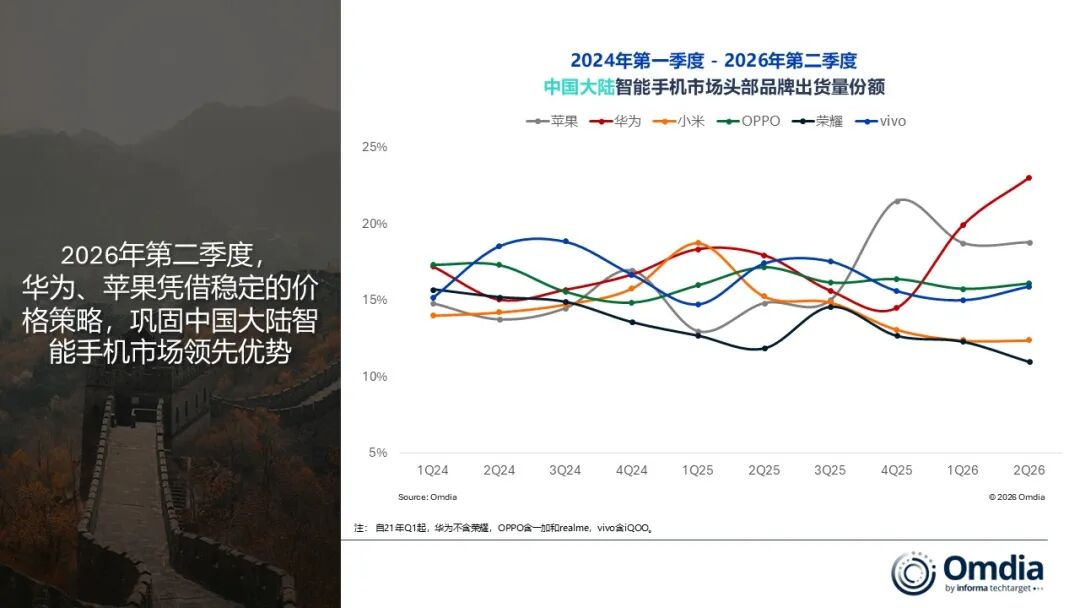
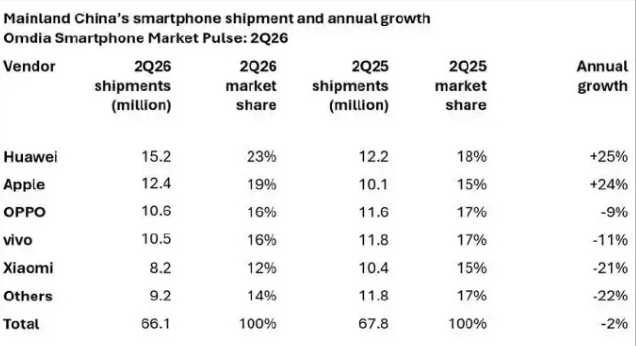
Huawei는 신제품 효과와 안정적인 가격 전략을 통해 점유율 우위를 지속적으로 확대하며 23%의 시장 점유율을 차지했습니다.
Apple은 1,240만 대를 출하하며 2위를 기록했으며, 중국 본토 시장에서 역대 2분기 기준 최고치의 출하량과 19%의 시장 점유율을 달성했습니다.
기타 주요 브랜드들은 일정 수준의 하락 압력 속에서도 전반적으로 강한 경영 회복력을 보여주고 있습니다.
- OPPO(OnePlus, realme 포함): 1,060만 대 출하, 점유율 16% (3위)
- vivo: 1,050만 대 출하 (4위)
- Xiaomi: 820만 대 출하, 점유율 12% (5위)
향후 전망
Omdia의 보고서에 따르면, 메모리 가격 상승으로 인한 비용 압박으로 인해 2026년 중국 스마트폰 시장 전체 출하량은 전년 대비 6% 감소할 것으로 예상되나, 그 하락 폭은 글로벌 시장보다 작을 것으로 보입니다.
또한 이러한 비용 및 경쟁 압력은 제조사들이 시장 점유율과 수익성 사이의 균형을 재조정하고 제품 구성, 유통 전략 및 공급망 배치를 최적화하는 계기가 되고 있습니다.
총평
2026년 2분기 중국 스마트폰 시장은 메모리 비용 상승 등의 영향으로 출하량이 소폭 감소했으나 글로벌 시장보다는 완만한 하락세를 보였습니다. 특히 Huawei와 Apple이 강력한 경쟁력을 바탕으로 선도적인 위치를 공고히 하고 있으며, 다른 주요 브랜드들도 변화하는 환경에 맞춰 제품 구성과 공급망 등 전략적 최적화를 진행하고 있습니다.
市场概况
根据 Omdia 的最新研究,受内存成本上涨带来的价格压力影响,2026 年第二季度中国大陆智能手机出货量预计为 6610 万台,同比下滑 2%。尽管面临下行压力,但其跌幅仍小于全球市场 4% 的降幅。此外,由于成本与竞争压力,厂商正通过优化产品组合、渠道策略及供应链布局来应对挑战。
主要品牌表现
在市场分化加剧的趋势下,头部厂商凭借高端产品优势进一步巩固了领先地位:
- Huawei:凭借新品推动和稳健的价格策略,占据 23% 的市场份额。
- Apple:出货量为 1240 万台,市场份额为 19%,创下历年第二季度新高。
- OPPO(含 OnePlus、realme):出货量为 1060 万台,市场份额为 16%。
- vivo:出货量为 1050 万台。
- Xiaomi:出货量为 820 万,市场份额为 12%。
总结
受存储成本上涨影响,中国智能手机市场在面临整体下滑压力的同时,竞争格局进一步向头部品牌倾斜。Huawei 和 Apple 在市场份额上显著领先,而其他主流厂商则在压力下通过优化策略来提升经营韧性。
市場動向
ITホームの報道によると、調査機関Omdiaが7月14日に発表した最新の調査結果で、2026年第2四半期の中国本土スマートフォン出荷台数は6,610万台と集計されました。これは前年同期比で2%の減少ですが、世界市場の減少幅である4%よりも緩やかな推移となっています。
メモリコストの上昇による価格圧力が顕在する中、市場の二極化が加速しており、プレミアム製品において競争力を備える主要メーカーが優位な地位をさらに固めています。
主要ブランドの動向
Huaweiは新製品の好調と安定した価格戦略によりシェアを拡大し、23%の市場シェアを獲得しました。
Appleは1,240万台を出荷し第2位にランクイン。中国市場において第2四半期として過去最高の出荷量を記録し、19%のシェアを達成しました。
その他の主要ブランドも、一定の圧力の中では強固な回復力を示しています。
- OPPO(OnePlus、realmeを含む): 1,060万台出荷、シェア16%(第3位)
- vivo: 1,050万台出荷(第4位)
- Xiaomi: 820万台出荷、シェア12%(第5位)
今後の見通し
Omdiaの報告書によれば、メモリ価格高騰によるコスト圧迫により、2026年の中国スマートフォン市場全体の出荷量は前年比で6%減少すると予測されていますが、その減少幅は世界市場よりも小さく抑えられる見込みです。
また、こうしたコストおよび競争の圧力は、メーカー各社にとってシェアと収益性のバランスを再調整し、製品構成、流通戦略、サプライチェーンの配置を最適化する契機となっています。
総評
2026年第2四半期の中国スマートフォン市場は、メモリコストの上昇などの影響で出荷台数がわずかに減少したものの、世界市場と比較して緩やかな下落傾向に留まりました。特にHuaweiとAppleが強力な競争力を背景に主導的な地位を固めており、他の主要ブランドも変化する環境に合わせて製品構成やサプライチェーンの戦略的最適化を進めています。
まとめ
2026年第2四半期の中国スマートフォン市場は、メモリコスト上昇の影響を受けつつも世界市場より緩やかな減速に留まりました。HuaweiとAppleが上位を独占する中、他の主要ブランドも収益性とシェアのバランスを見極めながら戦略的な最適化を進めています。
Market Overview
According to a report from Omdia released on July 14 and reported by IT Home, shipments in the mainland Chinese smartphone market for the second quarter of 2026 reached 66.1 million units. This represents a 2% decrease compared to the same period last year, which is a more moderate decline than the 4% drop observed in the global market.
As price pressures from rising memory costs become more prominent, market polarization continues to intensify, allowing major manufacturers with competitive premium products to further solidify their leading positions.
Major Brand Performance
Huawei continued to expand its dominance, capturing a 23% market share through the impact of new products and stable pricing strategies.
Apple ranked second with shipments of 12.4 million units, achieving both a record high for the second quarter in the mainland Chinese market and a 19% market share.
Other major brands are demonstrating strong operational resilience despite facing certain levels of downward pressure.
- OPPO (including OnePlus, realme): 10.6 million units shipped, 16% market share (3rd place)
- vivo: 10.5 million units shipped (4th place)
- Xiaomi: 8.2 million units shipped, 12% market share (5th place)
Future Outlook
Omdia's report indicates that while total shipments in the Chinese smartphone market are expected to decrease by 6% year-on-year due to cost pressures from rising memory prices, the decline is projected to be smaller than that of the global market.
Furthermore, these costs and competitive pressures are prompting manufacturers to rebalance the trade-off between market share and profitability while optimizing product mix, distribution strategies, and supply chain deployment.
Overall Review
The Chinese smartphone market in Q2 2026 saw a slight decline in shipments due to factors such as rising memory costs, but experienced a more moderate decline compared to the global market. Notably, Huawei and Apple are solidifying their leadership based on strong competitiveness, while other major brands are pursuing strategic optimizations in product mix and supply chains to adapt to the changing environment.
Summary
The Chinese smartphone market in Q2 2026 experienced a modest decline of 2%, outperforming the global market's downward trend despite rising memory costs. Huawei and Apple have solidified their leading positions, while other major brands are focusing on optimizing supply chains and product mix to balance profitability with market share.