iPhone 18 Pro Max의 제조 비용 상승
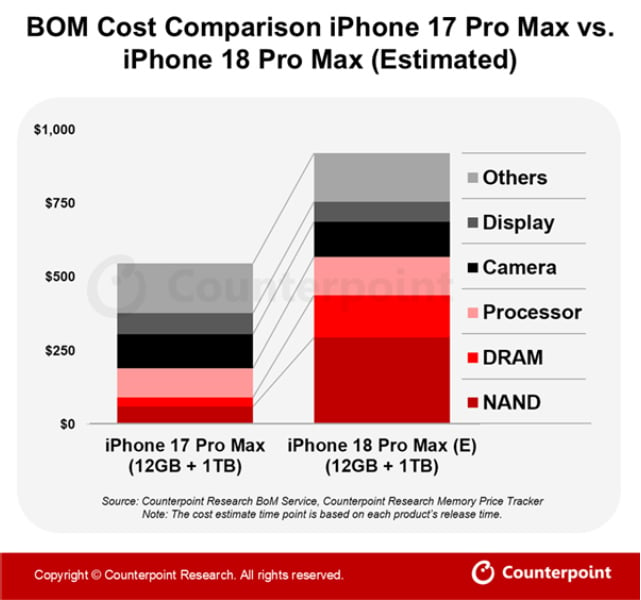
시장 조사 기관 Counterpoint Research의 최신 보고서에 따르면, iPhone 18 Pro Max의 제작 비용이 전년도 모델보다 높을 것으로 예상됩니다. 특히 1TB 모델의 경우, 동일한 용량의 iPhone 17 Pro Max와 비교했을 때 하드웨어 비용이 약 $300가량 더 증가할 전망입니다.
메모리 및 프로세서 관련 비용 요인
비용 상승을 유발하는 주요 원인은 다음과 같습니다.
- 메모리 가격: NAND flash 및 DRAM의 가격 상승이 부품 전체 비용을 끌어올리는 핵심 요인입니다. 특히 1TB와 같은 고용량 모델은 기본적으로 더 많은 메모리를 사용하기 때문에, 이러한 가격 변동에 따른 영향이 저용량 모델보다 훨씬 크게 나타납니다.
- 차세대 프로세서: iPhone 18 Pro Max에는 TSMC의 2nm 공정으로 제작된 Apple의 신형 A20 Pro 칩이 탑재될 예정입니다. 이 신공정은 성능과 전력 효율을 개선하지만, 제조 단가 또한 상승시켜 전체 하드웨어 비용에 반영됩니다.
부품별 비용 상쇄 및 전략적 가격 책정
모든 부품의 가격이 오르는 것은 아닙니다. Counterpoint는 디스플레이를 포함한 일부 부품의 제조 비용이 iPhone 17 Pro Max보다 낮아질 것으로 예상하며, 이는 메모리와 프로세서에서 발생한 비용 상승을 일부 상쇄할 수 있을 것으로 보고 있습니다.
또한 Apple은 저장 용량에 따라 가격 인상폭을 다르게 설정할 가능성이 높습니다. 고용량 모델이 NAND 가격 변화에 더 민감하게 반응하기 때문에, 모든 모델에 동일한 금액을 올리는 대신 용량별 차등 인상을 통해 수익성을 보호하려는 전략입니다.
Counterpoint는 iPhone 18 Pro Max의 평균 소매 가격이 $200 인상되더라도, 메모리 비용 부담으로 인해 실제 이익률은 iPhone 17 Pro Max보다 약간 낮아질 수 있다고 예측했습니다.
총평
iPhone 18 Pro Max는 고성능 A20 Pro 칩과 메모리 단가 상승으로 인해 제조 원가가 크게 높아질 전망입니다. 이에 따라 Apple은 수익성 확보를 위해 저장 용량에 따른 차등 가격 정책을 도입할 가능성이 높으며, 이는 기술적 진보와 비용 관리 사이의 균형을 맞추려는 전략으로 풀이됩니다.
Rising Manufacturing Costs for iPhone 18 Pro Max
According to a recent report from market research firm Counterpoint Research, the production costs for the iPhone 18 Pro Max are expected to be higher than those of its predecessor. Specifically, the 1TB model is projected to see hardware costs increase by approximately $300 compared to the same capacity on the iPhone 17 Pro Max.
Memory and Processor Cost Factors
The primary factors driving these cost increases are as follows:
- Memory Prices: Rising prices for NAND flash and DRAM are key drivers in pushing up total component costs. High-capacity models, such as the 1TB version, utilize more memory by default, making them significantly more susceptible to price fluctuations than lower-capacity models.
- Next-Generation Processor: The iPhone 18 Pro Max is expected to feature Apple's new A20 Pro chip manufactured on TSMC’s 2nm process. While this advanced manufacturing node improves performance and power efficiency, it also increases production costs, which are reflected in the overall hardware cost.
Component Offsets and Strategic Pricing
Not all components will see price increases. Counterpoint predicts that some parts, including the display, may have lower manufacturing costs than those of the iPhone 17 Pro Max, potentially offsetting some of the costs incurred from memory and processors.
Furthermore, Apple is likely to implement differentiated pricing based on storage capacity. Because high-capacity models are more sensitive to NAND price fluctuations, this strategy aims to protect profitability by applying tiered increases rather than a uniform price hike across all models.
Counterpoint predicts that even if the average retail price of the iPhone 18 Pro Max rises by $200, actual profit margins may be slightly lower than those of the iPhone 17 Pro Max due to the heavy burden of memory costs.
Overall Outlook
The iPhone 18 Pro Max is expected to see a significant rise in manufacturing costs due to the high-performance A20 Pro chip and rising memory prices. To maintain profitability, Apple will likely adopt a tiered pricing policy based on storage capacity, reflecting a strategy to balance technological advancement with cost management.
Summary
The iPhone 18 Pro Max faces higher production costs driven by the adoption of the A20 Pro chip and rising NAND flash/DRAM prices. To manage these costs while maintaining profitability, Apple is expected to implement differentiated pricing based on storage capacity. This strategy aims to balance high-end performance with effective cost management.
iPhone 18 Pro Maxの製造コスト上昇
市場調査機関Counterpoint Researchの最新レポートによると、iPhone 18 Pro Maxの製造コストは前モデルよりも高くなると予想されています。特に1TBモデルについては、同容量のiPhone 17 Pro Maxと比較して、ハードウェアコストが約300ドル増加する見通しです。
メモリおよびプロセッサに関するコスト要因
コスト上昇を引き起こす主な要因は以下の通りです。
- メモリ価格:NANDフラッシュおよびDRAMの価格上昇が、部品全体のコストを押し上げる主要な要因となっています。特に1TBのような大容量モデルは、構造的に多くのメモリを使用するため、これらの価格変動による影響が低容量モデルよりも顕著に現れます。
- 次世代プロセッサ:iPhone 18 Pro Maxには、TSMCの2nmプロセスで製造されるAppleの新チップ「A20 Pro」が搭載される予定です。この新プロセスは性能と電力効率を向上させますが、同時に製造単価も上昇させ、全体のハードウェアコストに反映されます。
部品別のコスト相殺と戦略的な価格設定
すべての部品の価格が上昇するわけではありません。Counterpointは、ディスプレイを含む一部の部品の製造コストがiPhone 17 Pro Maxよりも安くなると予測しており、これがメモリやプロセッサで発生したコスト増を一部相殺すると見ています。
また、Appleはストレージ容量に応じて値上げ幅を調整する可能性が高いです。高容量モデルはNANDの価格変動に敏感なため、全モデル一律の引き上げではなく、容量別の差別化された価格設定を行うことで収益性を保護しようとする戦略です。
Counterpointは、iPhone 18 Pro Maxの平均小売価格が200ドル上昇したとしても、メモリコストの負担により、実際の利益率はiPhone 17 Pro Maxよりもわずかに低くなる可能性があると予測しています。
まとめ
iPhone 18 Pro Maxは、高性能なA20 Proチップとメモリ単価の上昇により、製造原価が大幅に上昇する見通しです。これに伴い、Appleは収益性を確保するためにストレージ容量に応じた段階的な価格設定を導入する可能性が高く、技術革新とコスト管理のバランスを図る戦略をとると考えられます。
Rising Manufacturing Costs for iPhone 18 Pro Max
According to a recent report from market research firm Counterpoint Research, the production costs for the iPhone 18 Pro Max are expected to be higher than those of the previous year's model. Specifically, the hardware cost for the 1TB model is projected to increase by approximately $300 compared to the same capacity on the iPhone 17 Pro Max.
Memory and Processor Cost Factors
The primary factors driving these increased costs are as follows:
- Memory Prices: The rising prices of NAND flash and DRAM are key drivers pushing up total component costs. High-capacity models, such as the 1TB version, inherently use more memory, making them significantly more susceptible to price fluctuations compared to lower-capacity models.
- Next-Generation Processor: The iPhone 18 Pro Max is expected to feature Apple's new A20 Pro chip, manufactured using TSMC's 2nm process. While this advanced manufacturing process improves performance and power efficiency, it also increases production costs, which are reflected in the overall hardware expenses.
Component Offsetting and Strategic Pricing
Not all components are experiencing price hikes. Counterpoint predicts that some parts, including displays, may have lower manufacturing costs than those used in the iPhone 17 Pro Max, which could partially offset the cost increases seen in memory and processors.
Additionally, Apple is likely to implement differentiated pricing based on storage capacity. Because high-capacity models are more sensitive to NAND price fluctuations, this strategy aims to protect profit margins by applying specific price hikes for higher capacities rather than a uniform increase across all models.
Counterpoint predicts that even if the average retail price of the iPhone 18 Pro Max increases by $200, actual profit margins may be slightly lower than those of the iPhone 17 Pro Max due to the heavy burden of memory costs.
Summary
The iPhone 18 Pro Max faces significantly higher manufacturing costs driven by the adoption of the A20 Pro chip and rising NAND flash/DRAM prices. To balance technological advancement with profitability, Apple is expected to adopt a tiered pricing strategy based on storage capacity to mitigate the impact of these increased production costs.