신규 칩과 타우(τ) 법칙
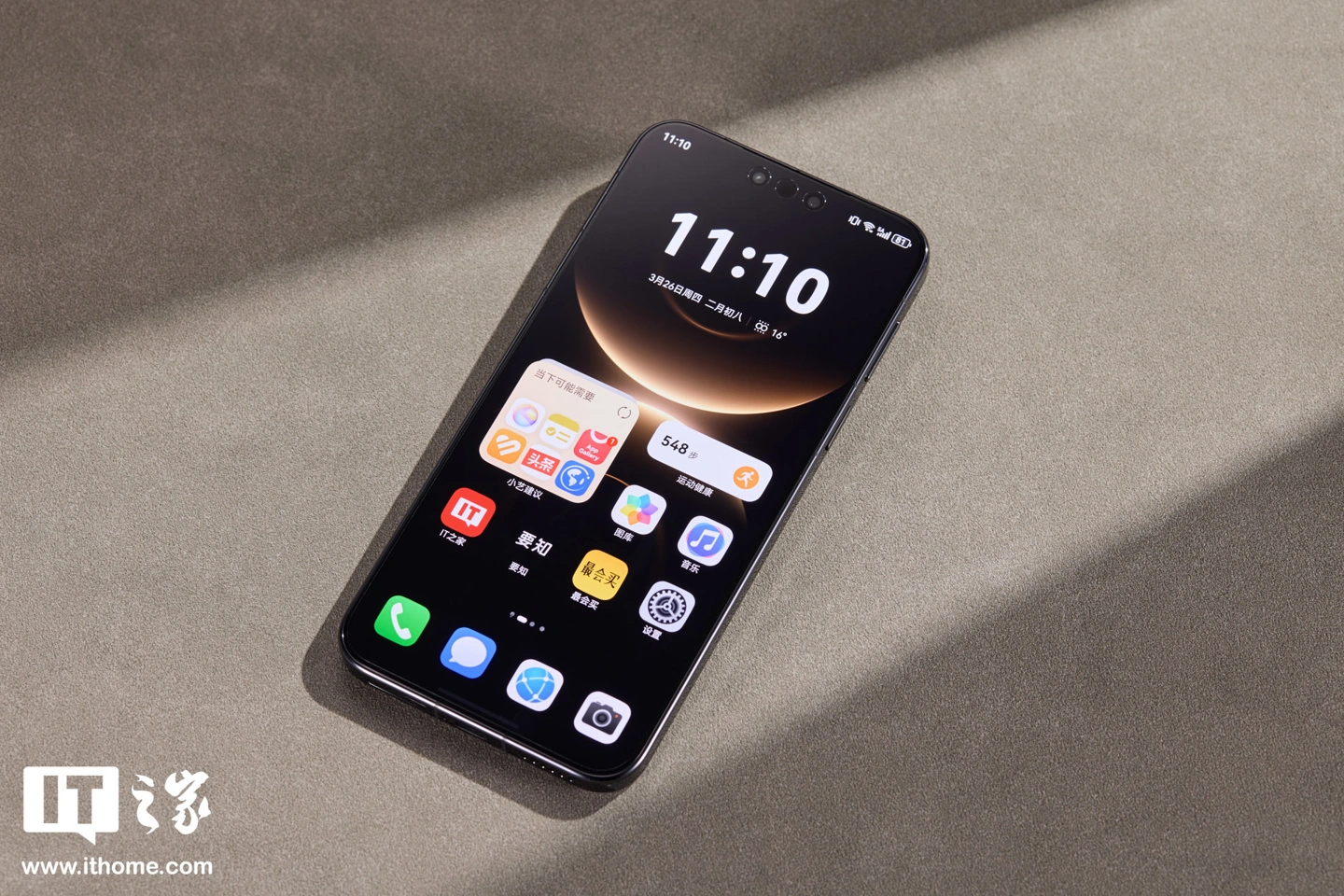
IT홈의 보도에 따르면, 올해 가을 출시 예정인 Huawei Mate 90 시리즈 스마트폰에 '타우(τ) 법칙'을 기반으로 한 새로운 Kirin 칩이 탑재될 계획입니다.
Huawei는 지난 5월 25일 열린 2026 국제 회로 및 시스템 심포지엄에서 Huawei 이사이자 반도체 사업부 사장인 He Tingbo가 7년 만에 대중 앞에 나타나, 반도체의 새로운 진화 경로인 '타우(τ) 법칙'을 처음으로 제시했습니다. 이는 중국이 글로벌 반도체 분야에서 산업 발전을 위한 새로운 원칙을 최초로 제시한 사례입니다.
기술 사양 및 성능 향상
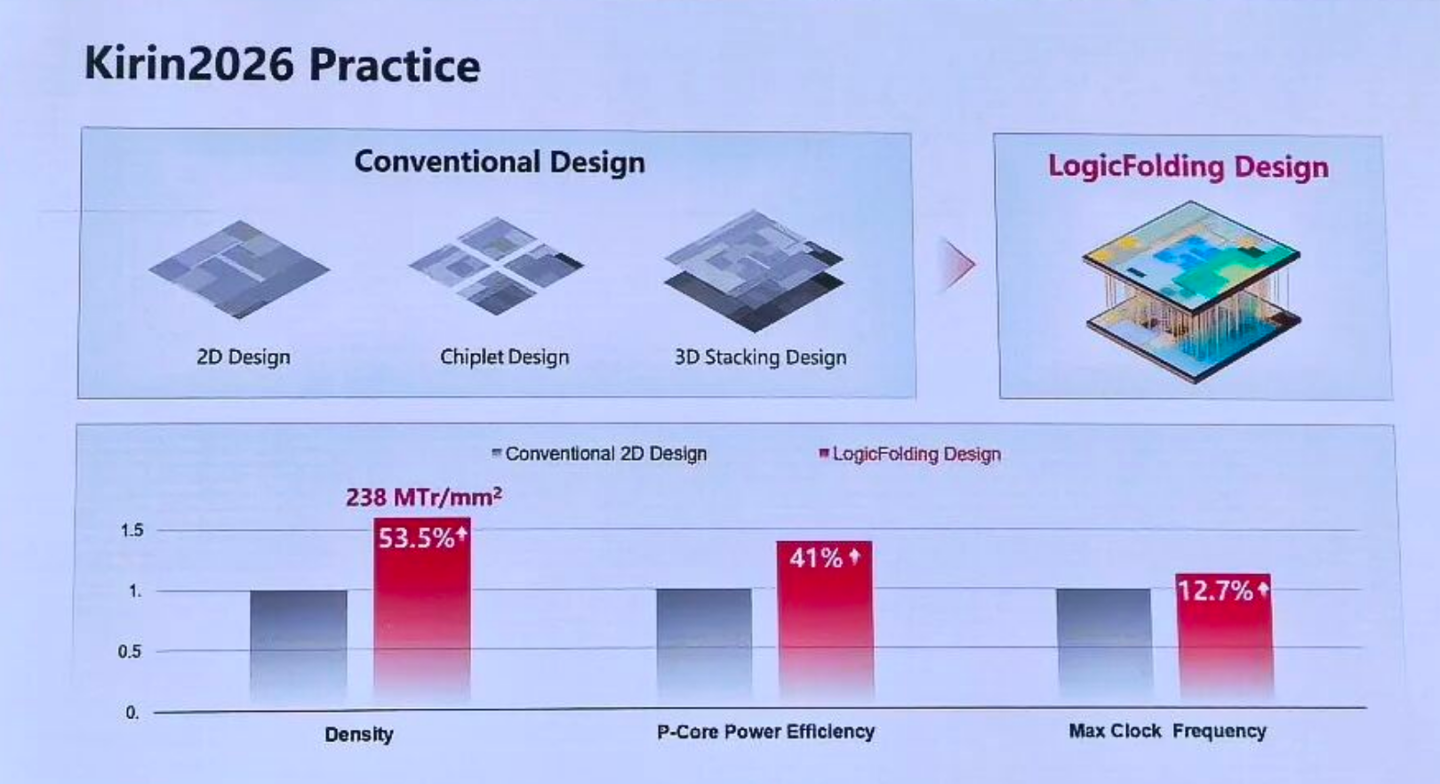
He Tingbo는 올해 가을 출시될 Kirin 모바일 칩에 LogicFolding 기술을 적용하여 성능을 대폭 향상시켰다고 밝혔습니다. 공식 명칭은 아직 발표되지 않은 Huawei Kirin 2026 칩의 주요 사양은 다음과 같습니다.
- 기존 2D 설계 칩 대비 트랜지스터 밀도 53.5% 향상 (238 MTr / mm² 달성)
- P-코어 효율 41% 향상
- 피크 주파수 12.7% 향상
향후 전망
타우(τ) 법칙에 따른 로드맵에 따르면, 2026년형 칩의 P-코어 주파수는 3.1GHz에 도달할 예정입니다. 앞서 보도된 Kirin 9030 Pro의 주파수가 2.75GHz인 점을 고려할 때, Kirin 2026 칩의 피크 주파수 12.7% 향상은 정확히 3.1GHz에 해당합니다.
또한 향후 주파수와 트랜지스터 밀도는 꾸준히 향상될 예정이며, 2031년에는 400+ MTr / mm²의 트랜지스터 밀도와 5.0GHz의 메인 주파수를 달성할 것으로 예상됩니다. 이 시점의 고성능 칩은 1.4nm 공정 수준과 동등한 트랜지스터 밀도를 갖추게 될 전망입니다.
총평
Huawei는 '타우(τ) 법칙'과 LogicFolding 기술을 도입하여 차세대 Kirin 칩의 성능을 대폭 강화하고 있습니다. 특히 Kirin 2026 칩은 트랜지스터 밀도와 P-코어 효율을 크게 개선하며, 2031년까지 고성능 반도체 목표를 달성하기 위한 기술적 기반을 마련했습니다.
新一代芯片与“韬定律”
华为计划在今年秋季发布的 Huawei Mate 90 系列手机中,搭载基于“韬(τ)定律”的新型麒麟芯片。该理念由华为半导体业务部总裁何庭波提出,是华为提出的半导体领域全新演进路径。
核心技术与性能提升
新一代麒麟 2026 芯片采用了逻辑折叠(LogicFolding)技术。相较于传统的 2D 设计芯片,其关键参数提升如下:
- 晶体管密度:提升 53.5%,达到 238 MTr / mm²
- P 核能效:提升 41%
- 峰值频率:提升 12.7%
技术路线与未来展望
根据“韬(τ)定律”的演进路径,相关芯片性能将持续稳步增长:
- 2026 年:P 核频率达到 3.1GHz(对比麒麟 9030 Pro 的 2.75GHz 有显著提升)。
- 2031 年预测:晶体管密度预计达到 400+ MTr / mm²,主频将达到 5.0GHz。
预计到 2031 年,基于该定律的高端芯片性能将达到 1.4 纳米制程的同等水平。
总结
Huawei Mate 90 系列将搭载采用“韬(τ)定律”和逻辑折叠技术的全新麒麟芯片。该技术显著提升了晶体管密度与能效,并建立了明确的性能增长路线,目标是让高端芯片在 2031 年达到 1.4 纳米制程的同等水平。
新チップと「タウ(τ)の法則」
ITホームの報道によると、今秋に発売予定のHuawei Mate 90シリーズスマートフォンには、「タウ(τ)の法則」に基づいた新しいKirinチップが搭載される計画です。
Huaweiは5月25日に開催された「2026年国際回路およびシステムシンポジウム」において、Huaweiのディレクター兼半導体事業部門責任者であるHe Tingbo氏が7年ぶりに公の場に登場し、半導体の新たな進化経路となる「タウ(τ)の法則」を初めて提示しました。これは、中国が世界の半導体分野における産業発展のための新しい原則を初めて提示した事例となります。
技術仕様および性能向上
He Tingbo氏は、今秋にリリースされるKirinモバイルチップにLogicFolding技術を適用することで、性能を大幅に向上させたと明らかにしました。正式名称はまだ発表されていませんが、Huawei Kirin 2026チップの主な仕様は以下の通りです。
- 従来の2D設計チップと比較してトランジスタ密度が53.5%向上(238 MTr/mm²を達成)
- Pコアの効率が41%向上
- ピーク周波数が12.7%向上
今後の展望
「タウ(τ)の法則」に基づくロードマップによると、2026年モデルのチップのPコア周波数は3.1GHzに達する予定です。先行して報じられたKirin 9030 Proの周波数が2.75GHzであることを考慮すると、Kirin 2026チップのピーク周波数12.7%向上は正確に3.1GHzに相当します。
また、今後も周波数とトランジスタ密度は着実に向上する見込みであり、2031年には400+ MTr/mm²のトランジスタ密度と5.0GHzのメイン周波数を達成すると予想されています。この時点での高性能チップは、1.4nmプロセスと同等のトランジスタ密度を備える見通しです。
総評
Huaweiは「タウ(τ)の法則」とLogicFolding技術を導入することで、次世代Kirinチップの性能を大幅に強化しています。特にKirin 2026チップはトランジスタ密度とPコア効率を大きく改善しており、2031年までの高性能半導体目標達成に向けた技術的基盤を確立しました。
まとめ
Huaweiは「タウ(τ)の法則」とLogicFolding技術を採用することで、次世代Kirinチップの性能を大幅に向上させています。これによりトランジスタ密度やPコア効率が改善され、2031年には1.4nmプロセス相当の高度な半導体性能を実現するロードマップを描いています。
New Chip and the Tau (τ) Law
According to a report by IT Home, the Huawei Mate 90 series, scheduled for release this fall, will feature new Kirin chips based on the "Tau (τ) Law."
On May 25, at the 2026 International Circuit and System Symposium, He Tingbo, a Director and President of the Semiconductor Division at Huawei, appeared in public for the first time in seven years to introduce the "Tau (τ) Law" as a new evolutionary path for semiconductors. This marks the first instance of China proposing a new principle for industrial development within the global semiconductor field.
Technical Specifications and Performance Improvements
He Tingbo stated that LogicFolding technology has been applied to the Kirin mobile chips launching this fall to significantly enhance performance. While the official name has not yet been announced, the key specifications of the Huawei Kirin 2026 chip are as follows:
- 53.5% increase in transistor density compared to existing 2D design chips (achieving 238 MTr/mm²)
- 41% improvement in P-core efficiency
- 12.7% increase in peak frequency
Future Outlook
According to the roadmap based on the Tau (τ) Law, the P-core frequency of the 2026 model chips is expected to reach 3.1GHz. Considering that the previously reported Kirin 9030 Pro has a frequency of 2.75GHz, the 12.7% increase in peak frequency for the Kirin 2026 chip corresponds exactly to 3.1GHz.
Furthermore, both frequency and transistor density are expected to improve steadily. By 2031, it is projected that these chips will achieve a transistor density of over 400+ MTr/mm² and a main frequency of 5.0GHz. At that point, high-performance chips are expected to possess transistor densities equivalent to the 1.4nm process level.
Summary
Huawei is significantly boosting the performance of its next-generation Kirin chips by implementing the "Tau (τ) Law" and LogicFolding technology. The Kirin 2026 chip specifically improves transistor density and P-core efficiency, establishing a technical foundation to achieve high-performance semiconductor targets by 2031.
Mate 90 系列搭载基于“韬定律”的新麒麟芯片
华为计划在今年秋季发布的 Mate 90 系列手机中,搭载基于“韬(τ)定律”新路径设计的全新麒麟芯片。该理念由 Huawei 半导体业务部总裁何庭波提出,旨在为半导体领域提供新的演进路径。
核心技术与性能参数
新款麒麟芯片采用了逻辑折叠(LogicFolding)技术。相比于传统的 2D 设计芯片,其关键性能指标显著提升:
- 晶体管密度:提升 53.5%,达到 238 MTr / mm²
- P 核能效:提升 41%
- 峰值频率:提升 12.7%,达到 3.1GHz(相比麒麟 9030 Pro 的 2.75GHz 有明显跨越)
未来技术路线规划
根据“韬(τ)定律”的演进路径,相关性能指标将持续稳步提升。预计到 2031 年,高端芯片的晶体管密度将达到 400+MTr / mm²,主频将达到 5.0GHz。
总结
Huawei 将在 Mate 90 系列中搭载采用逻辑折叠技术的新款麒麟芯片。该芯片通过“韬定律”显著提升了晶体管密度和 P 核性能,并为未来到 2031 年的高端芯片演进提供了明确的技术路径。
新チップと「タウ(τ)の法則」
ITホームの報道によると、今秋に発売予定のHuawei Mate 90シリーズスマートフォンには、「タウ(τ)の法則」に基づいた新しいKirinチップが搭載される計画です。
この概念は、Huaweiの半導体事業部門責任者であるHe Tingbo氏によって提唱されたもので、半導体の新たな進化経路として提示されました。これは、中国が世界の半導体分野において独自の産業発展に向けた新原則を初めて提示した事例として注目されています。
技術仕様と性能向上
He Tingbo氏は、今秋リリースされるKirinモバイルチップにLogicFolding技術を適用することで、性能を大幅に向上させたと述べています。正式名称はまだ発表されていませんが、Huawei Kirin 2026チップの主な仕様は以下の通りです。
- 従来の2D設計チップと比較してトランジスタ密度が53.5%向上(238 MTr/mm²を達成)
- Pコアの効率が41%向上
- ピーク周波数が12.7%向上
今後の展望
「タウ(τ)の法則」に基づくロードマップによると、2026年モデルのチップのPコア周波数は3.1GHzに達する予定です。先行して報じられたKirin 9030 Proの周波数が2.75GHzであることを考慮すると、Kirin 2026チップのピーク周波数12.7%向上は正確に3.1GHzに相当します。
また、今後も周波数とトランジスタ密度は着実に向上する見込みであり、2031年には400+ MTr/mm²のトランジスタ密度と5.0GHzのメイン周波数を達成すると予測されています。この時点での高性能チップは、1.4nmプロセスと同等のトランジスタ密度を備える見通しです。
まとめ
Huaweiは「タウ(τ)の法則」とLogicFolding技術を導入することで、次世代Kirinチップのトランジスタ密度とPコア効率を大幅に向上させています。この戦略により、2031年までに1.4nmプロセス相当の高度な半導体性能を実現するための強固な技術基盤を構築しています。
New Chip and the Tau (τ) Law
According to reports from IT Home, the Huawei Mate 90 series, scheduled for release this fall, will feature new Kirin chips based on the "Tau (τ) Law."
He Tingbo, Director and President of the Semiconductor Division at Huawei, introduced the "Tau (τ) Law" as a new evolutionary path for semiconductors during the 2026 International Circuit and System Symposium. This marks the first instance of China proposing a new principle for industrial development within the global semiconductor field.
Technical Specifications and Performance Improvements
He Tingbo stated that LogicFolding technology has been applied to the Kirin mobile chips launching this fall to significantly enhance performance. While the official name of the chip has not yet been announced, the key specifications for the Huawei Kirin 2026 chip are as follows:
- 53.5% increase in transistor density compared to existing 2D design chips (achieving 238 MTr/mm²)
- 41% improvement in P-core efficiency
- 12.7% increase in peak frequency
Future Outlook
According to the roadmap based on the Tau (τ) Law, the P-core frequency of the 2026 model chips is expected to reach 3.1GHz. Considering that the previously reported Kirin 9030 Pro has a frequency of 2.75GHz, the 12.7% increase in peak frequency for the Kirin 2026 chip corresponds exactly to 3.1GHz.
Furthermore, both frequency and transistor density are expected to improve steadily. By 2031, it is projected that these chips will achieve a transistor density of over 400 MTr/mm² and a main frequency of 5.0GHz. At that point, high-performance chips using this technology are expected to possess transistor densities equivalent to the 1.4nm process level.
Summary
Huawei is significantly boosting the performance of its next-generation Kirin chips by implementing the "Tau (τ) Law" and LogicFolding technology. The Kirin 2026 chip improves transistor density and P-core efficiency, establishing a technical foundation to achieve high-performance semiconductor targets by 2031.