시장 전망
CounterPoint Research는 2026년 전 세계 폴더블 디스플레이 스마트폰 시장이 조정 단계를 마치고 본격적인 성장에 진입할 것으로 예측했습니다.
- 2026년 연간 출하량: 약 2,750만 개 (전년 대비 약 24% 증가)
- 2026년 연간 출하액: 약 44억 달러 (전년 대비 약 48% 증가)
- 출하 비중: 하반기(3분기 및 4분기)에 전체의 약 64%가 집중될 것으로 예상
이러한 성장세는 Samsung의 제품 주기, 하반기 Apple의 패널 구매량 증가, 그리고 중국 스마트폰 제조사들의 후속 대응 속도에 의해 영향을 받을 것으로 보입니다.
브랜드 분석
Apple이 첫 폴더블 스마트폰(출시 후 iPhone Ultra로 예상)을 출시하며 시장에 진입함에 따라 브랜드별 점유율은 다음과 같이 전망됩니다.
- Samsung: 약 31% (1위 유지)
- Apple: 약 29% (첫해 기준)
- Huawei: 약 24%
Apple의 참가는 시장 규모를 확대하고, 더 높은 평균 판매가(ASP), 강화된 신뢰성, 그리고 낮은 접힘 자국을 갖춘 대형 가로형 폴더블 제품으로 경쟁의 초점을 이동시킬 것으로 분석됩니다.
공급망 및 제조사
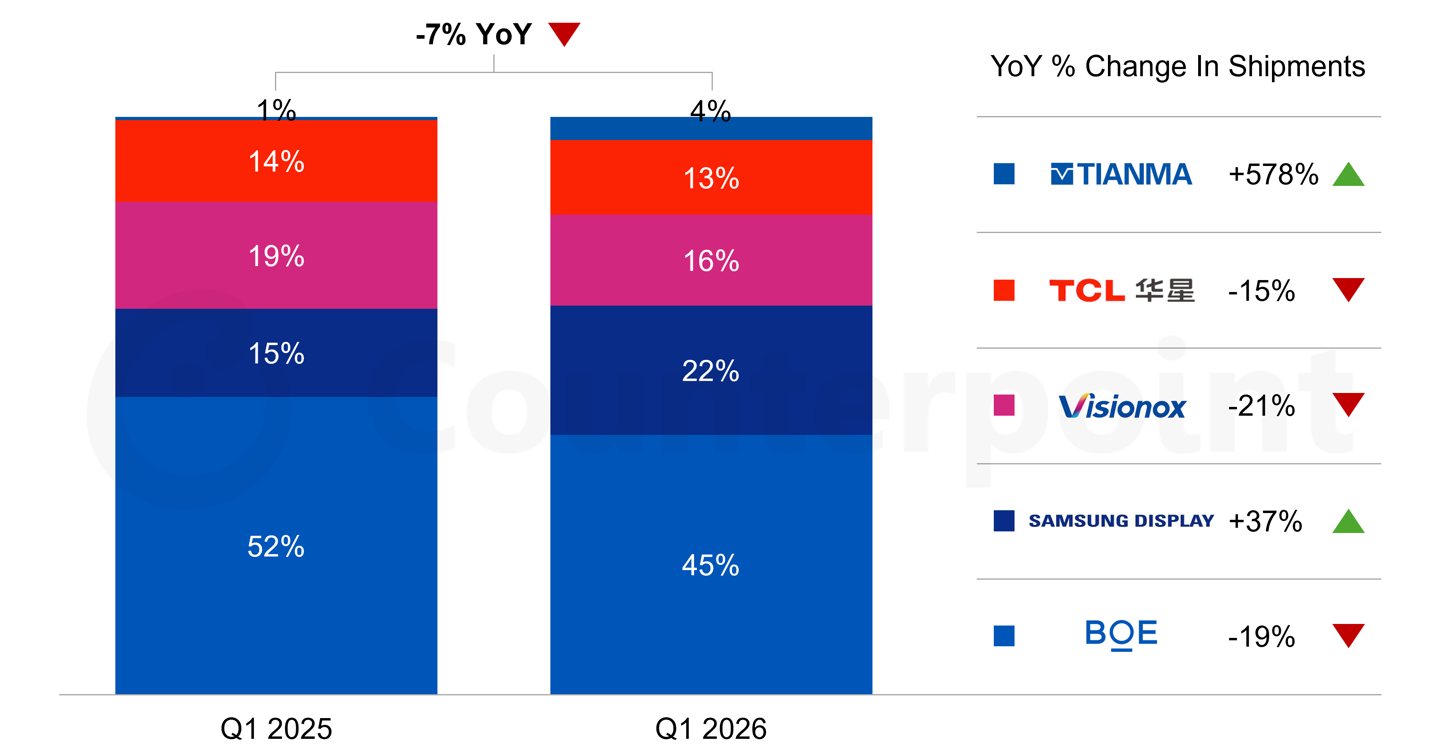
2026년 1분기에는 브랜드들의 재고 관리 및 신제품 출시 감소로 인해 전 세계 폴더블 디스플레이 스마트폰 패널 출하량이 전년 대비 약 7% 감소한 390만 개 수준이 될 것으로 보입니다.
주요 공급사별 점유율은 다음과 같습니다.
- BOE: 약 45%
- Samsung Display: 약 22%
- Visionox: 약 16%
- TCL CSOT: 약 13%
- Tianma: 약 4%
총평
2026년 폴더블 스마트폰 시장은 Apple의 참전과 하반기 수요 집중에 힘입어 큰 성장이 예상됩니다. 특히 기술적 경쟁은 고사양 및 대형 가로형 제품으로 이동할 것이며, BOE가 시장 내 높은 점유율을 유지할 것으로 보입니다.
2026年折叠屏市场预测
CounterPoint Research 预测,全球折叠式显示屏智能手机面板市场将在 2026 年结束调整阶段。预计全年出货量约为 2750 万片(同比增长约 24%),产值预估为 44 亿美元(同比增长约 48%)。
受 Samsung 产品周期、Apple 面板采购爬坡以及中国厂商跟进节奏的影响,市场反弹主要集中在下半年,第三季度和第四季度合计出货量预计占全年约 64%。
品牌份额与 Apple 的影响
Apple 首款折叠手机(预估名称为 iPhoneUltra)预计将在 2026 年夺取 29% 的全球折叠屏市场份额。虽然 Apple 不会立即取代 Samsung 和 Huawei,但其入场将推动市场规模扩大。
- Samsung:约 31%
- Apple:约 29%
- Huawei:约 24%
Apple 的加入将促使竞争重点转向更高平均售价、更强可靠性以及更低折痕的大尺寸横向内折产品。
面板供应商出货占比
预计 2026 年第一季度全球折叠屏面板出货量约为 390 万片(同比下降 7%)。
- BOE:约 45%
- Samsung Display:约 22%
- Visionox:约 16%
- TCL CSOT:约 13%
- Tianma:约 4%
总结
CounterPoint Research 预测 Apple 的入局将成为 2026 年折叠屏市场的重要驱动力,推动产值和出货量显著增长。虽然 Samsung 仍将保持领先地位,但 Apple 的加入将推动行业向更高性能、更强可靠性的高端产品方向演进。
市場見通し
CounterPoint Researchは、2026年の世界的な折りたたみ式ディスプレイ(フォルダブル)スマートフォン市場が調整局面を終え、本格的な成長期に入ると予測しています。
- 2026年 年間出荷量:約2,750万台(前年比 約24%増)
- 2026年 年間出荷額:約44億ドル(前年比 約48%増)
- 出荷の集中度:下半期(第3四半期および第4四半期)に全体の約64%が集中する見込み
この成長傾向は、Samsungの製品サイクル、下半期におけるAppleのパネル購入量の増加、および中国メーカーによる迅速な追随によって後押しされると見られています。
ブランド分析
Appleが初の折りたたみスマートフォン(発売後「iPhone Ultra」となる見込み)を投入して市場に参入することで、ブランド別のシェアは以下のように予測されています。
- Samsung:約31%(首位を維持)
- Apple:約29%(初年度ベース)
- Huawei:約24%
Appleの参入により市場規模が拡大するだけでなく、より高い平均販売単価(ASP)、信頼性の向上、そして折り目(クリース)の低減を備えた大型横型フォルダブル製品へと競争の焦点が移ると分析されています。
サプライチェーンおよびメーカー
2026年第1四半期は、各ブランドの在庫管理や新製品発表の減少により、世界的な折りたたみ式ディスプレイスマホのパネル出荷量は前年比約7%減の390万個程度に留まると予想されています。
主要サプライヤー別のシェアは以下の通りです。
- BOE:約45%
- Samsung Display:約22%
- Visionox:約16%
- TCL CSOT:約13%
- Tianma:約4%
まとめ
2026年の折りたたみスマートフォン市場は、Appleの参入と下半期の需要集中により大幅な成長が見込まれます。技術的な競争軸は高スペックな大型横型製品へとシフトし、供給網においてはBOEが高いシェアを維持する見通しです。
Market Outlook
CounterPoint Research predicts that the global foldable display smartphone market will move past its adjustment phase and enter a period of significant growth in 2026.
- 2026 Annual Shipments: Approximately 27.5 million units (an increase of about 24% year-over-year)
- 2026 Annual Shipment Value: Approximately $4.4 billion (an increase of about 48% year-over-year)
- Shipment Concentration: Approximately 64% of total shipments are expected to be concentrated in the second half of the year (Q3 and Q4)
This growth trend is expected to be influenced by Samsung's product cycles, an increase in Apple's panel purchases during the second half of the year, and the rapid response of Chinese smartphone manufacturers.
Brand Analysis
As Apple enters the market with its first foldable smartphone (expected to be launched as "iPhone Ultra"), brand market shares are projected as follows:
- Samsung: Approximately 31% (maintaining the top position)
- Apple: Approximately 29% (for its debut year)
- Huawei: Approximately 24%
Analysis suggests that Apple's entry will expand the market scale and shift the focus of competition toward large horizontal foldable products featuring higher Average Selling Prices (ASP), enhanced reliability, and reduced crease marks.
Supply Chain and Manufacturers
In Q1 2026, global shipments of foldable display smartphone panels are expected to decrease by approximately 7% year-over-year to around 3.9 million units due to brand inventory management and a reduction in new product launches.
Market share by major suppliers is as follows:
- BOE: Approximately 45%
- Samsung Display: Approximately 22%
- Visionox: Approximately 16%
- TCL CSOT: Approximately 13%
- Tianma: Approximately 4%
Summary
The foldable smartphone market is expected to see significant growth in 2026, driven by Apple's entry into the segment and a concentration of demand in the second half of the year. Competition will shift toward high-specification, large horizontal devices while BOE is expected to maintain its dominant position in the supply chain.
2026年折叠屏市场预测
CounterPoint Research 预计,全球折叠式显示屏智能手机面板市场将在 2026 年结束调整阶段。预计该年度出货量约为 2750 万片(同比增长约 24%),出货金额预估为 44 亿美元(同比增长约 48%)。
从时间线来看,市场反弹主要集中在下半年,其中第三季度和第四季度合计出货量预计占全年约 64%。这一趋势受到 Samsung 产品周期、Apple 下半年面板采购爬坡以及中国厂商后续跟进节奏的影响。
品牌竞争与 Apple 的影响
Apple 首款折叠手机(预估名为 iPhoneUltra)的加入将推动市场规模扩大,并将竞争重点推向更高平均售价、更强可靠性和更低折痕的大尺寸横向内折产品。虽然 Apple 不会立即取代 Samsung 和 Huawei,但其入场将显著改变市场格局。
2026 年主要品牌面板采购份额预测:
- Samsung: 约 31%
- Apple: 约 29%
- Huawei: 约 24%
供应链与出货量细节
在 2026 年第一季度,由于品牌控制库存及新品发布减少,全球折叠屏面板出货量预计约为 390 万片(同比下降 7%)。
主要面板供应商的份额预测如下:
- BOE (京东方): 约 45%
- Samsung Display: 约 22%
- Visionox (维信诺): 约 16%
- TCL CSOT (TCL 华星): 约 13%
- Tianma (天马): 约 4%
总结
2026 年全球折叠屏市场预计将进入快速增长期,出货量和金额均有显著提升。Apple 首款折叠手机的加入将成为核心驱动力,推动行业向高品质、高可靠性的高端产品方向转型。
市場見通し
CounterPoint Researchは、2026年の世界的な折りたたみ式ディスプレイ(フォルダブル)スマートフォン市場が調整局面を終え、本格的な成長期に入ると予測しています。
- 2026年 年間出荷量:約2,750万台(前年比 約24%増)
- 2026年 年間出荷額:約44億ドル(前年比 約48%増)
- 出荷の集中度:下半期(第3四半期および第4四半期)に全体の約64%が集中する見込み
この成長傾向は、Samsungの製品サイクル、下半期におけるAppleのパネル購入量の増加、および中国メーカーによる迅速な追随によって後押しされると見られています。
ブランド分析
Appleが初の折りたたみスマートフォン(「iPhone Ultra」と予想される)を投入して市場に参入することで、ブランド別のシェアは以下のように予測されています。
- Samsung:約31%(首位を維持)
- Apple:約29%(初年度ベース)
- Huawei:約24%
Appleの参入により市場規模が拡大するだけでなく、より高い平均販売単価(ASP)、信頼性の向上、そして折り目(クリース)の低減を備えた大型横型フォルダブル製品へと競争の焦点が移ると分析されています。
サプライチェーンと製造メーカー
2026年第1四半期は、各ブランドの在庫管理や新製品発表の減少により、世界的な折りたたみ式ディスプレイのパネル出荷量は前年比約7%減の390万個程度に留まると予想されています。
主要サプライヤー別のシェアは以下の通りです。
- BOE:約45%
- Samsung Display:約22%
- Visionox:約16%
- TCL CSOT:約13%
- Tianma:約4%
まとめ
2026年の折りたたみスマートフォン市場は、Appleの参入と下半期の需要集中により大幅な成長が見込まれます。技術的な競争軸は高スペックな大型横型製品へとシフトし、供給網においてはBOEが高いシェアを維持する見通しです。
Market Outlook
CounterPoint Research predicts that the global foldable display smartphone market will move past its adjustment phase and enter a period of significant growth in 2026.
- 2026 Annual Shipments: Approximately 27.5 million units (an increase of about 24% year-over-year)
- 2026 Annual Shipment Value: Approximately $4.4 billion (an increase of about 48% year-over-year)
- Shipment Concentration: Approximately 64% of total shipments are expected to be concentrated in the second half of the year (Q3 and Q4)
This growth trend is expected to be influenced by Samsung's product cycles, an increase in Apple's panel procurement during the second half of the year, and the rapid response of Chinese smartphone manufacturers.
Brand Analysis
As Apple enters the market with its first foldable smartphone (expected to be launched as "iPhone Ultra"), brand market shares are projected as follows:
- Samsung: Approximately 31% (maintaining the top position)
- Apple: Approximately 29% (for its debut year)
- Huawei: Approximately 24%
Analysis suggests that Apple's entry will expand the market scale and shift the focus of competition toward large horizontal foldable products featuring higher Average Selling Prices (ASP), enhanced reliability, and reduced crease marks.
Supply Chain and Manufacturers
In Q1 2026, global shipments of foldable display smartphone panels are expected to decrease by approximately 7% year-over-year to around 3.9 million units due to brand inventory management and a reduction in new product launches.
Market share by major suppliers is as follows:
- BOE: Approximately 45%
- Samsung Display: Approximately 22%
- Visionox: Approximately 16%
- TCL CSOT: Approximately 13%
- Tianma: Approximately 4%
Summary
The foldable smartphone market is expected to experience significant growth in 2026, driven by Apple's entry into the segment and a concentration of demand in the second half of the year. Competition will shift toward high-specification, large horizontal devices while BOE is expected to maintain its dominant position in the supply chain.