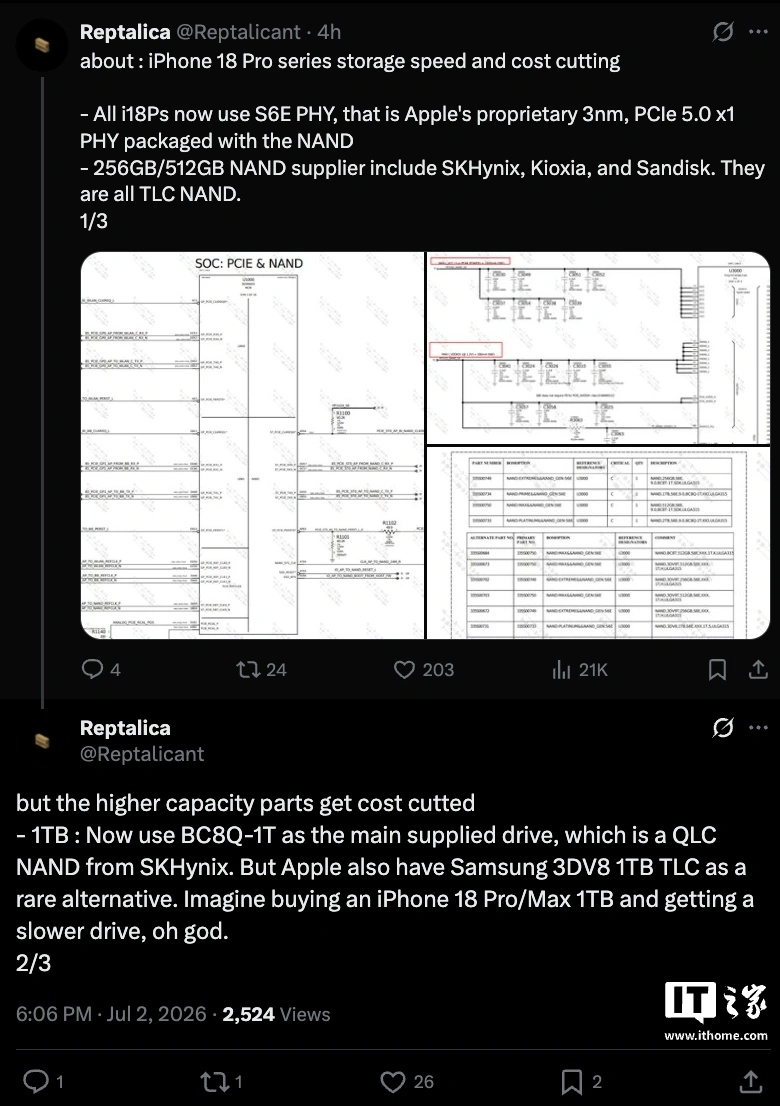
저장 장치 사양
IT홈의 소식에 따르면, 정보원 Reptalica가 공개한 내용에 의하면 Apple iPhone 18 Pro 시리즈 중 256GB 및 512GB 모델은 계속해서 TLC NAND 플래시 메모리를 채택할 예정이며, 공급업체로는 SK하이닉스, Kioxia, SanDisk가 포함됩니다.
반면 1TB 버전에서는 Apple이 TLC와 QLC 혼용 방식을 채택할 예정이며, 주로 SK하이닉스의 BC8Q-1T QLC NAND를 사용하고 소량의 Samsung 3DV8 1TB TLC NAND를 사용할 예정입니다. 또한 2TB 버전 모델은 SK하이닉스의 BC8Q-2T QLC NAND를 전량 채택할 것으로 알려졌습니다.
기술 비교 및 성능
공개된 정보에 따르면, TLC 플래시는 각 저장 단위당 3비트의 데이터를 저장할 수 있어 일반적으로 더 안정적이고 빠른 쓰기 속도를 제공하며 내구성 또한 QLC보다 우수하지만 비용이 더 높습니다. 반면 QLC 플래시는 단위당 4비트의 데이터를 저장하여 비용은 낮고 용량은 크지만, 쓰기 속도가 느리고 안정성과 수명이 상대적으로 떨어집니다. 이는 고사양 iPhone 18 Pro 모델에서 오히려 성능 저하가 발생할 수 있음을 의미합니다.
분석 및 전망
외신 wccftech는 Apple의 이러한 조치가 비용 절감을 위한 것이며, NAND 비용이 지속적으로 상승하는 상황에서 수익 균형을 찾기 위한 방법이라고 분석했습니다. 다만 고사양 버전에 대한 이러한 변화는 하이엔드 사용자의 불만을 초래할 수 있으며, 이는 256GB 및 512GB 버전의 가성비를 더욱 매력적으로 보이게 할 수 있습니다.
총평
Apple은 iPhone 18 Pro 시리즈에서 용량에 따라 TLC와 QLC 플래시를 차등 적용함으로써 NAND 비용 상승에 따른 수익 균형을 도모하고 있습니다. 이러한 전략은 고용량 모델의 성능 저하로 인한 하이엔드 사용자들의 불만을 야기할 수 있는 동시에, 중저용량 모델의 가성비를 높이는 결과로 이어질 수 있습니다.
iPhone 18 Pro 系列存储方案
据 Reptalica 消息,Apple iPhone 18 Pro 系列不同容量的机型将采用不同的 NAND 闪存技术:
- 256GB 和 512GB 版本:继续采用 TLC NAND 闪存,供应商包括 SK 海力士、铠侠和闪迪。
- 1TB 版本:采用 TLC 与 QLC 混用方案,主要使用 SK 海力士的 BC8Q-1T QLC NAND,并少量使用 Samsung 3DV8 1TB TLC NAND。
- 2TB 版本:据称将全面采用 SK 海力士的 BC8Q-2T QLC NAND。
TLC 与 QLC 技术对比
两种闪存技术在性能与成本上存在明显差异:
- TLC 闪存:每个单元存储 3 bit 数据,具有更稳定的写入速度和更好的耐用性,但生产成本较高。
- QLC 闪存:每个单元存储 4 bit 数据,成本更低且容量更大,但写入速度较慢,稳定性与寿命相对逊色。
成本控制与市场影响
分析认为,Apple 此举主要是为了在 NAND 成本上涨的背景下平衡利润。然而,高配机型采用 QLC 可能导致性能退步并引起高端用户不满,但同时也可能提升 256GB 和 512GB 版本在性价比方面的吸引力。
总结
Apple 计划在 iPhone 18 Pro 系列的高容量型号(1TB 及 2TB)中引入 QLC 闪存以应对成本压力。这一策略旨在平衡利润,但可能导致高配机型性能略逊于低配版本,从而影响高端用户的体验。
ストレージ仕様
ITホームの報道および情報源Reptalicaの公開情報によると、Apple iPhone 18 Proシリーズにおけるモデル別のフラッシュメモリ採用計画は以下の通りです。
- 256GBおよび512GBモデル:TLC NANDフラッシュを採用(サプライヤー:SK hynix、Kioxia、SanDiskなど)
- 1TBモデル:TLCとQLCの混在方式を採用(主にSK hynix BC8Q-1T QLCを使用し、少量のSamsung 3DV8 1TB TLCを併用)
- 2TBモデル:SK hynix BC8Q-2T QLC NANDを全面的に採用
技術比較と性能
公開された情報によると、TLCフラッシュとQLCフラッシュには以下のような特性の違いがあります。
- TLCフラッシュ:1ユニットあたり3ビットのデータを保存。安定性が高く、書き込み速度が速く、耐久性も優れるが、コストは高め。
- QLCフラッシュ:1ユニットあたり4ビットのデータを保存。低コストで大容量を実現できるが、書き込み速度が遅く、安定性と寿命は比較的劣る。
この技術的な差異により、ハイエンドなiPhone 18 Proモデルにおいて、特定の条件下でパフォーマンスの低下が発生する可能性があることが示唆されています。
分析と展望
海外メディアwccftechは、Appleによるこの動きをコスト削減のための戦略であると分析しています。NANDの価格が高騰し続ける中で収益バランスを確保するための措置ですが、ハイエンドモデルにおけるこのような変更は、ヘビーユーザーの不満を招く可能性があります。一方で、この動向により256GBや512GBといった中容量モデルのコストパフォーマンスがより魅力的に映る可能性もあります。
まとめ
AppleはiPhone 18 Proシリーズにおいて、容量に応じてTLCとQLCフラッシュを使い分けることで、NANDコストの上昇に対する収益バランスの最適化を図っています。この戦略は、高容量モデルのユーザーに性能面での懸念を与える可能性がある一方で、中容量モデルの価値を高める結果につながる可能性があります。
Storage Specifications
According to reports from IT Home citing source Reptalica, the iPhone 18 Pro series will utilize different types of NAND flash memory depending on the storage capacity chosen by the user.
- 256GB and 512GB Models: These models will continue to use TLC NAND flash memory from suppliers including SK hynix, Kioxia, and SanDisk.
- 1TB Model: This model will adopt a hybrid approach using both TLC and QLC. It is expected to primarily use SK hynix BC8Q-1T QLC NAND with a small amount of Samsung 3DV8 1TB TLC NAND.
- 2TB Model: This model is reported to exclusively use SK hynix BC8Q-2T QLC NAND.
Technology Comparison and Performance
The technical differences between these two types of flash memory impact both performance and cost:
- TLC (Triple-Level Cell): Stores 3 bits of data per cell. It is generally more stable, offers faster write speeds, and has better durability than QLC, but it comes at a higher production cost.
- QLC (Quad-Level Cell): Stores 4 bits of data per cell. While it provides larger capacity at a lower cost, it features slower write speeds and lower reliability/longevity compared to TLC.
These differences imply that high-capacity iPhone 18 Pro models may experience performance degradation compared to the lower-capacity versions due to the use of QLC memory.
Analysis and Outlook
The outlet wccftech suggests that Apple's decision is a strategic move toward cost reduction to balance profit margins amidst rising NAND costs. However, this shift in high-end models could lead to dissatisfaction among power users who prioritize performance, potentially making the 256GB and 512GB versions appear more attractive in terms of value for money.
Summary
Apple is expected to differentiate between TLC and QLC NAND flash memory across different storage capacities in the iPhone 18 Pro series to manage rising production costs. While this strategy helps balance profit margins, it may result in performance disparities that could lead some users to prefer mid-range capacity models.
存储设备规格
根据 IT Home 引用的信息源 Reptalica 的消息,Apple iPhone 18 Pro 系列将根据不同容量的机型采用不同的 NAND 闪存技术:
- 256GB 和 512GB 版本:继续采用 TLC NAND 闪存,供应商包括 SK hynix、Kioxia 和 SanDisk。
- 1TB 版本:采用 TLC 与 QLC 混合方案,主要使用 SK hynix BC8Q-1T QLC NAND,并少量使用 Samsung 3DV8 1TB TLC NAND。
- 2TB 版本:据称将全面采用 SK hynix BC8Q-2T QLC NAND。
技术对比与性能
根据公开信息,TLC 与 QLC 闪存在性能和成本上存在显著差异:
- TLC 闪存:每个单元存储 3 bit 数据,通常提供更稳定的写入速度和更好的耐用性,但生产成本较高。
- QLC 闪ern:每个单元存储 4 bit 数据,虽然成本较低且容量更大,但写入速度较慢,稳定性与寿命相对较低。
这些技术差异意味着在高性能的 iPhone 18 Pro 高容量型号中,可能会出现性能下降的情况。
分析与展望
外媒 wccftech 分析称,Apple 此举是为应对 NAND 成本持续上涨而采取的成本削减策略,旨在平衡利润。然而,高配机型采用 QLC 可能导致高端用户不满,同时可能让 256GB 和 512GB 版本在性价比上更具吸引力。
总结
Apple 在 iPhone 18 Pro 系列中根据容量差异采取 TLC 与 QLC 的不同配置,旨在应对 NAND 成本上涨带来的利润平衡问题。这一策略可能导致高容量机型出现性能下降而影响高端用户体验,但同时也提升了中低容量型号的性价比竞争力。
ストレージ仕様
IT Homeの報道および情報源Reptalicaの公開情報によると、Apple iPhone 18 Proシリーズでは、選択する容量によって異なるNANDフラッシュメモリ技術を採用する計画です。
- 256GBおよび512GBモデル:TLC NANDフラッシュを継続採用。サプライヤーにはSK hynix、Kioxia、SanDiskが含まれます。
- 1TBモデル:TLCとQLCの混在方式を採用。主にSK hynixのBC8Q-1T QLC NANDを使用し、少量のSamsung 3DV8 1TB TLC NANDを組み合わせて使用します。
- 2TBモデル:SK hynixのBC8Q-2T QLC NANDを全面的に採用する見込みです。
技術比較と性能
公開された情報に基づくと、TLCフラッシュとQLCフラッシュには性能とコストの面で明確な違いがあります。
- TLC(Triple-Level Cell):1セルあたり3ビットのデータを保存。安定性が高く、書き込み速度が速く、耐久性にも優れていますが、製造コストは高くなります。
- QLC(Quad-Level Cell):1セルあたり4ビットのデータを保存。低コストで大容量を実現できる一方で、書き込み速度が遅く、信頼性と寿命はTLCに比べて劣ります。
この技術的な差異により、高容量モデルのiPhone 18 Proにおいて、特定の条件下でパフォーマンスの低下が発生する可能性があることが示唆されています。
分析と展望
海外メディアwccftechは、Appleによるこの動きをNANDコストの上昇に対する収益バランスを確保するための戦略的なコスト削減策であると分析しています。しかし、ハイエンドモデルでのQLC採用は、パフォーマンスを重視するヘビーユーザーの不満を招く可能性がある一方で、256GBや512GBといった中容量モデルのコストパフォーマンスをより魅力的に見せる結果にもなり得ます。
まとめ
AppleはiPhone 18 Proシリーズにおいて、NANDコストの高騰に対応するため、容量に応じてTLCとQLCフラッシュを使い分ける戦略をとっています。この方針により、高容量モデルでは性能の差異が生じる可能性がある一方で、中容量モデルの価値が相対的に高まる可能性があります。
Storage Specifications
According to reports from IT Home citing source Reptalica, the iPhone 18 Pro series will utilize different types of NAND flash memory depending on the storage capacity selected by the user:
- 256GB and 512GB Models: These models will continue to use TLC NAND flash memory from suppliers including SK hynix, Kioxia, and SanDisk.
- 1TB Model: This model will adopt a hybrid approach using both TLC and QLC. It is expected to primarily utilize SK hynix BC8Q-1T QLC NAND with a small amount of Samsung 3DV8 1TB TLC NAND.
- 2TB Model: This model is reported to exclusively use SK hynix BC8Q-2T QLC NAND.
Technology Comparison and Performance
There are significant differences between the two flash technologies regarding performance, cost, and durability:
- TLC (Triple-Level Cell): Stores 3 bits of data per cell. It is generally more stable, offers faster write speeds, and has better durability than QLC, but it comes with a higher production cost.
- QLC (Quad-Level Cell): Stores 4 bits of data per cell. While it provides larger capacity at a lower cost, it features slower write speeds and lower reliability/longevity compared to TLC.
These technical differences imply that high-capacity iPhone 18 Pro models may experience performance degradation compared to the lower-capacity versions due to the integration of QLC memory.
Analysis and Outlook
The outlet wccftech suggests that Apple's decision is a strategic move toward cost reduction to balance profit margins amidst rising NAND costs. However, this shift in high-end models could lead to dissatisfaction among power users who prioritize performance. Conversely, this strategy may make the 256GB and 512GB versions appear more attractive in terms of value for money.
Summary
Apple plans to differentiate between TLC and QLC NAND flash memory across different storage capacities in the iPhone 18 Pro series to manage rising production costs. While this strategy helps balance profit margins, it may result in performance disparities that could lead some users to prefer mid-range capacity models.