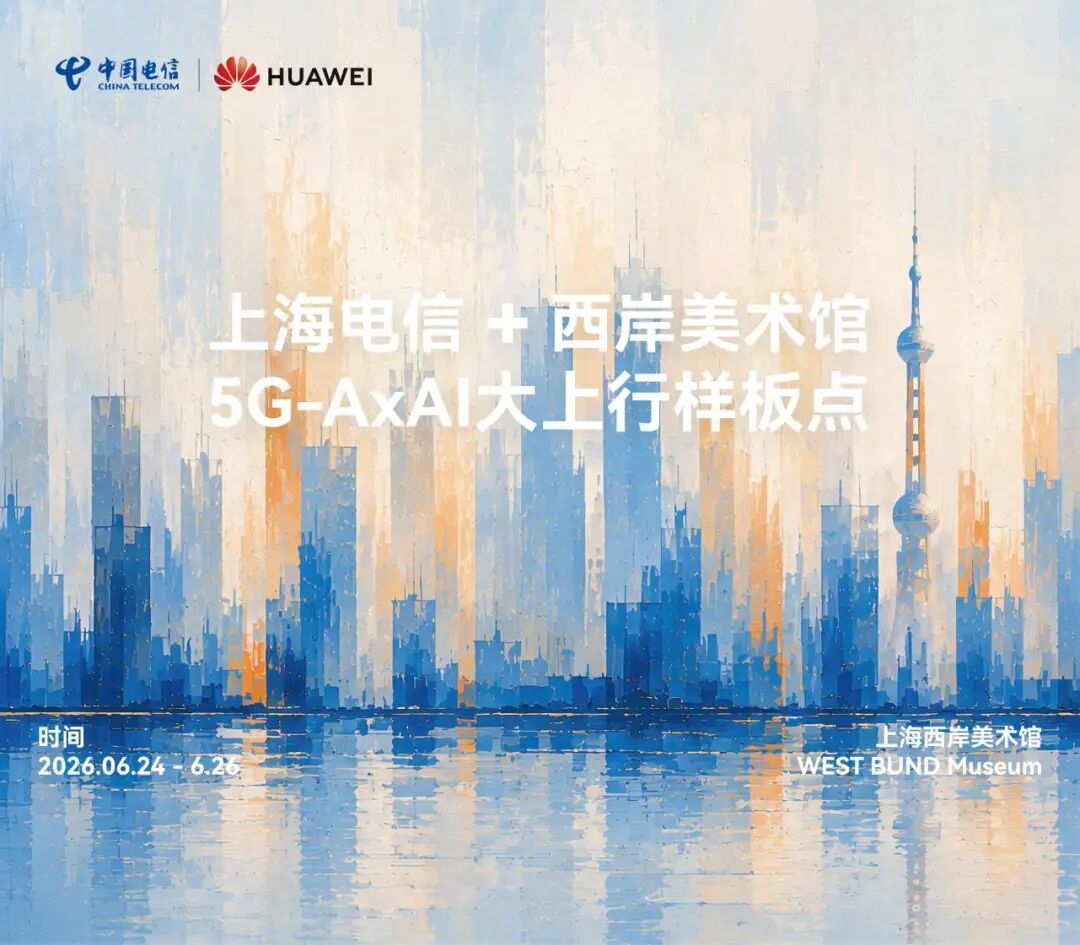
5G-A 및 AI 기반 대용량 업링크 시범 거점 구축
IT홈에 따르면, Huawei는 2026년 세계 이동통신대회(MWC) 상하이 개막을 앞두고 중국전신(China Telecom) 상하이 분사와 협력하여 상하이 서부안 미술관에 '5G-A×AI 대용량 업링크 시범 거점'을 구축했다고 발표했습니다.
서비스 환경 및 기술 검증
해당 시범 거점은 스마트 문화 관광 시나리오를 바탕으로 대용량 업링크 네트워크의 기술적 장점과 상업적 가치를 집중적으로 선보입니다. 서부안 미술관은 인구 밀도가 높고 건축물에 의한 신호 차단이 많은 복잡한 환경으로, 이동 네트워크의 업링 성능을 검증하기에 적합한 대표적인 시나리오를 제공합니다.
시범 거점은 전시 현장에서 중국전신 및 Huawei가 구축한 전국 최초 5G-A×AI 대용량 업링크 상용 네트워크를 기반으로 AI 글래스, 멀티모드 AI 상호작용 등 다양한 시나리오를 실질적인 환경에서 체계적으로 시연합니다.
Mobile AI 시대의 요구사항 변화
지난 30여 년간 다운로드 속도는 이동 네트워크를 측정하는 거의 유일한 척도였습니다. 그러나 Mobile AI 시대에 접어들면서 AI 스마트폰, AI 글래스, 구체화된 지능(Embodied Intelligence) 로봇 등 단말 기치가 급속히 확산되고 있으며, AIGC 실시간 생성, 멀티모드 실시간 상호작용, 고화질 비디오 전송 등의 시나리오가 등장함에 따라 네트워크 업링크 대역폭, 전송 안정성, 저지연 및 동시 처리 능력에 대한 요구가 더욱 높아지고 있습니다.
2026년 3월 스페인 바르셀로나에서 개최된 MWC 2026 기간 동안 GSMA는 주요 운영사 및 글로벌 산업 파트너와 함께 '대용량 업링크 네트워크 이니셔티브'를 공식 발표했습니다. 이를 통해 GigaUplink를 네트워크 진화의 우선 방향으로 확립하고, '어디서나 20Mbps, 피크 1Gbps' 등의 핵심 성능 지표를 제시했습니다.
중국전신 수석 과학자 비치(Bi Qi)는 Mobile AI의 본격적인 폭발적 성장이 네트워크를 '다운로드 우선'에서 '업링크와 다운링크의 균형 및 지연 시간이 결정적인 경험 지표가 되는 단계'로 나아가게 한다고 강조했습니다.
인프라 구축 및 성능
상하이 전신은 2026년 3월부터 전국 최초의 5G-A×AI 대용량 업링크 상용 네트워크 구축을 추진해 왔습니다. 현재까지 상하이 전신과 Huawei는 5G-A 3CC 기지국 3,400여 개를 구축했으며, F+T 5G-A 다중 캐리어 집성 및 대용량 업링크 기술을 바탕으로 실측 업링크 피크 속도 1Gbps, 다운로드 피크 속도 약 4Gbps를 달성했습니다.
현재 핵심 구역 내의 번화가, 보행자 거리 등 주요 시나리오에서 어디서나 20Mbps 업링크 연속 커버리지를 구현했으며, 2026년 말까지 중심부 전체 지역에 대한 커버리지를 확대할 예정입니다.
실질적 응용 사례 및 비교 테스트
서부안 미술관 시범 거점에서 상하이 전신과 Huawei는 다양한 Mobile AI 비즈니스 사례를 선보였습니다. 특히 Huawei AI 글래스는 현장의 핵심 체험 장비로, 전시물의 고화질 이미지와 비디오 스트림을 실시간으로 수집하고 5G-A 네트워크를 통해 클라우드 '샤오이(Xiaoyi) 봐라' 지능체에 전송하여 정밀 분석을 수행하며, 즉각적으로 작품의 배경 및 예술적 의미 등의 맞춤형 해설 내용을 제공합니다.
Huawei는 해당 시나리오가 다수의 사용자가 동시에 관람하는 고부하 요구를 안정적으로 수용하며 실시간으로 매끄럽게 작동함을 확인했다고 밝혔습니다. 또한 AI 글래스를 활용한 인물 인식, 사물 인식, 실시간 다국어 대화, QR 코드 결제 등 핸즈프리 상호작용 시나리오도 함께 선보였습니다.
또한 현장에서는 'Doubao' AI 비교 테스트가 진행되었습니다. 두 대의 단말이 각각 2.1GHz 8T8R과 1.8GHz 4T4R 네트워크에 접속하여 동일한 멀티모드 비즈니스를 실행했습니다. 실측 결과, 2.1GHz 8T8R 네트워크에서 AI 상호작용 응답이 더 빠르고 출력이 안정적이며 정확했던 반면, 1.8GHz 4T4R 링크에서는 1~2초의 응답 지연이 발생했습니다. 8T8R은 4T4R에 비해 업링크 커버리지가 3~5dB 향상되었고, 업링크 용량은 두 배로 증가했습니다.
총평
상하이 전신과 Huawei는 협력을 통해 5G-A 기술 기반의 대용량 업링크 네트워크를 구축하고 이를 활용한 다양한 Mobile AI 시나리오를 성공적으로 구현했습니다. 특히 고도화된 안테나 구성(8T8R)을 통해 안정적인 데이터 전송과 빠른 응답 속도를 확보하며 차세대 이동통신 환경의 가능성을 입증했습니다.
5G-A×AI 大上行样板点发布
中国电信股份有限公司上海分公司联合 Huawei 在上海徐汇西岸美术馆打造了 5G-A×AI 大上行样板点。该样板点以智慧文旅场景为载体,旨在复杂建筑环境及高人流场景中展示大上行网络的技术优势与商用价值,重点支持 AI 眼镜、多模态 AI 交互等应用。
行业趋势与“大上行”倡议
随着 Mobile AI 时代的到来,AI 手机、具身智能机器人及 AIGC 实时生成等场景对网络上行带宽、稳定性及低时延提出了更高要求。GSMA 已于 2026 年 3 月发布“大上行网络倡议”,确立 GigaUplink 为演进方向。
- 核心能力指标:泛在 20Mbps、峰值 1Gbps。
上海电信与 Huawei 网络建设成果
上海电信携手 Huawei 已建立相关商用网络,通过技术升级提升上行性能:
- 基站规模:已建成 5G-A 3CC 站点 3400 余站。
- 核心技术:采用 F+T 5G-A 多载波聚合和大上行技术。
- 实测性能:上行峰值速率达 1Gbps,下行峰值速率近 4Gbps。
- 覆盖目标:核心商圈已实现泛在 20Mbps 上行连续覆盖,预计 2026 年底覆盖整个中心城区。
典型业务演示与技术对比
样板点通过 Huawei AI 眼镜展示了高清图像回传、多模态交互、人脸识别及跨语言对话等功能。现场还对不同网络配置下的性能进行了实测对比:
- 2.1GHz 8T8R 网络:上行覆盖提升 3 至 5dB,上行容量翻倍,AI 交互响应更快且结果稳定。
- 1.8GHz 4T4R 网络:在同等业务下存在 1 至 2 秒的响应延迟。
总结
中国电信与 Huawei 通过在上海建立 5G-A×AI 大上行样板点,展示了支持高带宽、低时延的大上行网络能力。实测数据证明了 8T8R 技术在提升 AI 眼镜等移动端设备交互体验方面的显著优势。
5G-AおよびAIベースの大容量アップリンク試行拠点の構築
ITホームの報道によると、Huaweiは2026年の世界移動通信大会(MWC)上海開幕を前に、China Telecomの上海分社と協力し、上海の西灘美術館(West Bund Museum)に「5G-A×AI 大容量アップリンク試行拠点」を構築したと発表しました。
サービス環境および技術検証
この試行拠点はスマート文化観光シナリオに基づき、大容量アップリンクネットワークの技術的な利点と商業的価値を重点的に披露するものです。西灘美術館は人口密度が高く、建築物による信号遮断が多い複雑な環境であり、移動ネットワークのアップリンク性能を検証するための代表的なシナリオを提供します。
試行拠点では、展示現場においてChina TelecomおよびHuaweiが構築した国内初となる5G-A×AI 大容量アップリンク商用ネットワークを基盤とし、AIグラスやマルチモードAI相互作用など、多様なシナリオを実際の環境で体系的に実演します。
Mobile AI時代の要求の変化
過去30年以上にわたり、ダウンロード速度は移動ネットワークを測定するほぼ唯一の尺度でした。しかし、Mobile AI時代に突入し、AIスマートフォン、AIグラス、具現知能(Embodied Intelligence)ロボットなどの端末が急速に普及しています。AIGCのリアルタイム生成、マルチモードのリアルタイム相互作用、高画質ビデオ転送などのシナリオが登場するにつれ、ネットワークのアップリンク帯域幅、伝送安定性、低遅延、および同時処理能力に対する要求がさらに高まっています。
2026年3月にスペインのバルセロナで開催されたMWC 2026期間中、GSMAは主要な通信事業者およびグローバル産業パートナーと共に「大容量アップリンクネットワーク・イニシアチブ」を公式に発表しました。これにより、GigaUplinkをネットワーク進化の優先方向として確立し、「どこでも20Mbps、ピーク1Gbps」といった主要な性能指標を提示しました。
China Telecomの主席科学者であるビッチ(Bi Qi)氏は、Mobile AIの本格的な爆発的成長により、ネットワークが「ダウンロード優先」から「アップリンクとダウンリンクのバランス、および遅延時間が決定的な体験指標となる段階」へと移行していることを強調しました。
インフラ構築と性能
China Telecom(上海)は2026年3月より、国内初の5G-A×AI 大容量アップリンク商用ネットワークの構築を推進してきました。現在までに、China Telecom(上海)とHuaweiは5G-A 3CC基地局を約3,400基構築しており、F+T 5G-Aマルチキャリアアグリゲーションおよび大容量アップリンク技術に基づき、実測アップリンクピーク速度1Gbps、ダウンロードピーク速度約4Gbpsを達成しました。
現在、主要なシナリオである繁華街や歩行者エリアにおいて、どこでも20Mbpsのアップリンク連続カバレッジを実現しており、2026年末までに中心部全域へのカバレッジ拡大を予定しています。
実質的な応用事例および比較テスト
西灘美術館の試行拠点で、China Telecom(上海)とHuaweiは多様なMobile AIビジネス事例を披露しました。特にHuaweiのAIグラスは現場の核心的な体験機器として、展示物の高画質画像やビデオストリームをリアルタイムで収集し、5G-Aネットワークを通じてクラウド上の「シャオイ(Xiaoyi)見て」知能体に送信して精密な分析を行い、作品の背景や芸術的意味などのカスタマイズされた解説を即座に提供します。
Huaweiは、このシナリオが多数のユーザーが同時に観覧する高負荷な要求を安定して受け入れ、リアルタイムでスムーズに動作することを確認したと述べています。また、AIグラスを活用した人物認識、物体認識、リアルタイム多言語対話、QRコード決済などのハンズフリー相互作用シナリオも共に披露されました。
さらに、現場では「Doubao」のAI比較テストが行われました。2台の端末がそれぞれ2.1GHz 8T8Rと1.8GHz 4T4Rネットワークに接続し、同一のマルチモードビジネスを実行しました。実測の結果、2.1GHz 8T8RネットワークではAI相互作用の応答がより速く、出力も安定しており正確であったのに対し、1.8GHz 4T4Rリンクでは1〜2秒の応答遅延が発生しました。8T8Rは4T4Rと比較してアップリンクカバレッジが3〜5dB向上し、アップリンク容量は2倍に増加しました。
まとめ
China Telecom(上海)とHuaweiは協力により、5G-A技術に基づく大容量アップリンクネットワークを構築し、Mobile AIの多様なシナリオを成功裏に実現しました。特に高度なアンテナ構成(8T8R)を採用することで、安定したデータ転送と高速な応答速度を確保し、次世代移動通信環境の可能性を実証しました。
Establishment of 5G-A and AI-based Large Capacity Uplink Pilot Site
According to IT Home, Huawei announced that it has collaborated with China Telecom's Shanghai branch to establish a "5G-A x AI Large Capacity Uplink Pilot Site" at the West Bund Museum. This initiative was launched ahead of the opening of M1026 (Mobile World Congress) in Shanghai.
Service Environment and Technical Verification
Based on smart cultural tourism scenarios, this pilot site focuses on demonstrating the technical advantages and commercial value of large-capacity uplink networks. The West Bund Museum provides a representative scenario for testing mobile network uplink performance due to its high population density and complex environment where buildings often block signals.
The pilot site utilizes China Telecom and Huawei's first nationwide 5G-A x AI large capacity uplink commercial network. It systematically demonstrates various scenarios in a real-world environment, including AI glasses and multi-mode AI interactions.
Changing Requirements of the Mobile AI Era
For the past 30 years, download speed was the primary metric for measuring mobile networks. However, with the rise of the Mobile AI era, devices such as AI smartphones, AI glasses, and embodied intelligence robots are proliferating rapidly. As scenarios like real-time AIGC generation, multi-mode real-time interaction, and high-definition video transmission emerge, demands for network uplink bandwidth, transmission stability, low latency, and concurrent processing capabilities are increasing.
During MWC 2026 in Barcelona, Spain, GSMA officially announced the "Large Capacity Uplink Network Initiative" alongside major operators and global industrial partners. This initiative established GigaUplink as a priority for network evolution, setting key performance indicators such as "20Mbps everywhere, peak 1Gbps."
Bi Qi, Chief Scientist at China Telecom, emphasized that the rapid growth of Mobile AI is pushing networks from a "download-first" model toward a stage where both uplink and downlink are balanced, and latency becomes a critical metric for user experience.
Infrastructure Construction and Performance
China Telecom Shanghai has been working to build the nation's first 5G-A x AI large capacity uplink commercial network since March 2026. To date, China Telecom and Huawei have deployed over 3,400 5G-A 3CC base stations. Utilizing F+T 5G-A multi-carrier aggregation and large capacity uplink technologies, they achieved the following results:
- Peak Uplink Speed: 1Gbps
- Peak Downlink Speed: Approximately 4Gbps
Currently, continuous 20Mbps uplink coverage has been implemented in key areas such as busy streets and pedestrian zones. Coverage is planned to expand across the entire central area by the end of 2026.
Practical Applications and Comparative Testing
At the West Bund Museum pilot site, China Telecom and Huawei showcased various Mobile AI business cases. Specifically, Huawei AI glasses served as a core experience device; they collect high-definition images and video streams from exhibits in real-time and transmit them via the 5G-A network to the "Xiaoyi" cloud intelligence system for precise analysis. This allows the system to provide immediate tailored explanations regarding the background and artistic meaning of the works.
Huawei confirmed that this scenario operates smoothly in real-time, even under high loads from multiple concurrent users. Additionally, hands-free interaction scenarios using AI glasses—such as person recognition, object recognition, real-time multi-language conversation, and QR code payments—were also demonstrated.
A "Doubao" AI comparison test was also conducted on-site. Two devices performed the same multi-mode business while connected to different networks: 2.1GHz 8T8R and 1.8GHz 4T4R. The results showed that the 2.1GHz 8T8R network provided faster responses and more stable, accurate outputs for AI interactions, whereas the 1.8GHz 4T4R link experienced a delay of 1 to 2 seconds. Furthermore, 8T8R improved uplink coverage by 3-5dB and doubled the uplink capacity compared to 4T4R.
Summary
Huawei and China Telecom have successfully established a 5G-A based large capacity uplink network to support advanced Mobile AI applications like real-time content analysis and multi-modal interactions. By utilizing high-end antenna configurations such as 8T8R, the partnership demonstrated significant improvements in transmission stability and speed, proving the potential of next-generation mobile communications.
5G-A×AI 大上行样板点发布
中国电信股份有限公司上海分公司联合 Huawei 在上海西岸美术馆打造了 5G-A×AI 大上行样板点。该项目以智慧文旅场景为载体,旨在复杂建筑环境(如人流密集、墙体遮挡多)中展示大上行网络的技术优势与商用价值,特别针对 AI 眼镜、多模态 AI 交互等前沿应用进行实景演示。
Mobile AI 与“大上行”趋势
随着 AI 眼镜、具身智能机器人及 AIGC 实时生成等场景的普及,移动网络正从“下行优先”转向“上下行并重”。GSMA 已在 2026 年发布“大上行网络倡议”,确立 GigaUplink 为演进方向,提出“泛在 20Mbps、峰值 1Gbps”的核心能力指标。
技术参数与覆盖能力
上海电信携手 Huawei 构建的 5G-A×AI 大上行商用网络具备以下核心规格:
- 已建成 5G-A 3CC 站点 3400 余站。
- 采用 F+T 5G-A 多载波聚合和大上行技术。
- 实测上行峰值速率达 1Gbps,下行峰值速率近 4Gbps。
- 核心商圈已实现泛在 20Mbps 上行连续覆盖,预计到 2026 年底将覆盖整个中心城区。
实景应用与对比测试
样板点展示了基于 Huawei AI 眼镜的多种功能,包括实时采集高清视频流、多模态交互及跨语言对话等。在针对“豆包”AI 业务的对比测试中:
- 2.1GHz 8T8R 网络:上行覆盖提升 3 至 5dB,上行容量翻倍,AI 交互响应更快且结果稳定。
- 1.8GHz 4T4R 网络:在相同业务下存在 1 至 2 秒的响应延迟。
总结
中国电信与 Huawei 在上海联合打造了基于 5G-A 技术的大上行样板点,旨在满足 Mobile AI 时代对高带宽、低时延的需求。通过先进的多载波聚合技术,该网络实现了极高的上行峰值速率,为 AI 眼镜等新式终端提供了稳定的多模态交互体验。
5G-AおよびAIベースの大容量アップリンク試行拠点の構築
ITホームの報道によると、Huaweiは2026年の世界移動通信大会(MWC)上海開幕を前に、China Telecomの上海分社と協力し、上海の西灘美術館(West Bund Museum)に「5G-A×AI 大容量アップリンク試行拠点」を構築したと発表しました。この拠点はスマート文化観光シナリオをベースとしており、複雑な建築環境や人流の多い場所において、大容量アップリンクネットワークの技術的利点と商用価値を実証することを目的としています。
この試行拠点では、China TelecomおよびHuaweiが構築した国内初となる5G-A×AI 大容量アップリンク商用ネットワークを活用し、AIグラスやマルチモードAI相互作用など、多様なシナリオを実際の環境で体系的に実演しています。西灘美術館は人口密度が高く、建物による信号遮断が多い複雑な環境であるため、移動ネットワークのアップリンク性能を検証するための理想的なフィールドとなっています。
Mobile AI時代の要求の変化
過去30年以上にわたり、ダウンロード速度は移動ネットワークを評価するほぼ唯一の指標でした。しかし、Mobile AI時代への移行に伴い、AIスマートフォン、AIグラス、具現知能(Embodied Intelligence)ロボットなどのデバイスが急速に普及しています。AIGCのリアルタイム生成、マルチモードのリアルタイム相互作用、高画質ビデオ転送といったシナリオの登場により、ネットワークのアップリンク帯域幅、伝送安定性、低遅延、および同時処理能力に対する要求が急増しています。
2026年3月にスペインのバルセロナで開催されたMWC 2026において、GSMAは主要な通信事業者やグローバルパートナーと共に「大容量アップリンクネットワーク・イニシアチブ」を公式に発表しました。これにより、GigaUplinkがネットワーク進化の優先方向として確立され、以下の主要な性能指標が提示されました。
- どこでも20Mbps、ピーク1Gbps
China Telecomの主席科学者であるビッチ(Bi Qi)氏は、Mobile AIの爆発的な成長により、ネットワークは「ダウンロード優先」から「アップリンクとダウンリンクのバランス、および遅延時間が決定的な体験指標となる段階」へと移行していることを強調しました。
インフラ構築と性能
China Telecom(上海)は2026年3月より、国内初の5G-A×AI 大容量アップリンク商用ネットワークの構築を進めてきました。現在までに、China Telecom(上海)とHuaweiは以下の成果を達成しています。
- 基站規模:5G-A 3CC基地局を約3,400基構築
- 核心技術:F+T 5G-A 多重キャリアアグリゲーションおよび大容量アップリンク技術を採用
- 実測性能:アップリンクのピーク速度1Gbps、ダウンロードのピーク速度約4Gbpsを達成
- カバレッジ:主要な繁華街や歩行者エリアにおいて「どこでも20Mbps」のアップリンク連続カバレッジを実現。2026年末までに中心部全域への拡大を予定。
実質的な応用事例および比較テスト
西灘美術館の試行拠点では、様々なMobile AIビジネス事例が披露されました。特にHuaweiのAIグラスは核心的な体験機器として活用されており、展示物の高画質画像やビデオストリームをリアルタイムで収集し、5G-Aネットワークを通じてクラウド上の「シャオイ(Xiaoyi)見て」知能体に送信して精密な分析を行い、作品の背景や芸術的意味などのカスタマイズされた解説を即座に提供します。
Huaweiは、このシナリオが多数のユーザーが同時に観覧する高負荷な要求を安定して受け入れ、リアルタイムでスムーズに動作することを確認したと述べています。また、AIグラスを活用した人物認識、物体認識、リアルタイム多言語対話、QRコード決済などのハンズフリー相互作用シナリオも実演されました。
さらに、現場では「Doubao」のAI比較テストが行われました。2台の端末をそれぞれ異なるネットワーク構成に接続し、同一のマルチモードビジネスを実行した結果、以下の違いが確認されました。
- 2.1GHz 8T8Rネットワーク:AI相互作用の応答がより速く、出力も安定しており正確であった。
- 1.8GHz 4T4Rネットワーク:同等の業務において1〜2秒の応答遅延が発生した。
- 技術的優位性:8T8Rは4T4Rと比較してアップリンクカバレッジが3〜5dB向上し、アップリンク容量は2倍に増加した。
まとめ
China Telecom(上海)とHuaweiは協力により、5G-A技術に基づく大容量アップリンクネットワークを構築し、Mobile AIの多様なシナリオを成功裏に実現しました。特に高度なアンテナ構成(8T8R)を採用することで、高負荷環境下でも安定したデータ転送と高速な応答速度を確保し、次世代移動通信環境の可能性を実証しました。
Establishment of 5G-A and AI-based Large Capacity Uplink Pilot Site
According to IT Home, Huawei has collaborated with the Shanghai branch of China Telecom to establish a "5G-A x AI Large Capacity Uplink Pilot Site" at the West Bund Museum in Shanghai. This initiative was launched ahead of MWC 2026 to showcase advanced network capabilities.
Service Environment and Technical Validation
The pilot site is designed around a smart cultural tourism scenario to demonstrate the technical advantages and commercial value of large capacity uplink networks. The West Bund Museum provides an ideal testing environment due to its high population density and complex architectural structures, which often cause signal obstruction in mobile networks.
Based on the first 5G-A x AI large capacity uplink commercial network established by China Telecom and Huawei, the site systematically demonstrates various scenarios in a real-world environment, including AI glasses and multi-mode AI interactions.
Evolving Requirements of the Mobile AI Era
For over 30 years, download speed was the primary metric for measuring mobile networks. However, with the arrival of the Mobile AI era—characterized by the rapid expansion of AI smartphones, AI glasses, and embodied intelligence robots—there is a growing demand for uplink bandwidth, transmission stability, low latency, and concurrent processing capabilities to support real-time AIGC generation, multi-mode interaction, and high-definition video transmission.
During MWC 2026 in Barcelona, GSMA officially announced the "Large Capacity Uplink Network Initiative" alongside major operators and global industry partners. This initiative establishes GigaUplink as a priority for network evolution, setting key performance indicators of "20Mbps everywhere and a peak of 1Gbps."
Bi Qi, Chief Scientist at China Telecom, emphasized that the rapid growth of Mobile AI is shifting networks from a "download-first" model to a stage where balanced uplink/downlink speeds and low latency are the critical indicators for user experience.
Infrastructure Construction and Performance
China Telecom (Shanghai) has been promoting the construction of the first 5G-A x AI large capacity uplink commercial network since March 2026. To date, China Telecom and Huawei have deployed over 3,400 5G-A 3CC base stations.
- Technology: Utilizes F+T 5G-A multi-carrier aggregation and large capacity uplink technology.
- Performance: Achieved a measured peak uplink speed of 1Gbps and a peak downlink speed of approximately 4Gbps.
- Coverage: Implemented continuous 20Mbps uplink coverage in high-traffic areas such as bustling streets and pedestrian zones, with plans to expand coverage across the entire central area by the end of 2026.
Practical Applications and Comparative Testing
At the West Bund Museum pilot site, China Telecom and Huawei showcased various Mobile AI business cases. A key highlight is the Huawei AI glasses, which serve as a core experience device to collect high-definition images and video streams in real-time. These are transmitted via the 5G-A network to the "Xiaoyi" cloud intelligence system for precise analysis, providing immediate customized explanations regarding an artwork's background and artistic meaning.
Huawei confirmed that this scenario remains stable under heavy loads from multiple simultaneous users while operating smoothly in real-time. Other showcased features include face recognition, object recognition, real-time multi-language dialogue, and QR code payments via hands-free interaction.
A "Doubao" AI comparison test was also conducted to compare different network configurations:
- 2.1GHz 8T8R Network: Showed faster response times, more stable output, and higher accuracy for AI interactions.
- 1.8GHz 4T4R Network: Experienced a 1-to-2 second delay in response during the same operations.
- Comparison: The 8T8R configuration improved uplink coverage by 3 to 5dB and doubled the uplink capacity compared to the 4T4R setup.
Summary
Huawei and China Telecom have successfully established a 5G-A x AI large capacity uplink network at the West Bund Museum to support advanced Mobile AI applications like AI glasses. By utilizing 8T8R antenna configurations, they achieved significant improvements in uplink stability and speed, proving the viability of high-capacity networks for next-generation mobile experiences.