기술 개요
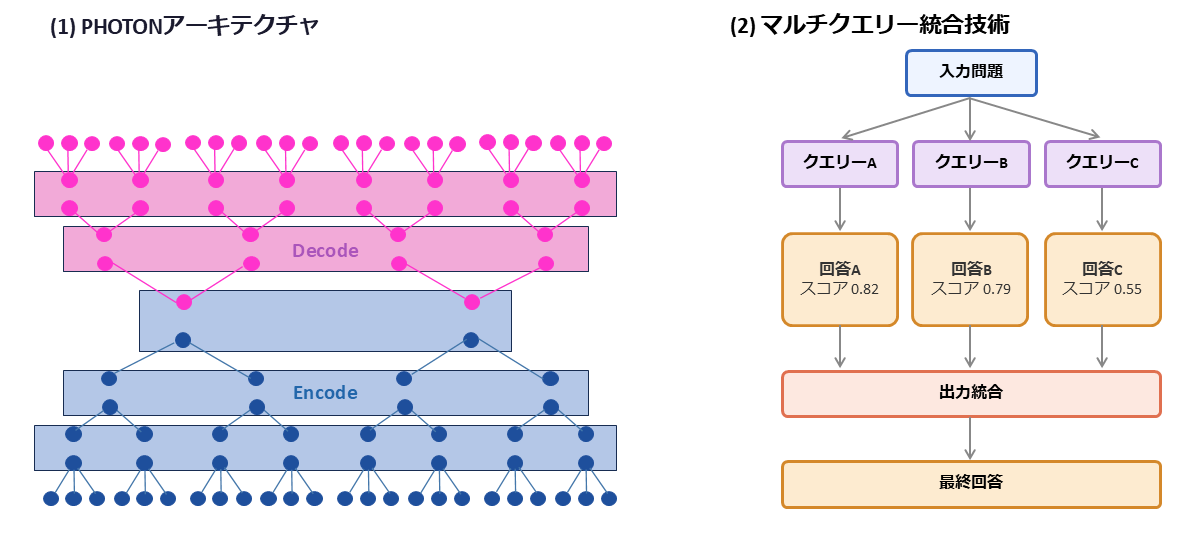
Fujitsu는 일본 현지 시간으로 어제 'PHOTON(Top-down Network Parallel Layered Calculation)' 아키텍처를 공개했습니다. 이 기술은 다중 쿼리(여러 개의 대안 결과를 생성하고 이를 바탕으로 최종 답변을 도출하는 시나리오)에서 기존의 주류 Transformer 아키텍처보다 최대 475배 높은 성능을 제공한다고 발표했습니다.
아키텍처 특징
Fujitsu에 따르면, Transformer 아키텍처는 긴 문맥 입력이나 멀티스레드 동기화 처리 시 과거 정보를 유지하기 위해 대량의 메모리 접근(Memory Access)을 수행하며 속도가 저하되는 단점이 있습니다. 반면 PHOTON은 에이전트 시스템의 다양한 I/O 프로세스를 효율적이고 낮은 비용으로 처리하여 GPU 비용을 절감할 수 있습니다.
PHOTON 아키텍처는 의미론적 수준에서 계층화된 처리를 수행하며, Transformer의 토큰 단위 분할과 비교해 계산 복잡도를 낮추고 더 나은 병렬성을 제공합니다. 다중 쿼리의 최종 결정 단계에서는 다수결 또는 최적의 방식을 선택하는 방식을 채택하여 단 한 번의 추론만으로 결과를 도출합니다.
성능 및 테스트 결과
테스트 결과에 따르면, PHOTON은 600M, 900M, 1.2B 등 상대적으로 규모가 작은 모델에서 더 높은 반복 처리량(Throughput)과 낮은 메모리 점유율을 달성했습니다.
- 1.2B 모델: 475배의 성능 향상 및 약간 낮은 품질 기록
- KV 캐시(KV Cache): 매 반복마다 필요한 KV 캐시가 적어 최대 반복 횟수 증가
총평
Fujitsu는 다중 쿼리 시나리오에서 Transformer 대비 압도적인 성능을 보이는 PHOTON 아키텍처를 공개했습니다. 이 기술은 계산 복잡도를 낮추고 메모리 점유율을 줄임으로써 특히 소형 모델에서 효율적인 처리가 가능하도록 설계되었습니다.
架构介绍
Fujitsu 推出了名为 PHOTON(自上而下网络并行分层计算)的新型架构。该架构旨在解决 Transformer 架构在处理长上下文输入或多线程同步时,因大量访存操作导致性能下降的问题。PHOTON 通过在语义层面进行分层处理,而非传统的词元级分割,显著降低了计算复杂度并提升了并行性。
核心技术优势
PHOTON 架构旨在优化智能体系统的多 I/O 流程,从而降低 GPU 成本。其主要特点包括:
- 通过语义层处理提供更好的并行性。
- 在多查询决策环节采用多数决定或选择最佳方式,仅需一次推理。
- 由于每次迭代所需的 KV Cache 更少,能够显著提升最大迭代次数。
测试数据与性能表现
在针对不同参数规模模型的测试中,PHOTON 展示了显著的性能优势:
- 支持模型规模:600M、900M、1.2B。
- 核心性能:在 1.2B 模型上实现了高达 475 倍的性能提升(伴随略低的质量)。
- 资源优化:在较低内存占用的前提下,实现更高的迭代吞吐量。
总结
Fujitsu 推出的 PHOTON 架构通过语义分层处理替代传统的词元级分割,有效解决了 Transformer 在长上下文和多线程场景下的性能瓶颈。该技术在 1.2B 模型上实现了高达 475 倍的性能提升,并在降低 GPU 成本和优化 KV Cache 方面表现出色。
技術概要
Fujitsuは日本時間で昨日、「PHOTON(Top-down Network Parallel Layered Calculation)」アーキテクチャを発表しました。この技術は、複数の代替結果を生成し、それに基づいて最終的な回答を導き出すマルチクエリのシナリオにおいて、従来の主流なTransformerアーキテクチャよりも最大475倍高い性能を提供すると発表しています。
アーキテクチャの特徴
Fujitsuによると、Transformerアーキテクチャは長い文脈の入力やマルチスレッド同期処理を行う際、過去の情報を保持するために大量のメモリアクセス(Memory Access)を実行するため、速度が低下するという欠点があります。対してPHOTONは、エージェントシステムの多様なI/Oプロセスを効率的かつ低コストで処理することで、GPUコストを削減することが可能です。
PHOTONアーキテクチャは意味論的なレベルで階層化された処理を実行するため、Transformerのトークン単位の分割と比較して計算の複雑さを抑え、より優れた並列性を提供します。マルチクエリの最終決定段階では、多数決または最適な手法を選択する方式を採用しており、わずか一度の推論で結果を導き出すことができます。
パフォーマンスおよびテスト結果
テスト結果によると、PHOTONは600M、900M、1.2Bといった比較的規模の小さいモデルにおいて、より高いスループット(Throughput)と低いメモリ占有率を達成しました。
- 1.2Bモデル:475倍の性能向上とわずかに低下した品質を記録
- KVキャッシュ(KV Cache):毎回の反復で必要なKVキャッシュが少ないため、最大反復回数が増加
総評
Fujitsuは、マルチクエリのシナリオにおいてTransformerと比較して圧倒的な性能を示すPHOTONアーキテクチャを発表しました。この技術は計算の複雑さを低減しメモリ占有率を抑えることで、特に小型モデルにおいて効率的な処理を可能にするよう設計されています。
まとめ
Fujitsuが発表した「PHOTON」アーキテクチャは、意味論的階層処理を採用することでTransformerと比較してマルチクエリのシナリオで最大475倍の性能向上を実現します。この技術により、計算コストとメモリ占有率を抑えつつ、特に小型モデルにおいて効率的な推論が可能になります。
Technical Overview
Fujitsu unveiled the 'PHOTON (Top-down Network Parallel Layered Calculation)' architecture yesterday. The company announced that this technology provides up to 475 times higher performance than traditional mainstream Transformer architectures in multi-query scenarios, where multiple alternative results are generated and used to derive a final answer.
Architectural Features
According to Fujitsu, Transformer architectures suffer from speed degradation because they require massive memory access to retain past information during long context inputs or multi-thread synchronization processing. In contrast, PHOTON processes various I/O processes of agent systems efficiently and at a lower cost, thereby reducing GPU expenses.
The PHOTON architecture performs hierarchical processing at the semantic level, which reduces computational complexity and provides better parallelism compared to the token-based segmentation used in Transformers. During the final decision stage for multi-queries, it employs methods such as majority voting or selecting the optimal result to produce a conclusion in a single inference.
Performance and Test Results
Test results indicate that PHOTON achieves higher throughput and lower memory occupancy in relatively small models, including 600M, 900M, and 1.2B parameters.
- 1.2B Model: Recorded a 475x performance improvement with slightly lower quality.
- KV Cache: Reduced the amount of KV cache required per iteration, resulting in an increase in the maximum number of iterations.
Summary
Fujitsu has introduced the PHOTON architecture, which significantly outperforms traditional Transformer models in multi-query scenarios by reducing computational complexity and memory usage. This technology is specifically designed to enable efficient processing for smaller models while lowering GPU costs through optimized I/O handling.
PHOTON架构发布
Fujitsu 推出了名为 PHOTON(自上而下网络并行分层计算)的新型架构。该架构旨在优化多查询场景,即在生成多个备选结果并最终给出答案的过程中,显著提升处理性能。
技术优势与原理
相较于传统 Transformer 架构,PHOTON 在以下方面具有核心优势:
- 降低复杂度: 通过语义层面的分层处理代替词元级分割,从而降低计算复杂度并提供更好的并行性。
- 高效 I/O 处理: 能高效率、低开销地处理智能体系统中的多 I/O 流程。
- 成本优化: 由于减少了大量访存操作,该架构能够有效降低 GPU 成本。
- 决策机制: 在多查询的最后环节采用多数决定或选择最佳方式,仅需一次推理即可完成。
性能测试数据
在针对不同规模模型的实验中,PHOTON 展示了显著的性能提升:
- 模型范围: 涵盖 600M、900M 及 1.2B 等参数规模的模型。
- 核心性能: 在 1.2B 模型上实现了高达 475 倍的性能提升(伴随略低的质量)。
- 内存优化: 由于每次迭代所需的 KV Cache 更少,该架构能显著降低内存占用并提高最大迭代次数。
总结
Fujitsu 推出的 PHOTON 架构通过语义层分层处理和高效的决策机制,解决了 Transformer 在长上下文及多线程场景下的访存瓶颈。该技术在小参数模型上实现了高达 475 倍的性能提升,并能显著降低 GPU 成本与内存占用。
技術概要
Fujitsuは日本時間で昨日、「PHOTON(Top-down Network Parallel Layered Calculation)」アーキテクチャを発表しました。この技術は、複数の代替結果を生成し、それに基づいて最終的な回答を導き出すマルチクエリのシナリオにおいて、従来の主流なTransformerアーキテクチャよりも最大475倍高い性能を提供すると発表しています。
アーキテクチャの特徴
Fujitsuによると、Transformerアーキテクチャは長いコンテキスト入力やマルチスレッド同期処理を行う際、過去の情報を保持するために大量のメモリアクセス(Memory Access)を実行するため、速度が低下するという課題があります。これに対しPHOTONは、エージェントシステムの多様なI/Oプロセスを効率的かつ低コストで処理し、GPUコストの削減を実現します。
PHOTONアーキテクチャは意味論的なレベルでの階層化処理を実行します。Transformerのトークン単位の分割と比較して計算の複雑さを抑え、より優れた並列性を提供します。マルチクエリの最終決定段階では、多数決または最適な手法を選択する仕組みを採用しており、わずか一回の推論で結果を導き出すことが可能です。
性能およびテスト結果
テスト結果によると、PHOTONは600M、900M、1.2Bといった比較的小規模なモデルにおいて、より高いスループットと低いメモリ占有率を達成しました。
- 1.2Bモデル:性能が475倍向上(品質はわずかに低下)。
- KVキャッシュ(KV Cache):毎回の反復で必要なKVキャッシュが少なくなったため、最大反復回数が増加。
まとめ
FujitsuのPHOTONアーキテクチャは、意味論的な階層処理を採用することでTransformerのボトルネックを解消し、特に小規模モデルにおいて劇的な性能向上を実現します。この技術により、GPUコストの削減とKVキャッシュの最適化が可能になり、マルチクエリシナリオでの効率的な処理が期待されます。
Technology Overview
Fujitsu recently unveiled its "PHOTON" (Top-down Network Parallel Layered Calculation) architecture. The company announced that this technology delivers up to 475 times higher performance compared to traditional Transformer architectures in multi-query scenarios, where multiple alternative results are generated to derive a final answer.
Architecture Features
According to Fujitsu, standard Transformer architectures suffer from performance degradation due to heavy memory access when processing long context inputs or multi-threaded synchronization. In contrast, PHOTON handles various I/O processes in agent systems more efficiently and at a lower cost, thereby reducing GPU expenses.
The PHOTON architecture performs layered processing at the semantic level rather than the token-level division used by Transformers. This approach reduces computational complexity and provides superior parallelism. In the final decision stage of multi-query scenarios, it employs methods such as majority voting or selecting the best option to produce a result in a single inference step.
Performance and Test Results
Test results indicate that PHOTON achieves higher throughput and lower memory occupancy on relatively small models, including 600M, 900M, and 1.2B parameters.
- 1.2B Model: Achieved a 475x performance increase with slightly lower quality.
- KV Cache: Requires less KV cache per iteration, allowing for an increased maximum number of iterations.
Summary
Fujitsu's PHOTON architecture replaces traditional token-level processing with semantic layered calculation to overcome the memory and synchronization bottlenecks found in Transformer models. This innovation significantly improves performance—up to 475x on a 1.2B model—while reducing GPU costs and optimizing KV Cache efficiency.
技术架构与核心优势
Fujitsu 推出的 PHOTON(自上而下网络并行分层计算)架构旨在解决主流 Transformer 架构在处理长上下文输入或多线程同步时,因大量访存操作导致性能下降的问题。该架构通过语义层面的分层处理替代传统的词元级分割,显著降低了计算复杂度并提供了更好的并行性。
- 高效处理: 能高效率、低开销地处理智能体系统等多 I/O 流程。
- 决策优化: 在多查询的最终决策环节采用多数决定或选择最佳方式,仅需一次推理。
- 成本降低: 通过优化架构设计,旨在显著降低 GPU 成本。
性能测试与参数表现
实验数据表明,PHOTON 在较小规模的模型中能够实现更高的迭代吞吐量和更低的内存占用:
- 支持模型规模: 600M、900M、1.2B。
- 性能提升: 在 1.2B 模型上实现了高达 475 倍的性能提升(伴随略低质量)。
- 缓存优化: 由于每次迭代所需的 KV Cache 更少,能够显著提升最大迭代次数。
总结
Fujitsu 推出的 PHOTON 架构通过语义层分层处理取代词元级分割,有效降低了计算复杂度并减少了访存开销。该技术在多查询场景下表现优异,特别是在小参数模型上实现了高达 475 倍的性能提升,同时能显著优化内存占用并降低 GPU 成本。
技術概要
Fujitsuは日本時間で昨日、「PHOTON(Top-down Network Parallel Layered Calculation)」アーキテクチャを発表しました。この技術は、複数の代替結果を生成しそれに基づいて最終的な回答を導き出す「マルチクエリ」のシナリオにおいて、従来の主流なTransformerアーキテクチャよりも最大475倍高い性能を提供すると発表しています。
アーキテクチャの特徴
Fujitsuによると、Transformerアーキテクチャは長い文脈の入力やマルチスレッド同期処理を行う際、過去の情報を保持するために大量のメモリアクセス(Memory Access)を実行するため、速度が低下するという欠点があります。これに対しPHOTONは、エージェントシステムの多様なI/Oプロセスを効率的かつ低コストで処理することで、GPUコストを削減することが可能です。
PHOTONアーキテクチャは意味論的なレベルで階層化された処理を実行するため、Transformerのトークン単位の分割と比較して計算の複雑さを抑え、より優れた並列性を提供します。マルチクエリの最終決定段階では、多数決または最適な手法を選択する方式を採用しており、わずか一度の推論で結果を導き出すことができます。
パフォーマンスおよびテスト結果
テスト結果によると、PHOTONは600M、900M、1.2Bといった比較的規模の小さいモデルにおいて、より高いスループット(Throughput)と低いメモリ占有率を達成しました。
- 1.2Bモデル:475倍の性能向上とわずかに低下した品質を記録
- KVキャッシュ(KV Cache):毎回の反復で必要なKVキャッシュが少ないため、最大反復回数が増加
まとめ
Fujitsuが発表した「PHOTON」アーキテクチャは、意味論的階層処理を採用することでTransformerと比較してマルチクエリのシナリオで最大475倍の性能向上を実現します。この技術により、計算コストとメモリ占有率を抑えつつ、特に小型モデルにおいて効率的な推論が可能になります。
Technical Overview
Fujitsu unveiled the 'PHOTON (Top-down Network Parallel Layered Calculation)' architecture. This technology is designed for multi-query scenarios—where multiple alternative results are generated to derive a final answer—and is reported to deliver up to 475 times higher performance compared to traditional mainstream Transformer architectures.
Architectural Features
According to Fujitsu, standard Transformer architectures suffer from speed degradation during long context inputs or multi-thread synchronization because they require massive memory access to retain past information. In contrast, PHOTON handles various I/O processes in agent systems more efficiently and at a lower cost, thereby reducing GPU expenses.
The PHOTON architecture performs hierarchical processing at the semantic level rather than the token-based segmentation used by Transformers. This approach reduces computational complexity and provides superior parallelism. In the final decision stage of multi-query processes, it employs methods such as majority voting or selecting the optimal result to produce a conclusion in a single inference step.
Performance and Test Results
Test results indicate that PHOTON achieves higher throughput and lower memory occupancy across several smaller model scales:
- Supported models: 600M, 900M, and 1.2B parameters.
- 1.2B Model: Recorded a 475x performance improvement with slightly lower quality.
- KV Cache: Reduced the amount of KV cache required per iteration, leading to an increased maximum number of iterations.
Summary
Fujitsu's PHOTON architecture addresses the memory access bottlenecks of traditional Transformers by utilizing semantic-level hierarchical processing instead of token-based segmentation. This innovation significantly enhances performance in multi-query scenarios and reduces GPU costs, particularly for smaller models.