시장 전망
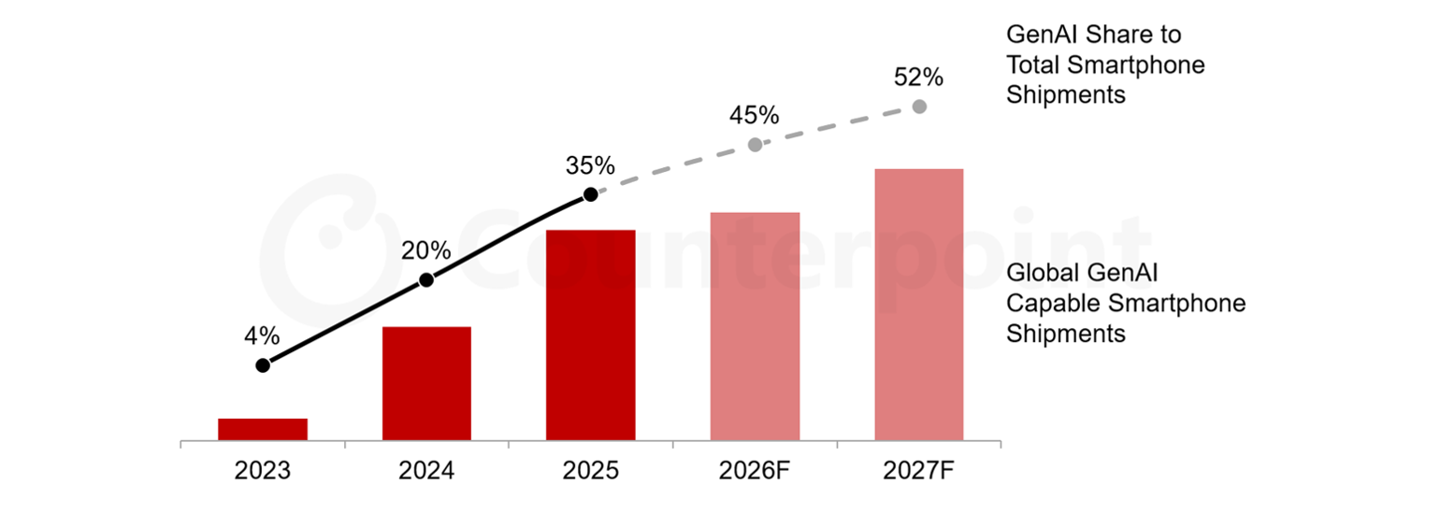
IT홈 소식에 따르면, Counterpoint Research가 발표한 최신 보고서에 따르면 생성형 AI를 지원하는 모델이 2026년 전 세계 스마트폰 출하량의 45%를 차지할 것으로 예상되며, 이는 2025년의 36%보다 높은 수치입니다.
보고서는 AI 스마트폰이 빠르게 보급되고 있지만, 소비자의 실제 사용 수요, 메모리 비용, 그리고 제조사별 생태계 통합 능력이 다음 단계의 시장 경쟁을 결정할 것이라고 분석했습니다.
메모리 공급 위기의 지속적인 영향으로 2026년 전 세계 스마트폰 출하량은 전년 대비 13.9% 급감한 10억 8,000만 대로 예상되며, 이는 기록상 최저치입니다. 동시에 AI 스마트폰의 침투율은 계속 상승하여 2027년에는 52%에 도달할 것으로 보이며, 이는 생성형 AI 기술이 스마트폰의 표준 사양으로 자리 잡을 것임을 의미합니다.
비용 및 시장 영향
생성형 AI의 급격한 확산과 동시에 메모리 비용이 크게 상승하고 있으며, 이러한 비용 압력은 어떤 새로운 기능보다 스마트폰 시장에 더 큰 영향을 미치고 있습니다. 특히 보급형 시장이 가장 큰 타격을 입고 있으며, 부품 가격 상승으로 인해 제조사들은 저가 모델을 줄이거나 취소하는 상황에 직면해 있습니다.
프리미엄 AI 스마트폰은 더 넓은 수익 공간을 확보하고 있어 비용 상승을 흡수하기 용이하며, 오히려 시장 지위가 더욱 강화될 수 있습니다. 소비자는 수년 만에 처음으로 비용은 더 많이 지불하면서 하드웨어 업그레이드는 적은 상황에 직면할 가능성이 높습니다. OEM 제조사들은 기본 메모리 용량, 카메라 구성 및 SKU 수를 줄이고 있지만, 여전히 상당 부분의 추가 비용을 소비자에게 전가할 것입니다.
기술적 제약과 미래
장기적으로 메모리는 생성형 AI가 중저가 스마트폰 시장에 빠르게 진입할 수 있는지 결정하는 핵심 요소입니다. AI 모델 구동을 위해 추가 DRAM이 필요하므로, 현재 AI 스마트폰의 도매가는 400달러(약 2,716 위안) 이하로 낮추기 어려운 상황입니다.
메모리 공급 압력이 점차 완화되고 온디바이스 모델의 최적화 효율이 향상됨에 따라, 생성형 AI 기능은 비로소 더 저렴한 스마트폰으로 확대될 것입니다. 이에 따라 Counterpoint Research는 보급형 시장은 계속 축소되고 프리미엄 시장은 더욱 확대될 것이며, 소비자의 기기 사용 기간 연장으로 리퍼비시 시장도 성장할 것으로 전망했습니다.
총평
2026년부터 생성형 AI가 스마트폰의 표준 사양으로 자리 잡으며 높은 침투율을 기록할 전망입니다. 다만 메모리 비용 상승과 공급 부족으로 인해 보급형 시장은 위축되고 프리미엄 시장은 강화되는 양극화 현상이 나타날 것으로 예상됩니다.
AI 手机市场渗透率预测
根据 Counterpoint Research 的最新报告,生成式 AI 功能正在迅速成为智能手机的标配。预计支持生成式 AI 的机型在市场的渗透率将持续攀升:
- 2025 年:预计占全球出货量的 36%
- 2026 年:预计达到 45%
- 2027 年:预计达到 52%,成为常规配置
市场规模与供应挑战
受内存供应危机影响,2026 年全球智能手机出货量预计将面临显著下滑。由于零部件成本上涨带来的压力已超过新功能的推动力,市场格局正在发生变化:
- 2026 年全球智能手机出货量预计同比下降 13.9%,至 10.8 亿部(创 2013 年以来新低)。
- 内存成本的上涨对入门级市场冲击最大,导致厂商减少甚至取消低价机型。
- 高端 AI 手机因拥有更高利润空间,更能承受成本上涨,其市场地位可能进一步增强。
消费趋势与技术门槛
由于硬件升级带来的成本增加,消费者可能会面临“花费更多、硬件更新更少”的局面。与此同时,翻新机市场预计将因用户延长手机使用周期而增长。
目前,高昂的内存成本是 AI 功能进入中低端市场的核心障碍:
- 由于运行 AI 模型需要额外的 DRAM 存储模型权重,当前 AI 手机的批发价难以降至 400 美元以下。
- 只有在内存供应压力缓解且端侧模型优化效率提高后,生成式 AI 功能才会进一步下放到更低价位的智能手机中。
总结
Counterpoint Research 预测,尽管生成式 AI 将在 2027 年成为智能手机的标准配置,但由于内存成本飙升,2026 年全球手机出货量将创下新低。高昂的硬件成本正导致低端市场收缩、高端市场扩张,并迫使消费者面临更高的购机成本。
市場予測
ITホームの報道およびCounterpoint Researchが発表した最新レポートによると、生成AIをサポートするモデルは2026年に全世界のスマートフォン出荷量の45%を占めると予想されており、これは2025年の36%を上回る数値です。
同レポートでは、AIスマートフォンは急速に普及しているものの、消費者の実際の需要、メモリコスト、およびメーカーごとのエコシステム統合能力が次段階の市場競争を決定づけると分析しています。
メモリ供給不足の影響により、2026年の全世界スマートフォン出荷量は前年比13.9%減の1億8,000万台に急落すると予測されており、これは過去最低の数値を記録する見込みです。一方で、AIスマートフォンの普及率は上昇を続け、2027年には52%に達すると予測されており、生成AI技術がスマートフォンの標準仕様として定着することを示唆しています。
コストと市場への影響
生成AIの急速な普及に伴い、メモリコストが大幅に上昇しており、このコスト圧力は新機能よりもスマートフォン市場により大きな影響を与えています。特にエントリーモデル(低価格帯)市場が最も深刻な打撃を受けており、部品価格の上昇により、メーカーは低価格モデルの削減や生産中止に直面しています。
プレミアムAIスマートフォンはより広い収益空間を確保しているため、コスト上昇を吸収しやすく、むしろ市場での地位が強化される可能性があります。消費者は数年ぶりに「より多くの費用を支払う一方で、ハードウェアのアップグレードは少ない」という状況に直面する可能性が高いです。OEMメーカーは基本メモリ容量、カメラ構成、およびSKU数を削減していますが、依然としてかなりの追加コストを消費者に転嫁する見通しです。
技術的制約と未来
長期的には、メモリは生成AIが中低価格帯のスマートフォン市場に迅速に参入できるかどうかを決定する鍵となります。AIモデルの駆動には追加のDRAMが必要なため、現在のAIスマートフォンの卸売価格を400ドル(約2,716元)未満に抑えることは困難な状況です。
メモリ供給の圧力が緩和され、オンデバイスモデルの最適化効率が向上するにつれて、生成AI機能はより安価なスマートフォンへと拡大していくでしょう。これに伴い、Counterpoint Researchはエントリー市場が縮小し、プレミアム市場がさらに拡大すると予測しています。また、消費者のデバイス使用期間の長期化により、リファービッシュ(整備済製品)市場も成長すると見込んでいます。
まとめ
2026年までに生成AIはスマートフォンの標準仕様として定着し、高い普及率を記録する見込みです。しかし、メモリコストの上昇と供給不足により、低価格帯市場が縮小する一方でプレミアム市場が強化されるという「市場の二極化」が進むと予想されます。
Market Outlook
According to a recent report by Counterpoint Research, as reported by IT Home, models supporting generative AI are expected to account for 45% of global smartphone shipments in 2026, up from 36% in 2025.
The report analyzes that while AI smartphones are being adopted rapidly, the next stage of market competition will be determined by actual consumer demand, memory costs, and the ability of manufacturers to integrate their respective ecosystems.
Due to the ongoing impact of the memory supply crisis, global smartphone shipments in 2026 are projected to drop to 108 million units, a 13.9% decrease from the previous year, marking a record low. Simultaneously, the penetration rate of AI smartphones is expected to continue rising, reaching 52% by 2027, which signifies that generative AI technology will become a standard specification for smartphones.
- 2025: 36% market share for GenAI-supported models
- 2026: 45% market share for GenAI-supported models
- 2027: 52% penetration rate (becoming a standard feature)
- 2026 Global Shipments: 108 million units (a 13.9% year-on-year decrease)
Cost and Market Impact
The rapid expansion of generative AI is accompanied by a significant rise in memory costs, which are impacting the smartphone market more than any new feature. The budget segment is particularly hard hit; due to rising component prices, manufacturers face situations where they must reduce or cancel low-end models.
In contrast, premium AI smartphones have a wider profit margin, making it easier for them to absorb rising costs and potentially strengthening their market position. Consumers may face a situation where they pay more while receiving fewer hardware upgrades—a trend not seen in several years. While OEMs are reducing base memory capacities, camera configurations, and the number of SKUs, they will still pass significant additional costs on to the consumers.
Technical Constraints and Future
In the long term, memory is a critical factor determining whether generative AI can quickly enter the mid-to-low-end smartphone market. Because extra DRAM is required to run AI models, it is currently difficult to lower the wholesale price of AI smartphones below $400 (approximately 2,716 RMB).
As memory supply pressure eases and the optimization efficiency of on-device models improves, generative AI features will eventually expand into more affordable smartphones. Consequently, Counterpoint Research predicts that the budget market will continue to shrink while the premium market expands. Additionally, the refurbished market is expected to grow as consumers extend the usage period of their devices.
Summary
Generative AI is expected to become a standard smartphone feature by 2026, with penetration rates climbing toward 52% by 2027. However, high memory costs and supply issues are creating a polarized market where the premium segment strengthens while the budget segment faces contraction. Furthermore, as on-device models become more optimized, these features will eventually reach lower-priced devices, potentially expanding the refurbished market.
生成式 AI 手机普及趋势
根据 Counterpoint Research 的最新报告,支持生成式 AI 的智能手机在市场中的渗透率将持续快速增长。由于技术成熟度提高和用户需求增加,AI 功能正逐渐成为智能手机的常规配置。
- 2025 年:AI 手机预计占全球出货量的 36%
- 2026 年:预测占比将提升至 45%
- 2027 年:预计渗透率将达到 52%
市场规模与宏观挑战
受内存供应危机及成本压力影响,全球智能手机市场的整体出货量面临显著下滑。与此同时,高昂的硬件成本正迫使厂商在产品策略上做出调整。
- 2026 年全球智能手机出货量预计同比下降 13.9%
- 预测总产量为 10.8 亿部(创 2013 年以来新低)
内存成本对市场分层的影响
由于运行 AI 模型需要大量的 DRAM 内存,高昂的硬件成本正导致智能手机市场出现明显的分层。入门级市场受到的冲击最为严重,而高端市场则可能因具备更好的利润空间而进一步扩大。
- 批发价门槛:由于内存成本压力,AI 手机的批发价格目前难以降至 400 美元以下
- 低端市场变化:厂商正减少基础内存容量、简化摄像头配置并缩减 SKU 数量
- 消费趋势:随着新机成本上升且硬件升级变少,消费者可能会延长使用周期,从而推动翻新机市场的增长
总结
Counterpoint Research 预测,生成式 AI 将在 2027 年成为智能手机的标配,但高昂的内存成本将导致低端市场萎缩并推高高端市场的地位。受此影响,预计 2026 年全球智能手机出货量将创下近十年来的新低。
市場展望
Counterpoint Researchが発表した最新のレポートによると、生成AIをサポートするモデルは2026年に世界のスマートフォン出荷量の45%を占めると予測されており、これは2025年の36%を上回る数値です。
報告書では、AIスマートフォンの普及が急速に進む一方で、消費者の実際の需要、メモリコスト、そしてメーカーごとのエコシステム統合能力が次なる市場競争の鍵を握ると分析しています。
予測される浸透率
生成AI機能は急速にスマートフォンの標準仕様となりつつあり、以下の通り普及率が上昇すると予測されています。
- 2025年:世界出荷量の36%を占める見込み
- 2026年:45%に到達
- 2027年:52%に達し、標準的な構成として定着
コストと市場への影響
生成AIの急速な普及に伴いメモリコストが大幅に上昇しており、このコスト圧力が新機能の導入よりもスマートフォン市場に大きな影響を与えています。特にエントリーモデル(低価格帯)が最も深刻な打撃を受けており、部品価格の上昇によりメーカーは低価格モデルの削減や中止を余儀なくされる状況に直面しています。
対照的に、プレミアムAIスマートフォンはより広い利益空間を確保しているため、コスト上昇を吸収しやすく、市場での地位がさらに強化される可能性があります。消費者は数年ぶりに「より多くの費用を支払う一方で、ハードウェアのアップグレードは少なくなっている」という状況に直面する可能性が高くなっています。
技術的制約と将来の展望
長期的には、メモリが生成AIの低・中価格帯スマートフォンへの普及を左右する重要な要素となります。AIモデルの駆動には追加のDRAMが必要なため、現在のAIスマートフォンの卸売価格を400ドル(約2,716元)未満に抑えることは困難な状況です。
メモリ供給の圧力が緩和され、オンデバイスモデルの最適化効率が向上するにつれて、生成AI機能はより安価なスマートフォンにも拡大していく見込みです。これに伴い、エントリー市場は縮小し、プレミアム市場はさらに拡大するとともに、消費者の端末利用期間の長期化によりリファービッシュ(整備済製品)市場も成長すると予測されています。
まとめ
2026年以降、生成AIはスマートフォンの標準仕様として定着し、高い普及率を記録する見通しです。一方でメモリコストの上昇と供給不足により、低価格帯市場が縮小しプレミアム市場が強化されるという二極化が進むと予想されます。
Market Outlook
According to a report by Counterpoint Research via IT Home, models supporting generative AI are expected to account for 45% of global smartphone shipments in 2026, up from 36% in 2025. The report analyzes that while AI smartphones are being adopted rapidly, the next phase of market competition will be determined by actual consumer demand, memory costs, and the ability of manufacturers to integrate their ecosystems.
Due to the ongoing impact of the memory supply crisis, global smartphone shipments in 2026 are projected to drop by 13.9% year-on-year to 1.08 billion units, marking a record low. Simultaneously, the penetration rate of AI smartphones is expected to continue rising, reaching 52% by 2027, which signifies that generative AI technology will become a standard specification for smartphones.
Cost and Market Impact
The rapid expansion of generative AI is accompanied by a significant rise in memory costs. These cost pressures are impacting the smartphone market more significantly than any new features. The entry-level segment is being hit hardest, with manufacturers facing situations where they must reduce or cancel low-cost models due to rising component prices.
Premium AI smartphones possess wider profit margins, making it easier for them to absorb cost increases and potentially strengthen their market position. Consumers are likely to face a situation—for the first time in years—where they pay more while receiving fewer hardware upgrades. To manage these costs, OEMs are reducing base memory capacities, camera configurations, and the number of SKUs, though significant portions of these additional costs will still be passed on to consumers.
Technical Constraints and Future
In the long term, memory is a key factor determining whether generative AI can quickly enter the mid-to-low-end smartphone market. Because running AI models requires additional DRAM, it is currently difficult to lower the wholesale price of AI smartphones below $400 (approximately 2,716 RMB).
As memory supply pressure eases and the optimization efficiency of on-device models improves, generative AI features will eventually expand into more affordable phones. Consequently, Counterpoint Research predicts that the entry-level market will continue to shrink while the premium market expands. Additionally, the refurbished market is expected to grow as consumers extend their device usage cycles.
AI Smartphone Market Penetration Forecast
According to the latest report from Counterpoint Research, generative AI features are rapidly becoming a standard feature in smartphones. The projected penetration rates for models supporting generative AI are as follows:
- 2025: Expected to account for 36% of global shipments
- 2026: Expected to reach 45%
- 2027: Expected to reach 52%, becoming a standard configuration
Impacted by the memory supply crisis, global smartphone shipments are expected to face a significant decline in 2026. Because the pressure from rising component costs outweighs the push from new features, the market landscape is shifting:
- Global smartphone shipments in 2026 are projected to drop by 13.9% year-on-year to 1.08 billion units (the lowest since 2013).
- Rising memory costs have the greatest impact on the entry-level market, leading manufacturers to reduce or cancel low-priced models.
- High-end AI phones can better withstand cost increases due to higher profit margins, potentially strengthening their market position.
Due to increased costs from hardware upgrades, consumers may face a "pay more, fewer hardware updates" scenario. Meanwhile, the refurbished market is expected to grow as users extend their device usage cycles.
Summary
Generative AI is projected to become a standard smartphone feature by 2026, with penetration rates reaching 52% by 2027. However, rising memory costs are creating a polarized market where the entry-level segment shrinks while the premium segment strengthens. This shift may result in consumers paying more for fewer hardware upgrades, ultimately leading to growth in the refurbished device market.
AI 手机市场渗透率预测
根据 Counterpoint Research 的最新报告,支持生成式 AI 的智能手机正迅速普及。预计其在全球市场的占比将持续攀升:
- 2025 年:36%
- 2026 年:45%
- 2027 年:52%(届时生成式 AI 将成为智能手机的常规配置)
市场出货量与内存成本压力
受持续的内存供应危机影响,全球智能手机市场面临显著挑战。由于零部件成本上涨,尤其是高昂的内存成本,对低端市场的冲击最为严重。
- 2026 年全球智能手机出货量预计同比下降 13.9%,至 10.8 亿部(创 2013 年以来新低)。
- 高端 AI 手机拥有更大的利润空间,能够更好地消化成本上涨。
- 由于硬件升级减少且价格上涨,消费者可能会延长更换周期,从而推动翻新机市场的增长。
中低端市场进入门槛
内存是决定生成式 AI 能否快速普及至中低价位段的关键因素。目前运行 AI 模型需要额外的 DRAM 空间,导致支持 AI 功能的手机批发价目前很难降至 $400 以下。
随着内存供应压力缓解及端侧模型优化效率提升,生成式 AI 功能才有望进一步下放至更具性价比的智能手机市场。
总结
Counterpoint Research 预测,尽管生成式 AI 将在 2027 年成为主流配置,但因高昂的内存成本导致的供应链压力将导致 2026 年全球手机出货量大幅下滑。高端市场将继续扩张,而中低端市场的 AI 功能普及则高度依赖于未来内存技术的优化与成本降低。
市場予測
ITホームの報道およびCounterpoint Researchの最新レポートによると、生成AIをサポートするスマートフォンモデルは2026年に世界出荷量の45%を占めると予想されており、これは2025年の36%を上回る数値です。
同レポートでは、AIスマートフォンの普及は急速に進んでいるものの、次段階の市場競争は消費者の実需要、メモリコスト、およびメーカーによるエコシステムの統合能力によって決定されると分析しています。
メモリ供給不足の影響により、2026年の世界スマートフォン出荷量は前年比13.9%減の1億800万台に急落すると予測されており、これは過去最低の数値を記録する見込みです。一方で、AIスマートフォンの普及率は上昇を続け、2027年には52%に達し、生成AI技術がスマートフォンの標準仕様として定着することを示唆しています。
AIスマートフォン市場の予測シェア:
- 2025年:世界出荷量の36%
- 2026年:世界出荷量の45%
- 2027年:普及率52%(標準仕様として定着)
コストと市場への影響
生成AIの急速な拡大に伴い、メモリコストが大幅に上昇しており、このコスト圧力が新機能よりもスマートフォン市場により大きな影響を与えています。特にエントリーモデル(低価格帯)が深刻な打撃を受けており、部品価格の高騰により、メーカーは低価格モデルの削減や生産中止を余儀なくされている状況です。
対照的に、プレミアムAIスマートフォンはより広い利益率を確保しているため、コスト上昇を吸収しやすく、市場での地位がさらに強化される可能性があります。消費者は数年ぶりに「より多くの費用を支払う一方で、ハードウェアのアップグレードが限定的になる」という状況に直面する可能性が高いです。OEMメーカーは基本メモリ容量、カメラ構成、およびSKU数を削減していますが、依然として相当な追加コストを消費者に転嫁する見通しです。
技術的制約と将来
長期的には、メモリが生成AIの低価格帯市場への参入を左右する鍵となります。AIモデルの駆動には追加のDRAMが必要なため、現在、AI搭載スマートフォンの卸売価格を400ドル(約2,716元)未満に抑えることは困難な状況です。
メモリ供給の圧力が緩和され、オンデバイスモデルの最適化が進むにつれて、生成AI機能はより安価なスマートフォンへと拡大していくでしょう。これに伴い、エントリー市場は縮小し、プレミアム市場がさらに拡大すると予測されています。また、消費者のデバイス使用期間の長期化により、リファービッシュ(整備済製品)市場も成長が見込まれています。
まとめ
2026年までに生成AIはスマートフォンの標準仕様として定着し、高い普及率を記録する見込みです。しかし、メモリコストの高騰と供給不足により、低価格帯市場が縮小しプレミアム市場が強化されるという「市場の二極化」が進むと予想されます。
Market Outlook
According to a recent report from Counterpoint Research, as reported by IT Home, smartphone models supporting generative AI are expected to account for 45% of global shipments in 2026, up from 36% in 2025. While the adoption of AI-enabled devices is accelerating rapidly, the report notes that the next stage of market competition will be determined by actual consumer demand, memory costs, and the ability of manufacturers to integrate their respective ecosystems.
Due to the ongoing impact of the memory supply crisis, global smartphone shipments are projected to drop significantly in 2026. The forecast estimates a 13.9% year-on-year decrease to 1.08 billion units, marking a record low since 2013. Simultaneously, the penetration rate of AI smartphones is expected to continue rising, reaching 52% by 2027, which indicates that generative AI technology will become a standard specification for smartphones.
- 2025: 36% market share for GenAI-supported models
- 2026: 45% market share for GenAI-supported models
- 2027: 52% penetration rate (becoming a standard feature)
- 2026 Global Shipments: 1.08 billion units (a 13.9% year-on-year decrease)
Cost and Market Impact
The rapid expansion of generative AI is accompanied by a significant rise in memory costs, which is impacting the smartphone market more heavily than any new feature. The budget segment is particularly hard hit; due to rising component prices, manufacturers are facing situations where they must reduce or cancel low-end models.
In contrast, premium AI smartphones have wider profit margins, making it easier for them to absorb rising costs and potentially strengthening their market position. Consumers may face a situation where they pay more while receiving fewer hardware upgrades—a trend not seen in several years. While OEMs are reducing base memory capacities, camera configurations, and the number of SKUs, these costs will still be passed on significantly to the consumers.
Technical Constraints and Future
In the long term, memory is a critical factor determining whether generative AI can quickly enter the mid-to-low-end smartphone market. Because extra DRAM is required to run AI models, it is currently difficult to lower the wholesale price of AI smartphones below $400 (approximately 2,716 RMB).
As memory supply pressure eases and the efficiency of on-device model optimization improves, generative AI features will eventually expand into more affordable devices. Consequently, Counterpoint Research predicts that the entry-level market will contract while the premium market expands. Additionally, the refurbished market is expected to grow as consumers extend their device usage cycles.
Summary
By 2026, generative AI is expected to become a standard feature in smartphones despite a projected decline in total global shipments caused by high memory costs. This economic pressure is creating a market polarization where the budget segment shrinks while the premium market strengthens. The expansion of AI into lower-priced models will ultimately depend on improved memory supply and more efficient on-device model optimization.