사건 개요
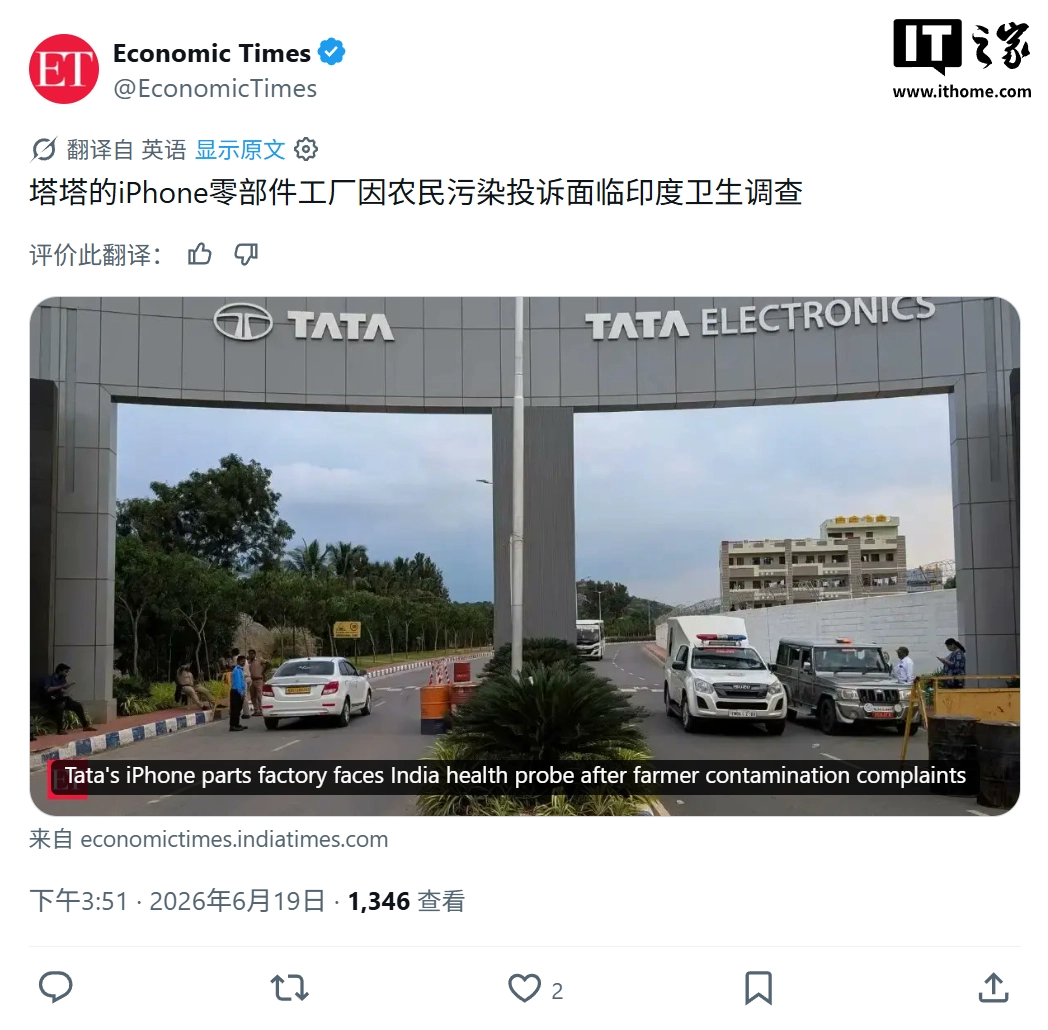
IT홈(IT之家)의 보도에 따르면, 로이터 통신은 어제(6월 19일) Apple 공급사인 Tata Electronics가 인도 타밀나두주 호수르(Hosur)에 운영 중인 iPhone 부품 공장의 폐수 배출 문제에 대해 현지 보건 당국이 조사 중이라고 발표했습니다.
오염 및 환경 영향
로이터의 보도에 따르면, 해당 사건은 2026년 5월(원문 기재 기준)까지 거슬러 올라가며, 일부 현지 농부들이 공장 폐수로 인해 농경지가 오염되고 피부 질환이 발생했다고 불만을 제기했습니다. 타밀나두주 오염 관리 위원회는 Tata 측에 경고를 발송하며, 공장 폐수가 인근 농장의 지하수를 오염시켰을 가능성을 지적하고 생산 중단 명령을 예고했습니다.
Tata는 이후 대응을 제출했으며, 위원회는 6월 16일 "모든 의문 사항이 만족스럽게 해결되었다"고 확인하며 추가 조치를 취소했습니다. 그러나 농경지 오염으로 인한 건강상의 우려는 여전히 해소되지 않은 상태입니다.
수질 및 환경 조사 결과
로이터가 입수한 내부 서한에 따르면, 호수르 지역 정부 의료관 Anish Parvin은 5월 27일 국가 매개 제어 및 인수공통전염병 연구소에 보낸 서한에서 Tata 공장에서 배출된 폐수가 주변 농지에 고여 "심각한 악취"를 유발하고 있으며, 우물물이 "동물용으로 부적합"하다고 지적했습니다.
또한 주민들이 오염으로 인해 피부 문제를 겪고 있다고 보고했으나, 현재까지 임상적으로 확진된 사례는 없다고 밝혔습니다. 보건 당국은 두 곳의 농지 샘플을 채취했으며, 정부 실험실의 5월 30일 결과에 따르면 두 샘플 모두 대장균(E. coli)이 검출되어 분변 오염의 가능성이 확인되었습니다.
오염 감시 기관은 4월 공장 인근의 개방된 우물에서 수질을 채취했으며, 분석 결과 다음과 같은 수치가 나타났습니다.
- TDS(총 용존 고형물): 각각 1084 및 1286 mg/L
- 인도 표준국 기준: 500 mg/L (공장 인근 샘플이 기준치의 두 배 이상 초과)
농가 피해 상황
비영리 단체 Paani Earth Foundation의 공동 설립자 Nidhi Paliwal은 "산업 오염으로 인해 TDS 수치가 상승할 수 있으며, 현재 처리되지 않은 상태에서는 인간이 마시기에 부적합할 뿐만 아니라 어업과 야생동물에게도 해롭다"고 분석했습니다.
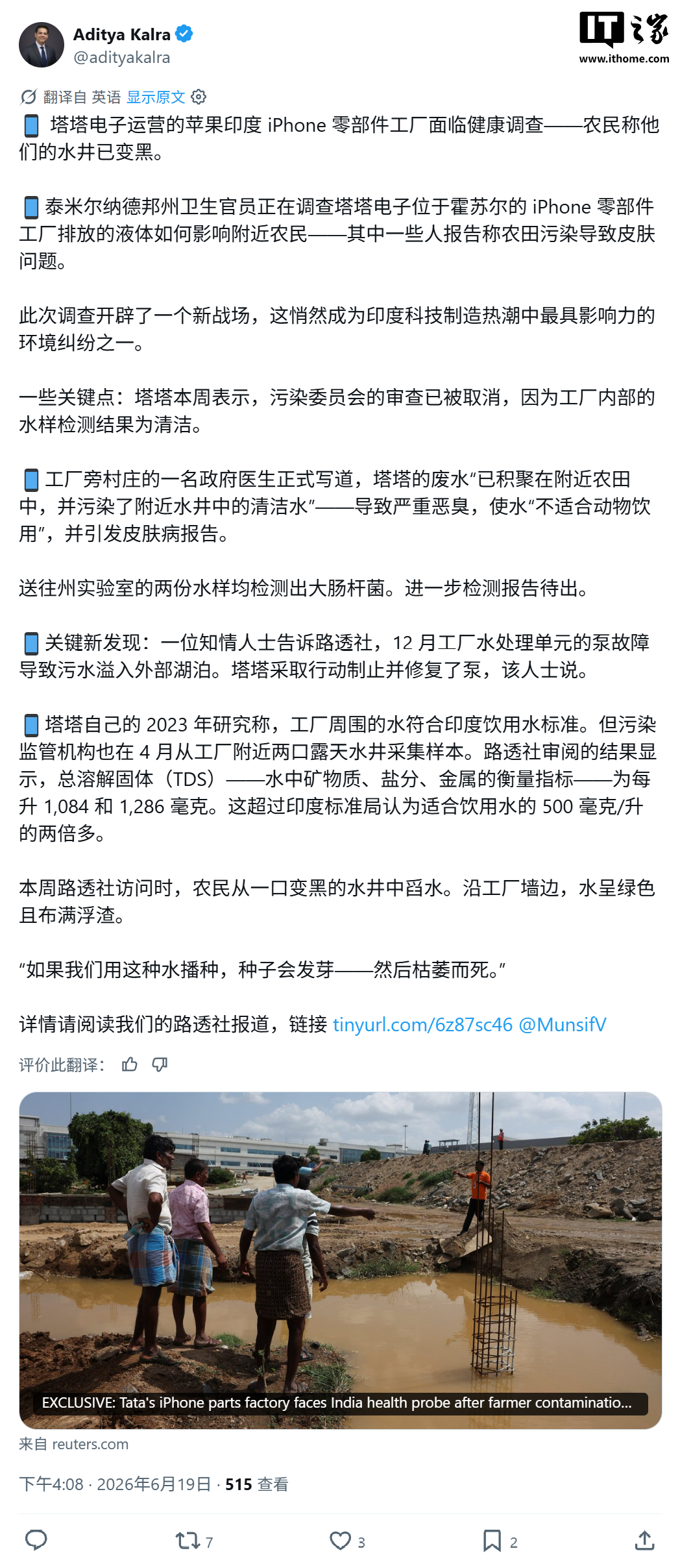
로이터는 이번 주 공장 부지를 두 차례 방문하여 10여 명의 농부와 인터뷰를 진행했습니다. 농부들은 색이 검게 변한 우물에서 물을 길어 올렸으며, 공장 담벼락 근처에는 녹색의 탁한 물이 고여 있는 것을 확인했습니다. 40세의 농부 Gurumoorthy V는 인근에서 토마토, 콩, 쌀 등을 재배해 왔으나, 현재는 "이런 물로 파종하면 씨앗이 싹이 터도 곧 시들어 죽는다"고 호소했습니다.
총평
Apple의 주요 공급사인 Tata Electronics가 인도 내 공장에서 발생하는 폐수 오염 문제로 인해 현지 당국과 농민들로부터 비판을 받고 있습니다. 기업 측은 규정 준수를 주장하며 상황이 해결되었다고 발표했으나, 실제 수질 검사 결과와 지역 사회의 피해 호소는 여전히 지속되고 있어 환경적 책임에 대한 논란이 이어지고 있습니다.
调查背景与进展
路透社报道,印度泰米尔纳德邦的 Apple 供应商 Tata Electronics 在霍苏尔(Hosur)的 iPhone 零部件工厂因废水排放问题受到调查。当地农民投诉称厂区废水导致农田污染并引发皮肤问题。尽管泰米尔纳德邦污染控制委员会于 6 月 16 日确认相关疑问已解决并撤销了停产警告,但关于环境和健康的担忧仍在持续。
检测数据与环境影响
官方调查及第三方机构对厂区周边水质进行了监测,具体数据如下:
- 大肠杆菌 (E. coli): 5 月 30 日的政府实验室报告显示,两处农田水样均检出大肠杆菌。
- TDS(总溶解固体): 检测结果分别为 1084 mg/L 和 1286 mg/L,超过印度标准局规定的 500 mg/L 饮用水标准一倍以上。
农户反馈与现状
当地农民反映,由于工厂排放的废水导致土壤和水源污染,原本种植番茄、豆类和稻米的农田受到严重影响,种子在发芽后枯萎死亡。现场观察到厂墙边附近的积水呈绿色浑浊状。
总结
Apple 供应商 Tata Electronics 的印度工厂因废水排放导致农田及地下水污染引发争议。尽管官方已撤回初步处罚,但检测数据表明该区域水质严重超标且存在细菌污染,对当地农业生产和生态环境造成了显著影响。
事件の概要
ITホーム(IT之家)の報道によると、ロイター通信は昨日(6月19日)、AppleのサプライヤーであるTata Electronicsがインドのタミルナードゥ州ホスール(Hosur)で運営するiPhone部品工場の廃水排出問題について、現地の保健当局が調査中であると発表しました。
汚染および環境への影響
ロイターの報道によると、この件は2026年5月(原文記載)まで遡り、一部の地元農家が工場の廃水による農地の汚染や皮膚疾患の発生について不満を訴えています。タミルナードゥ州汚染管理委員会はTata側に警告を発し、工場の廃水が近隣農場の地下水を汚染した可能性を指摘し、生産停止命令を予告しました。
Tata側はその後対応策を提出し、委員会は6月16日に「すべての懸念事項が満足に解決された」と確認し、追加措置を取り消しました。しかし、農地汚染による健康への懸念は依然として解消されていない状況です。
水質および環境調査の結果
ロイターが入手した内部書簡によると、ホスール地域の政府医療官Anish Parvinは5月27日、国家媒介制御および人獣共通感染症研究院に送った書簡の中で、Tata工場の廃水が周辺の農地に滞留して「深刻な悪臭」を引き起こしており、井戸水が「家畜用にも不適切」であると指摘しました。
また、住民が汚染により皮膚の問題を抱えていると報告されていますが、現時点で臨床的に確定した症例は確認されていません。保健当局は2箇所の農地サンプルを採取し、政府試験室による5月30日の結果では、両方のサンプルから大腸菌(E. coli)が検出され、糞便汚染の可能性が確認されました。
汚染監視機関は4月に工場付近の開放された井戸から水質を採取し、分析の結果以下の数値が示されました。
- TDS(総溶解固形物):それぞれ1084および1286 mg/L
- インド標準規格:500 mg/L(工場の近くのサンプルは基準値の2倍以上を上回る)
農家の被害状況
非営利団体Paani Earth Foundationの共同創設者Nidhi Paliwalは、「産業汚染によりTDS値が上昇する可能性があり、現在の未処理の状態では人間が飲むのに適さないだけでなく、漁業や野生動物にも有害である」と分析しています。
ロイターは今週、工場の敷地を2回訪問し、10人以上の農家とインタビューを行いました。農家たちは色が黒く変色した井戸から水を引き上げ、工場の壁の近くには緑色の濁った水が溜まっているのを確認しました。40歳の農家Gurumoorthy Vは近隣でトマト、豆、米などを栽培してきましたが、現在は「このような水で種をまくと、芽が出てもすぐに枯れてしまう」と訴えています。
総評
Appleの主要サプライヤーであるTata Electronicsは、インド国内の工場で発生する廃水汚染問題により、現地当局や農民から批判を受けています。企業側は規制遵守を主張し状況が解決したと発表していますが、実際の水質検査結果や地域社会の被害訴えは依然として続いており、環境責任に関する議論が続いています。
まとめ
AppleのサプライヤーであるTata Electronicsが、インドの工場における廃水汚染問題で批判を受けています。企業側は当局への対応により解決したと主張していますが、実際の水質検査では基準値を大幅に上回る数値や大腸菌の検出が確認されており、環境保護に対する責任を巡る議論が続いています。
Incident Overview
According to a report by IT Home, Reuters announced that local health authorities are investigating the discharge of wastewater from an iPhone component factory operated by Tata Electronics, an Apple supplier, in Hosur, Tamil Nadu, India.
Pollution and Environmental Impact
The issue reportedly dates back to May (as noted in the original text), with several local farmers complaining that agricultural land has been contaminated and skin conditions have emerged due to factory wastewater. The Tamil Nadu Pollution Control Board issued a warning to Tata, pointing out that the waste may have contaminated groundwater in nearby farms and threatening to order a production halt.
Tata subsequently submitted a response, after which the board confirmed on June 16 that "all concerns were satisfactorily resolved" and canceled further measures. However, health concerns regarding the contamination of farmland remain unresolved.
Water Quality and Environmental Investigation Results
An internal letter obtained by Reuters from Dr. Anish Parvin, a government medical officer in the Hosur region, stated that wastewater discharged from the Tata plant had pooled on nearby land, causing a "severe stench" and making well water "unfit for animal use."
While residents reported experiencing skin issues due to the contamination, no cases have been clinically confirmed to date. Health authorities collected samples from two pieces of farmland; results from May 30 showed that both samples contained E. coli, confirming the possibility of fecal contamination.
Monitoring agencies tested water from open wells near the factory in April, and the analysis revealed the following figures:
- TDS (Total Dissolved Solids): 1084 and 1286 mg/L respectively
- Indian Standard Bureau: 500 mg/L (the samples near the factory exceeded the standard by more than double)
Impact on Farming Households
Nidhi Paliwal, co-founder of the non-profit Paani Earth Foundation, analyzed that industrial pollution can cause an increase in TDS levels. She noted that in its current untreated state, the water is not only unfit for human consumption but also harmful to fisheries and wildlife.
Reuters visited the factory site twice this week and interviewed over 10 farmers. The farmers reported drawing water from wells that had turned black, and murky green water was observed pooling near the factory walls. Gurumoorthy V, a 40-year-old farmer who grows tomatoes, beans, and rice nearby, lamented that "even if seeds sprout when planted with this water, they wither and die shortly thereafter."
Summary
Tata Electronics is facing criticism from local authorities and farmers regarding wastewater contamination at its iPhone component manufacturing site in India. While the company claims to have resolved all regulatory concerns, actual water quality tests and reports from the local community indicate that environmental issues persist.
调查背景
路透社报道,印度泰米尔纳德邦的污染控制机构正对 Apple 供应商 Tata Electronics 在霍苏尔(Hosur)的 iPhone 零部件工厂进行调查。该厂被指控排放废水导致周边农田和地下水受到严重污染。
监管与官方进展
泰米尔纳德邦污染控制委员会此前曾向 Tata 发出警告,并因其工厂废水可能污染邻近农场而威胁可能勒令停产。在 Tata 提交回应后,相关机构于 6 月 16 日确认“已满意解决所有疑问”,并撤销了进一步行动。
环境监测数据
尽管官方已放行,但相关调查记录显示该区域水质存在严重问题:
- 细菌污染: 政府实验室报告显示两处农田水样均检出大肠杆菌 (E. coli),表明存在粪便污染。
- TDS(总溶解固体): 采样点显示的 TDS 分别为 1084 和 1286 毫克/升,超过印度标准局规定的 500 毫克/升的饮用水标准。
当地影响与现状
受污染的水源导致周边农田出现严重恶臭,且被认为不适合动物饮用。当地农民反映,由于水质问题,在相关区域种植的番茄、豆类和稻米等作物在发芽后会枯萎死亡。
总结
Apple 供应商 Tata Electronics 的印度工厂因排放废水导致农田及地下水污染受到调查。尽管监管机构已撤回处罚措施,但环境检测数据表明该区域水质严重超标且存在细菌污染。此事件引发了关于当地农业生产和居民健康受损的广泛担忧。
事件の概要
ITホーム(IT之家)の報道によると、ロイター通信は昨日(6月19日)、AppleのサプライヤーであるTata Electronicsがインドのタミル・ナードゥ州ホスール(Hosur)で運営するiPhone部品工場の廃水排出問題について、現地当局が調査中であると発表しました。
汚染および環境への影響
ロイターの報道によれば、この件は(原文記載に基づき)2026年5月まで遡り、一部の地元農家が工場の廃水による農地の汚染や皮膚疾患の発生について不満を訴えています。タミル・ナードゥ州汚染管理委員会はTata社に警告を発し、工場からの廃水が近隣農場の地下水を汚染した可能性を指摘し、生産停止命令を予告しました。
その後、Tata側は対応策を提示し、委員会は6月16日に「すべての懸念事項が満足に解決された」と確認し、追加措置を取り消しました。しかし、農地汚染による健康への懸念は依然として解消されていない状況です。
水質および環境調査の結果
ロイターが入手した内部書簡によると、ホスール地域の政府医療官Anish Parvinは5月27日、国家媒介制御および人獣共通感染症研究機関に送った書簡の中で、Tata工場の廃水が周辺の農地に滞留し「深刻な悪臭」を引き起こしており、井戸水が「家畜用として不適切」であると指摘しました。
また、住民が汚染により皮膚の問題を訴えているものの、現時点で臨床的に確定した症例はないと報告されています。保健当局は2箇所の農地サンプルを採取し、政府の実験室による5月30日の結果では、両方のサンプルから大腸菌(E. coli)が検出され、糞便汚染の可能性が確認されました。
汚染監視機関は4月に工場付近の開放された井戸から水質を採取し、分析の結果以下の数値が示されました。
- TDS(総溶解固形物):それぞれ1084および1286 mg/L
- インド標準規格:500 mg/L(工場の近隣のサンプルは基準値の2倍以上を上回る)
農家への被害状況
非営利団体Paani Earth Foundationの共同創設者Nidhi Paliwalは、「産業汚染によりTDS値が上昇する可能性があり、未処理の状態では人間が飲むのに適さないだけでなく、漁業や野生動物にも有害である」と分析しています。
ロイターは今週、工場の敷地を2回訪問し、10人以上の農家とインタビューを行いました。農家たちは色が黒く変色した井水から水を汲み上げ、工場の壁の近くには緑色の濁った水が溜まっているのを確認しました。40歳の農家Gurumoorthy Vは近隣でトマト、豆、米などを栽培してきましたが、現在は「このような水で種をまくと、芽が出てもすぐに枯れてしまう」と訴えています。
総評
Appleの主要サプライヤーであるTata Electronicsは、インド国内の工場で発生する廃水汚染問題により、現地当局や農民から批判を受けています。企業側は規制遵守を主張し状況が解決したと発表していますが、実際の水質検査結果と地域社会の被害訴えは依然として続いており、環境責任に関する議論が続いています。
まとめ
AppleのサプライヤーであるTata Electronicsが、インドの工場における廃水汚染問題で批判を受けています。当局は公式に問題を解決したと発表していますが、実際の検査では基準値を大幅に上回るTDSや大腸菌が検出されており、農家への被害が続いていることから環境責任を巡る議論が続いています。
Investigation Overview
According to a report by IT Home, Reuters reported that local health authorities are investigating issues regarding wastewater discharge at an iPhone components factory operated by Tata Electronics, a major supplier for Apple, located in Hosur, Tamil Nadu, India.
Contamination and Environmental Impact
The issue reportedly dates back to May 2026 (as noted in the original text), with local farmers complaining that factory wastewater has contaminated farmland and caused skin conditions. The Tamil Nadu Pollution Control Board initially issued a warning to Tata, noting that the waste may have contaminated groundwater near neighboring farms and threatening a production halt.
Tata subsequently submitted a response, and on June 16, the board confirmed that "all concerns were satisfactorily resolved" and withdrew the order for production suspension. However, health concerns regarding the contamination of agricultural land remain unresolved.
Water Quality and Environmental Investigation Results
According to internal letters obtained by Reuters, local government medical officer Anish Parvin noted in a letter sent on May 27 to the National Institute of Communicable Diseases and Zoonoses that wastewater discharged from the Tata plant was pooling on nearby land, causing "severe odors" and making well water "unsuitable for livestock."
While residents reported experiencing skin issues due to the contamination, no cases were clinically confirmed at that time. However, health authorities collected samples from two pieces of farmland; government laboratory results from May 30 confirmed the presence of E. coli in both samples, indicating potential fecal contamination.
Monitoring agencies also sampled water from open wells near the factory in April. The analysis revealed the following figures:
- TDS (Total Dissolved Solids): 1084 and 1286 mg/L
- Indian Standard: 500 mg/L (The samples near the factory exceeded the limit by more than double)
Impact on Local Farms
Nidhi Paliwal, co-founder of the non-profit Paani Earth Foundation, analyzed that industrial pollution can cause a spike in TDS levels. She noted that in its current untreated state, the water is not only unfit for human consumption but also harmful to fisheries and wildlife.
Reuters visited the factory site twice this week and interviewed over 10 farmers. The farmers reported drawing water from wells that had turned black and observed murky green water pooling near the factory walls. One farmer, Gurumoorthy V, who has been growing tomatoes, beans, and rice nearby, lamented that "if you sow seeds with this water, they may sprout but will soon wither and die."
Summary
Tata Electronics, a key supplier for Apple, is facing scrutiny over wastewater discharge at its manufacturing facility in India. While the company claims to have resolved the issue with authorities, laboratory tests show high levels of E. coli and TDS exceeding safety standards in nearby water sources. The situation continues to cause significant concern among local residents regarding health risks and the viability of their crops.
调查背景
路透社报道,印度泰米尔纳德邦的 Apple 供应商 Tata Electronics 在 Hosur 的 iPhone 零部件工厂因废水排放问题受到调查。当地农民投诉厂区废水导致农田污染并引发皮肤问题。尽管相关监管机构在 6 月 16 日确认“已满意解决所有疑问”并撤销了停产威胁,但关于环境污染和健康风险的担忧仍在持续。
检测数据与标准
官方调查及第三方组织对工厂周边水质进行了采样,结果显示相关指标严重超标:
- 大肠杆菌 (E. coli):两处农田水样均检出,表明存在粪便污染。
- TDS(总溶解固体):检测值分别为 1084 和 1286 毫克/升。
- 标准对比:印度标准局规定的饮用水标准为 500 毫克/升,当前采样数值超标一倍以上。
对当地社区的影响
由于工厂排放的废水在周边农田积聚,导致该地区出现严重恶臭,且井水被认为不适合动物饮用。受影响的农民反映,因水源污染导致种植的番茄、豆类和稻米等作物在发芽后枯萎死亡。此外,部分居民报告称出现了皮肤问题,但目前尚未有病例经临床确诊。
总结
Apple 供应商 Tata Electronics 因 iPhone 工厂排放高浓度 TDS 及含大肠杆菌的废水引发环境争议。尽管监管机构已撤回初步处罚,但该工厂造成的农田污染及对当地生态和居民健康的影响仍受到广泛关注。
事件の概要
ITホーム(IT之家)の報道によると、ロイター通信は昨日(6月19日)、AppleのサプライヤーであるTata Electronicsがインドのタミルナードゥ州ホスール(Hosur)で運営するiPhone部品工場の廃水排出問題について、現地の保健当局が調査中であることを報じました。
汚染および環境への影響
ロイターの報道によれば、この問題は5月まで遡り、一部の地元農家が工場の廃水による農地の汚染や皮膚疾患の発生について不満を訴えています。タミルナードゥ州汚染管理委員会はTataに対し警告を発し、工場の廃水が近隣農場の地下水を汚染した可能性を指摘し、生産停止命令を予告しました。
その後、Tata側は対応策を提出し、委員会は6月16日に「すべての懸念事項が満足に解決された」と確認し、追加措置を取り消しました。しかし、農地汚染による健康への懸念は依然として解消されていない状況です。
水質および環境調査の結果
ロイターが入手した内部書簡によると、ホスール地域の政府医療官Anish Parvinは5月27日、国家媒介制御および人獣共通感染症研究院に送った書簡の中で、Tata工場の廃水が周辺の農地に滞留して「深刻な悪臭」を引き起こしており、井戸水が「家畜用にも不適切」であると指摘しました。
また、住民が汚染により皮膚の問題を抱えていると報告されていますが、現時点で臨床的に確定した症例は確認されていません。保健当局は2箇所の農地サンプルを採取し、政府試験室による5月30日の結果では、両方のサンプルから大腸菌(E. coli)が検出され、糞便汚染の可能性が確認されました。
汚染監視機関は4月に工場付近の開放された井戸から水質を採取し、分析の結果以下の数値が示されました。
- TDS(総溶解固形物):それぞれ1084および1286 mg/L
- インド標準規格:500 mg/L(工場の近くのサンプルは基準値の2倍以上を上回る)
農家の被害状況
非営利団体Paani Earth Foundationの共同創設者Nidhi Paliwalは、「産業汚染によりTDS値が上昇する可能性があり、現在の未処理の状態では人間が飲むのに適さないだけでなく、漁業や野生動物にも有害である」と分析しています。
ロイターは今週、工場の敷地を2回訪問し、10人以上の農家とインタビューを行いました。農家たちは色が黒く変色した井戸から水を引き上げ、工場の壁の近くには緑色の濁った水が溜まっているのを確認しました。40歳の農家Gurumoorthy Vは近隣でトマト、豆、米などを栽培してきましたが、現在は「このような水で種をまくと、芽が出てもすぐに枯れてしまう」と訴えています。
総評
Appleの主要サプライヤーであるTata Electronicsは、インド国内の工場で発生する廃水汚染問題により、現地当局や農民から批判を受けています。企業側は規制遵守を主張し状況が解決したと発表していますが、実際の水質検査結果や地域社会の被害訴えは依然として続いており、環境責任に関する議論が続いています。
まとめ
AppleのサプライヤーであるTata Electronicsが、インドの工場における廃水汚染問題で批判を受けています。企業側は当局への対応により解決したと主張していますが、実際の水質検査では基準値を大幅に上回る数値や大腸菌の検出が確認されており、環境保護に対する責任を巡る議論が続いています。
Incident Overview
According to reports from IT Home and Reuters, local health authorities are investigating wastewater discharge issues at a Tata Electronics facility in Hosur, Tamil Nadu, India. The plant produces components for iPhones as part of the Apple supply chain.
Pollution and Environmental Impact
The issue reportedly dates back to May, with several local farmers complaining that agricultural land has been contaminated and skin conditions have emerged due to factory wastewater. The Tamil Nadu Pollution Control Board issued a warning to Tata Electronics, noting that waste may have contaminated groundwater in nearby farms and threatening to order a production halt.
Tata subsequently submitted a response, after which the board confirmed on June 16 that "all concerns were satisfactorily resolved" and canceled further measures. However, health concerns regarding the contamination of farmland remain unresolved by the local community.
Water Quality and Environmental Investigation Results
An internal letter obtained by Reuters from Dr. Anish Parvin, a government medical officer in the Hosur region, stated that wastewater discharged from the Tata plant had pooled on nearby land, causing a "severe stench" and making well water "unfit for animal use."
While residents reported experiencing skin issues due to the contamination, no cases have been clinically confirmed to date. Health authorities collected samples from two pieces of farmland; results from May 30 showed that both samples contained E. coli, confirming the possibility of fecal contamination.
Monitoring agencies tested water from open wells near the factory in April, and the analysis revealed the following figures:
- TDS (Total Dissolved Solids): 1084 mg/L and 1286 mg/L
- Indian Standard Bureau: 500 mg/L (The samples near the factory exceeded this standard by more than double)
Impact on Farming Households
Nidhi Paliwal, co-founder of the non-profit Paani Earth Foundation, analyzed that industrial pollution can cause a rise in TDS levels. She noted that in its current untreated state, the water is not only unfit for human consumption but also harmful to livestock and wildlife.
Reuters visited the factory site twice this week and interviewed over 10 farmers. The farmers reported drawing water from wells that had turned black, and observed murky green water pooling near the factory walls. One farmer, Gurumoorthy V, who grows tomatoes, beans, and rice nearby, stated that "when seeds are sown with this water, they wither and die shortly after sprouting."
Summary
Tata Electronics, a key supplier for Apple, is facing scrutiny over wastewater contamination at its Indian manufacturing site. While the company claims to have resolved the issue with authorities, high TDS levels and E. coli detections continue to raise significant environmental and public health concerns for local farmers.