Apple의 미래 아이폰 칩 계획
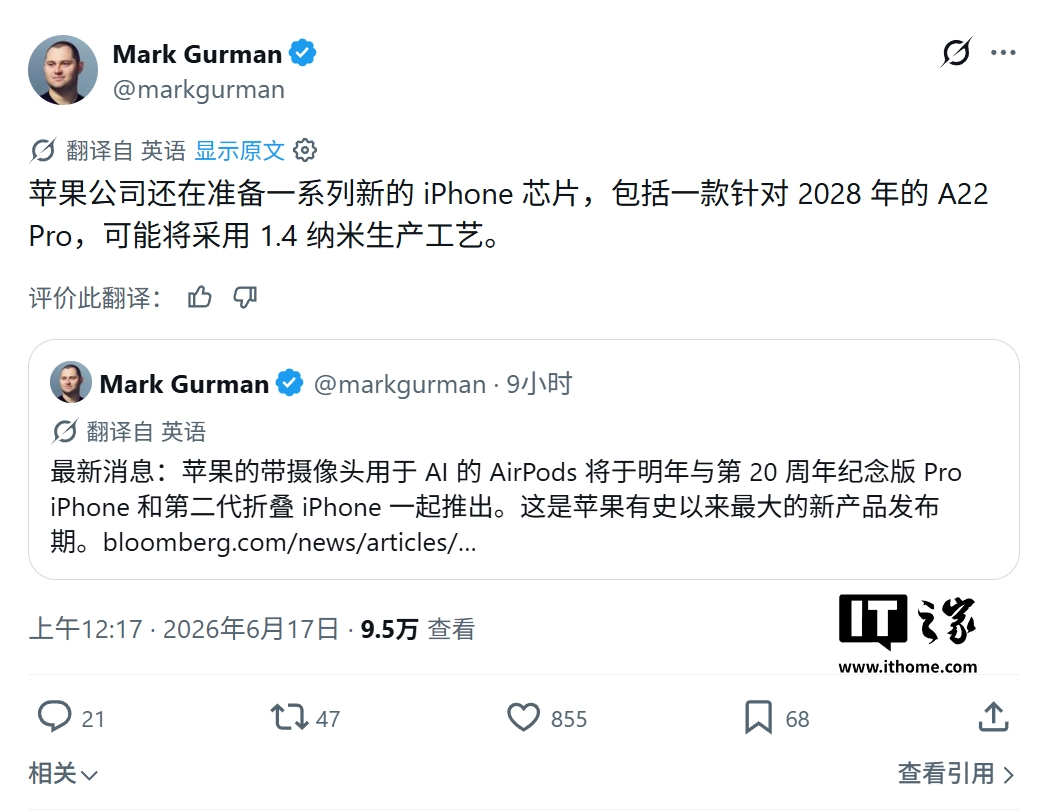
IT之家 6월 17일 소식에 따르면, 블룸버그 마크 거먼은 오늘 발행된 Power On 뉴스레터에서 Apple이 2028년 고급형 iPhone 모델에 1.4nm 공정의 A22 Pro 칩을 탑재할 계획이라고 밝혔다. 이 칩은 2nm 공정 대비 최대 15%의 성능 향상을 제공할 것으로 예상된다.
파운드리 파트너십과 관련하여 TSMC는 여전히 Apple의 주요 협력사이지만, 거먼은 Apple이 공급망 다변화를 위해 일부 주문을 Intel에 분산할 의향이 있다고 언급했다.
공정 로드맵을 보면, Apple iPhone 17 시리즈는 3세대 N3P 3nm 공정을 사용할 예정이다. 올해 9월 출시될 iPhone 18 Pro, iPhone 18 Pro Max 및 폴더블 iPhone(가칭 iPhone Ultra)은 2nm 칩을 최초로 탑재할 것으로 예상된다. 2027년 iPhone은 여전히 2nm 단계를 유지할 것으로 보이지만, 2028년에는 일부 iPhone 칩이 1.4nm로 업그레이드될 예정이다.
성능 측면에서, TSMC의 A14 공정 노드는 2nm N2 공정 노드 대비 최대 15%의 성능 향상과 동일 성능에서 30%의 전력 소비 감소를 제공할 것으로 알려졌다. 고급형 iPhone의 경우, 이는 더 강력한 온디바이스 컴퓨팅 능력과 더불어 향상된 배터리 수명 및 발열 관리 성능을 의미할 수 있다.
총평
Apple은 2028년 고급형 iPhone에 1.4nm A22 Pro 칩을 탑재하여 2nm 대비 최대 15%의 성능 향상과 30%의 전력 효율 개선을 목표로 하고 있다. TSMC가 주요 파운드리 파트너로 유지되지만, Apple은 공급망 다변화를 위해 Intel과의 협력도 고려 중이다. 이러한 기술 발전은 미래 iPhone의 온디바이스 컴퓨팅 능력, 배터리 수명 및 발열 관리에 긍정적인 영향을 미칠 것으로 기대된다.
芯片工艺演进
Apple 计划在未来数年内逐步推进更先进的制程技术:
- iPhone 17 系列预计采用第 3 代 N3P(3纳米)工艺。
- 2028 年的高端机型将规划使用 1.4nm 工艺的 A22 Pro 芯片。
代工厂合作动态
在生产合作伙伴方面,Apple 维持核心合作的同时寻求变动:
- 台积电(TSMC)仍是 Apple 的首选合作伙伴。
供应链多元化策略
为了降低风险并丰富生态,Apple 在供应商选择上采取新举措:
- Apple 有意分流部分订单给 Intel,以进一步多元化其供应链生态。
产品型号预测
关于未来具体机型的芯片搭载计划如下:
- iPhone 18 Pro、iPhone 18 Pro Max 以及折叠式 iPhone(预估名为 iPhone Ultra)预计将率先搭载 2nm 芯片。
- 2027 年的 iPhone 机型预计仍将停留在 2nm 工艺阶段。
技术性能与能效
新工艺带来的具体性能指标包括:
- 相较于 2nm 的 N2 工艺,1.4nm 工艺可提供最高 15% 的性能提升。
- 在同等性能下,1.4nm 工艺能降低 30% 的功耗。
- 这些改进旨在为高端机型提供更强的本地计算能力,并优化续航与散热表现。
总结
Apple 计划从 2028 年起在高端机型中引入 1.4nm 工艺以显著提升性能并降低功耗。同时,公司在继续与台积电合作的同时,正通过增加 Intel 的订单比例来推动供应链多元化。
Appleの次世代iPhoneチップ計画
IT之家の6月17日の報道によると、Bloombergのマーク・ガーマー氏が本日発行された「Power On」ニュースレターにおいて、Appleが2028年のハイエンドiPhoneモデルに1.4nmプロセスを採用したA22 Proチップを搭載する計画であることを明らかにしました。このチップは、2nmプロセスと比較して最大15%の性能向上を実現すると予測されています。
ファウンドリパートナーシップに関しては、TSMCが引き続きAppleの主要な協力先となりますが、ガーマー氏はAppleがサプライチェーンの多様化を見据え、一部の注文をIntelに分散させる意向があると言及しました。
プロセスのロードマップによると、次世代iPhoneの展開は以下の通りです。
- iPhone 17シリーズ:第3世代N3P 3nmプロセスを採用予定。
- iPhone 18 Pro、iPhone 18 Pro Max、および折りたたみ式iPhone(仮称:iPhone Ultra):2nmチップを初めて搭載する見込み。
- 2027年のiPhoneは引き続き2nmの段階を維持する見通しですが、2028年には一部のiPhoneチップが1.4nmへとアップグレードされる予定です。
性能面において、TSMCの1.4nmプロセスノードは、2nm N2プロセスと比較して最大15%の性能向上と、同等の性能における30%の消費電力削減を実現すると報じられています。ハイエンドiPhoneにおいては、これがより強力なオンデバイスコンピューティング能力に加え、バッテリー寿命の向上や熱管理性能の改善につながる可能性があります。
まとめ
Appleは2028年のハイエンドiPhoneに1.4nmプロセスのA22 Proチップを搭載し、2nmと比較して最大15%の性能向上と30%の電力効率改善を目指しています。TSMCを主要なパートナーとしつつも、サプライチェーンの多様化のためにIntelとの協力も検討しており、これらの技術進歩は将来のiPhoneにおけるオンデバイスコンピューティング能力、バッテリー寿命、および熱管理に好影響を与えることが期待されています。
Apple's Future iPhone Chip Roadmap
According to a report from IT Home on June 17, Bloomberg's Mark Gurman revealed in his Power On newsletter that Apple plans to equip high-end iPhone models with the A22 Pro chip using a 1.4nm process by 2028. This chip is expected to deliver up to a 15% performance increase compared to the 2nm process.
Regarding foundry partnerships, while TSMC remains Apple's primary collaborator, Gurman noted that Apple intends to diversify its supply chain by distributing some orders to Intel.
The manufacturing roadmap outlines the following transitions:
- iPhone 17 series: Will utilize the third-generation N3P 3nm process.
- iPhone 18 Pro, iPhone 18 Pro Max, and the foldable iPhone (tentatively "iPhone Ultra"): Expected to be the first to feature 2nm chips.
- 2027 models: Expected to remain on the 2nm stage.
- 2028 models: Certain iPhone chips are scheduled to upgrade to the 1.4nm process.
In terms of performance, TSMC's A14 process node is reported to provide up to a 15% performance boost and a 30% reduction in power consumption at equivalent performance levels compared to the 2nm N2 process node. For high-end iPhones, this translates to more powerful on-device computing capabilities along with improved battery life and thermal management.
Summary
Apple plans to introduce 1.4nm A22 Pro chips in its premium iPhone lineup by 2028, targeting significant improvements in performance and power efficiency over the 2nm standard. While maintaining TSMC as a primary partner, Apple is looking toward Intel to diversify its supply chain. These technological advancements are expected to enhance on-device computing, battery life, and thermal management for future flagship models.