신규 CoreAI 엔진 도입
IT소식에 따르면 기술 매체 Wccftech는 2026년 WWDC에서 Apple이 기존의 CoreML 프레임워크를 대체하는 CoreAI 엔진을 발표할 것이라고 보도했습니다. CoreAI는 특히 온디바이스 대규모 언어 모델(LLM) 추론에 최적화된 성능을 제공하도록 설계되었습니다.
기존 CoreML은 약 9년 동안 이미지 분류와 같은 소형 정적 작업에 주로 활용되어 왔으나, 새롭게 도입되는 CoreAI는 온디바이스 로컬 추론 및 에지 AI 시나리오를 겨냥합니다. 특히 대규모 언어 모델의 추론 성능을 최적화하고, 더욱 유연한 모델 포맷과 더 큰 모델 메모리 점유량을 지원하는 데 중점을 둡니다.
한편, Apple 생태계 내의 또 다른 머신러닝 프레임워크인 MLX는 연구, 학습 및 미세 조정(Fine-tuning)에 특화되어 있으며, 개발자들이 로컬 대형 모델을 테스트하고 배포할 때 주로 활용됩니다.
성능 벤치마크
초기 벤치마크 결과에 따르면 CoreAI는 '소형 모델에서 강력하며, 대형 모델에서는 MLX와 유사한 성능'을 보이는 특징이 있습니다.
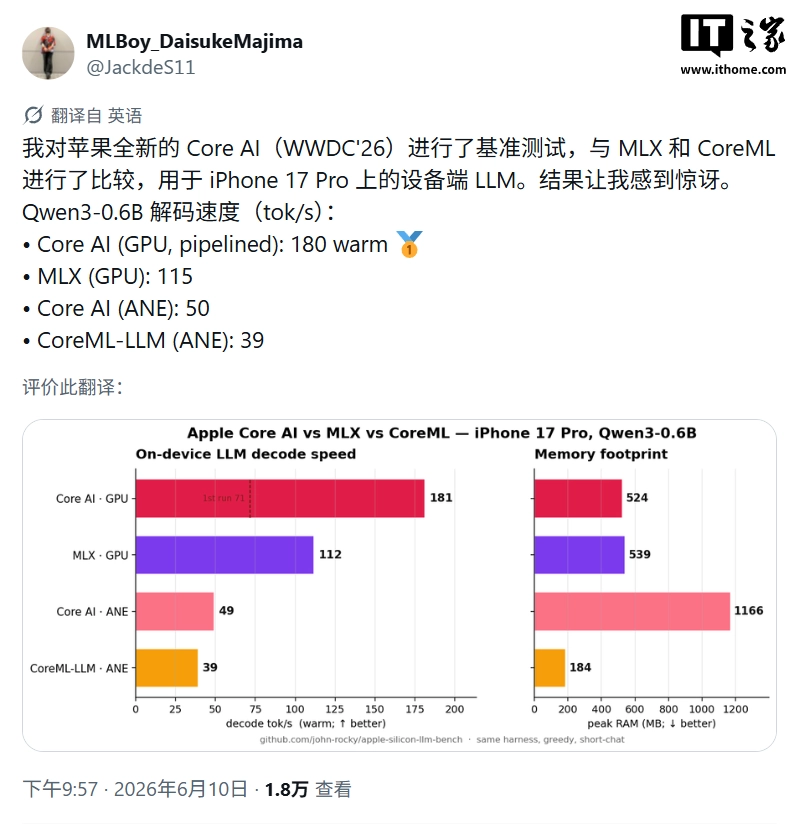
- M4 Mac에서 Qwen3 0.6B 모델 실행 시: CoreAI가 MLX보다 약 2.47배 빠른 디코딩 속도를 기록했습니다.
- iPhone 17 Pro에서 실행 시: CoreAI가 MLX보다 약 1.6배 높은 성능을 보였습니다.
디코딩 속도는 대형 언어 모델이 텍스트를 생성할 때 초당 출력하는 토큰 수(tok/s)를 의미하며, 이 수치가 높을수록 모델의 응답 속도가 빨라지고 사용자의 대기 시간이 단축됩니다.
모델 규모가 커져 80억 파라미터급인 Qwen3 8B(M4 Max 환경)로 올라가면 CoreAI는 MLX보다 약 5% 빠른 수준으로 성능 격차가 줄어듭니다. 이는 모델의 크기가 커질수록 CoreAI의 상대적인 성능 우위가 수렴함을 의미합니다.
지속성 및 타사 비교
지속적인 부하 환경에서 테스트한 결과, iPhone 17 Pro의 GPU는 장시간 구동 시 발열로 인한 클럭 저하(Throttling)가 발생하여 성능이 저하되는 반면, CoreML과 Apple Neural Engine(ANE)을 조합한 방식은 안정적인 성능 유지율에서 우위를 점했습니다.
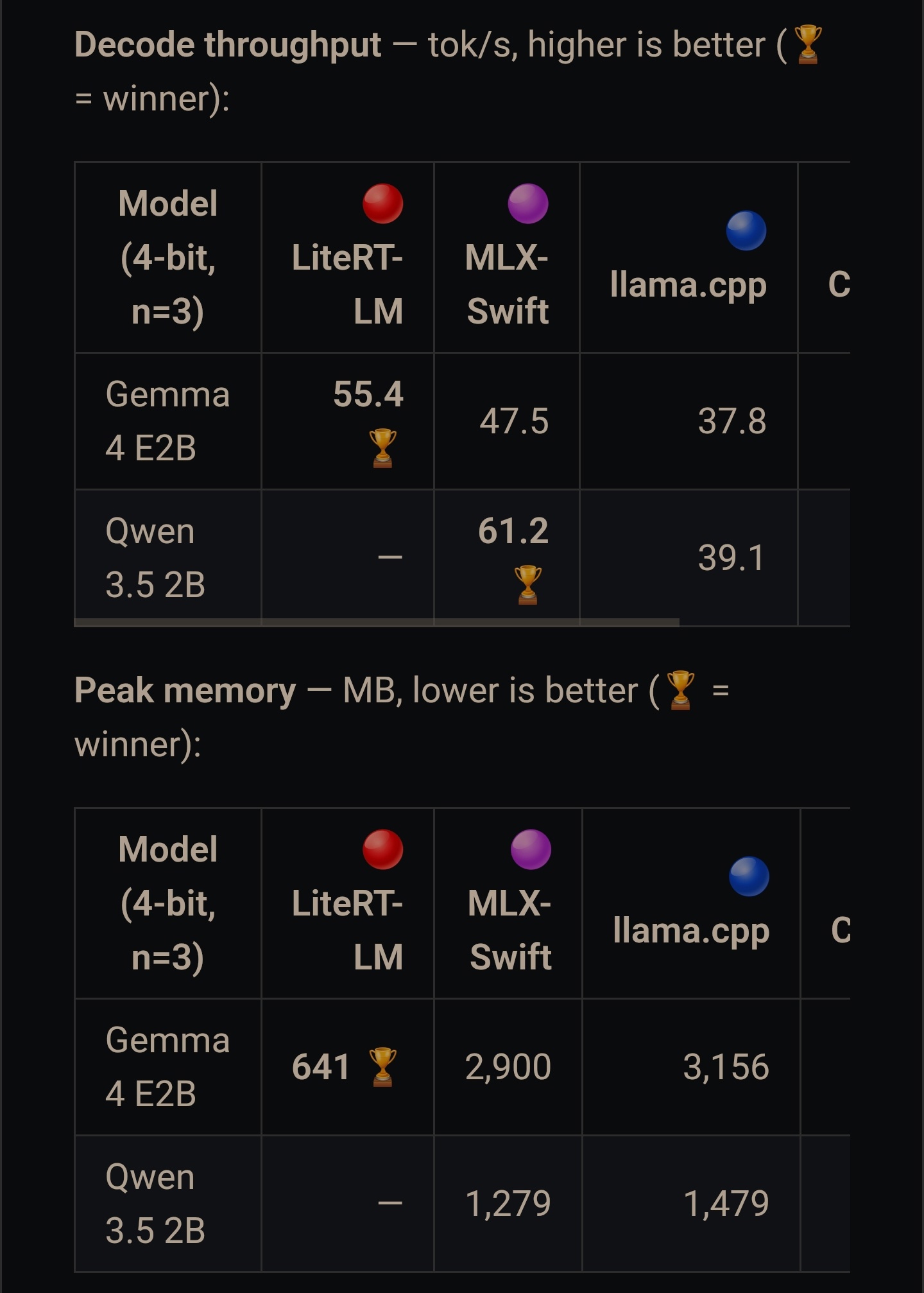
타사 솔루션과의 비교에서는 특정 모델에 최적화된 엔진이 더 유리한 결과를 보여주었습니다. 예를 들어 Google의 LiteRT-LM을 사용하여 Gemma를 실행할 경우, iPhone 17 Pro에서 초당 55.4 토큰을 달성하면서도 RAM 점유량은 641MB에 불과했습니다. 반면 동일 조건에서 Apple MLX는 2900MB의 메모리를 점유하여 약 4.5배 높은 메모리 사용량을 기록했습니다.
총평
Apple이 도입하는 CoreAI 엔진은 기존 CoreML을 넘어 온디바이스 대형 언어 모델(LLM) 추론에 최적화된 성능과 유연성을 제공할 것으로 기대됩니다. 특히 소형 모델에서 강력한 디코딩 속도를 보여주며, ANE와의 조합을 통해 안정적인 지속 성능을 확보하는 데 강점이 있습니다.
Apple 发布 CoreAI 引擎
Apple 计划在 2026 年 WWDC 上推出 CoreAI 引擎,旨在接替自 2017 年推出的 CoreML 框架。CoreML 主要面向图像分类等小型静态任务,而新推出的 CoreAI 则专注于端侧本地推理和边缘 AI 场景,重点优化大语言模型(LLM)的推理性能、支持更灵活的模型格式以及更大的模型内存占用。
CoreAI 与 MLX 的性能对比
在基准测试中,CoreAI 展示出“小模型强、大模型接近持平”的特征。与偏向研究、训练和微调任务的机器学习框架 MLX 相比:
- Qwen3 0.6B 模型(M4 Mac):CoreAI 的解码速度约为 MLX 的 2.47 倍。
- iPhone 17 Pro 端:CoreAI 的性能优势约为 1.6 倍。
- Qwen3 8B 模型(M4 Max):随着模型规模增加到 80 亿参数,CoreAI 比 MLX 快约 5%,两者解码性能基本持平。
硬件稳定性与跨厂商对比
在持续负载测试中,iPhone 17 Pro 的 GPU 在长时间运行后会触发温控降频,而 CoreML 配合 Apple 神经引擎(ANE)的组合在性能保持率上更具优势。
在横向对比中,针对特定模型深度优化的方案仍具有显著优势。例如谷歌的 LiteRT-LM 在 iPhone 17 Pro 上运行 Gemma 模型时:
- 解码速度达到 55.4 tokens/s;
- 内存占用仅为 641 MB(而 Apple MLX 的内存占用为 2900 MB,是前者的 4.5 倍)。
总结
Apple 将推出 CoreAI 引擎以取代 CoreML,旨在显著提升端侧大模型的推理性能和灵活性。测试显示 CoreAI 在小规模模型上具有明显的速度优势,但在超大规模模型上与 MLX 差距缩小。此外,针对特定模型深度优化的方案在内存效率方面仍优于通用的机器学习框架。
新CoreAIエンジンの導入
ITニュースによると、技術メディアのWccftechは、Appleが2026年のWWDCにおいて従来のCoreMLフレームワークに代わる「CoreAI」エンジンを発表すると報じています。CoreAIは、特にオンデバイスでの大規模言語モデル(LLM)推論に最適化された性能を提供するように設計されています。
従来のCoreMLは、約9年間にわたり画像分類などの小規模な静的タスクに主に活用されてきましたが、新たに導入されるCoreAIは、オンデバイスのローカル推論およびエッジAIシナリオをターゲットとしています。特に大規模言語モデルの推論性能の最適化、より柔軟なモデルフォーマット、およびより大きなモデルメモリ占有量のサポートに重点を置いています。
一方、Appleエコシステム内の別の機械学習フレームワークであるMLXは、研究、学習、および微調整(Fine-tuning)に特化しており、開発者がローカルの大規模モデルをテストし展開する際に主に活用されます。
パフォーマンスベンチマーク
初期のベンチマーク結果によると、CoreAIは「小型モデルにおいて強力で、大型モデルではMLXとほぼ同等の性能」を示すという特徴があります。
- M4 MacでQwen3 0.6Bモデルを実行時:CoreAIはMLXよりも約2.47倍速いデコード速度を記録しました。
- iPhone 17 Proで実行時:CoreAIはMLXよりも約1.6倍高い性能を示しました。
デコード速度とは、大規模言語モデルがテキストを生成する際に1秒間に出力されるトークン数(tok/s)を指し、この数値が高いほどモデルの応答速度が向上し、ユーザーの待ち時間が短縮されます。
モデルの規模が大きくなり、80億パラメータ級のQwen3 8B(M4 Max環境)になると、CoreAIはMLXよりも約5%速い水準となり、性能の差が縮まります。これは、モデルのサイズが大きくなるにつれて、CoreAIの相対的な優位性が収束することを意味しています。
持続性と他社比較
継続的な負荷環境でのテスト結果では、iPhone 17 ProのGPUは長時間駆動時に発熱によるクロック低下(Throttling)が発生して性能が低下するのに対し、CoreMLとApple Neural Engine(ANE)を組み合わせた手法は、安定したパフォーマンス維持において優位性を示しました。
他社ソリューションとの比較では、特定のモデルに最適化されたエンジンがより有利な結果を示しました。例えば、GoogleのLiteRT-LMを使用してGemmaを実行する場合、iPhone 17 Proで毎秒55.4トークンを達成しながら、RAM占有量はわずか641MBでした。一方、同じ条件でのApple MLXは2900MBのメモリを消費し、約4.5倍高いメモリ使用量を記録しました。
総評
Appleが導入するCoreAIエンジンは、従来のCoreMLを超え、オンデバイスの大規模言語モデル(LLM)推論に最適化された性能と柔軟性を提供すると期待されます。特に小型モデルにおいて強力なデコード速度を示し、ANEとの組み合わせによって安定した持続的なパフォーマンスを確保できる点が強みです。
まとめ
Appleは2026年のWWDCで、オンデバイスLLM推論に最適化された新エンジン「CoreAI」を発表する見込みです。このエンジンは特に小型モデルで優れたデコード速度を発揮し、ANEとの連携により安定した持続的なパフォーマンスを実現します。また、他社ソリューションと比較してもメモリ効率の面で高い優位性を示す可能性があります。
Introduction of New CoreAI Engine
According to reports from tech media Wccftech via IT news, Apple is expected to unveil a new "CoreAI" engine at WWDC 2026 to replace the existing CoreML framework. CoreAI is specifically designed to provide optimized performance for on-device Large Language Model (LLM) inference.
While the current CoreML has been primarily utilized for small, static tasks such as image classification for about nine years, the newly introduced CoreAI targets on-device local inference and edge AI scenarios. It focuses on optimizing LLM inference performance while supporting more flexible model formats and larger memory footprints.
Meanwhile, MLX—another machine learning framework within the Apple ecosystem—is specialized for research, training, and fine-tuning, and is primarily used by developers when testing and deploying large local models.
Performance Benchmarks
Initial benchmark results indicate that CoreAI is "powerful in small models while showing performance similar to MLX in larger models."
- M4 Mac (Qwen3 0.6B model): CoreAI recorded a decoding speed approximately 2.47 times faster than MLX.
- iPhone 17 Pro: CoreAI demonstrated performance about 1.6 times higher than MLX.
Decoding speed refers to the number of tokens produced per second (tok/s) when an LLM generates text; a higher value results in faster response speeds and reduced wait times for users.
As model sizes increase, such as with the Qwen3 8B on M4 Max environments, the performance gap narrows, with CoreAI being only about 5% faster than MLX. This indicates that CoreAI's relative performance advantage converges as the scale of the model increases.
Sustainability and Third-Party Comparison
In tests under sustained load conditions, the iPhone 17 Pro GPU experienced clock throttling due to heat during prolonged operation, leading to a drop in performance. In contrast, the method combining CoreML with the Apple Neural Engine (ANE) showed superior stability in maintaining consistent performance.
When compared with third-party solutions, engines optimized for specific models yielded more favorable results. For example, when running Gemma using Google's LiteRT-LM on an iPhone 17 Pro, it achieved 55.4 tokens per second while consuming only 641MB of RAM. Under the same conditions, Apple MLX consumed 2900MB of memory, recording approximately 4.5 times higher memory usage.
Overall Review
The CoreAI engine introduced by Apple is expected to provide optimized performance and flexibility for on-device LLM inference beyond the capabilities of the existing CoreML. It shows particularly strong decoding speeds in smaller models and excels in maintaining stable, sustained performance when integrated with the ANE.
Summary
Apple plans to introduce a new CoreAI engine at WWDC 2026 to replace CoreML, specifically targeting optimized on-device LLM inference and edge AI scenarios. Benchmarks show that CoreAI significantly outperforms MLX in smaller models while providing superior stability when paired with the Apple Neural Engine (ANE). The new framework aims to provide a more flexible and efficient environment for local large model deployment.
Apple 发布新一代推理引擎 CoreAI
Apple 在 WWDC 上推出了全新的 CoreAI 引擎,旨在接替服役 9 年的 CoreML 框架。相比于以往主要处理图像分类等小型静态任务的 CoreML,CoreAI 专门针对端侧大模型(LLM)推理和边缘 AI 场景进行了优化,支持更灵活的模型格式以及更大的内存占用。
CoreAI 与 MLX 的性能对比
在基准测试中,CoreAI 在处理不同规模的模型时表现出不同的优势特征:
- Qwen3 0.6B 模型(M4 Mac):CoreAI 的解码速度约为 MLX 的 2.47 倍。
- iPhone 17 Pro 端:CoreAI 的解码速度约比 MLX 快 1.6 倍。
- Qwen3 8B 模型(M4 Max):随着模型规模增加,CoreAI 比 MLX 快 5%,性能优势随模型变大而收窄。
硬件优化与跨厂商对比
在极端环境和特定优化方面,不同方案表现各异:
- 持续负载表现: 由于 iPhone 17 Pro 的 GPU 在长时间运行后会触发温控降频,CoreML 配合 Apple 神经引擎(ANE)的组合在性能保持率上更具优势。
- 跨厂商对比: 针对特定模型优化的方案仍具有竞争力。例如,Google 的 LiteRT-LM 在 iPhone 17 Pro 上运行 Gemma 时,解码速度达到 55.4 tokens/s,且内存占用仅为 641 MB;而同等条件下,Apple MLX 的内存占用为 2900 MB,约为前者的 4.5 倍。
总结
Apple 推出的 CoreAI 是针对端侧大模型推理设计的核心引擎,在小规模模型的解码速度上显著优于 MLX 框架。尽管在大模型上的性能优势会随规模增加而收窄,但通过与 ANE 结合,CoreAI 能提供更稳定的持续运行表现。同时,特定厂商深度优化的方案在内存占用等指标上仍具有极高竞争力。
新CoreAIエンジンの導入
ITニュースによると、技術メディアWccftechは、Appleが2026年のWWDCにおいて、従来のCoreMLフレームワークに代わる「CoreAI」エンジンを発表すると報じました。CoreAIは、特にオンデバイスでの大規模言語モデル(LLM)推論に最適化された性能を提供することを目的に設計されています。
従来のCoreMLは約9年間にわたり、画像分類などの小型で静的なタスクに主に活用されてきましたが、新たに導入されるCoreAIは、オンデバイスのローカル推論およびエッジAIシナリオをターゲットとしています。特に、大規模言語モデルの推論性能の最適化、より柔軟なモデルフォーマットへの対応、およびより大きなモデルメモリ占有量のサポートに重点を置いています。
なお、Appleエコシステム内の別の機械学習フレームワークであるMLXは、研究、学習、および微調整(Fine-tuning)に特化しており、開発者がローカルの大規模モデルをテストし展開する際に主に活用されます。
性能ベンチマーク
初期のベンチマーク結果によると、CoreAIは「小型モデルにおいて強力で、大型モデルではMLXとほぼ同等の性能」を示す特徴があります。
- M4 MacでQwen3 0.6Bモデルを実行時:CoreAIはMLXよりも約2.47倍速いデコード速度を記録しました。
- iPhone 17 Proで実行時:CoreAIはMLXよりも約1.6倍高い性能を示しました。
デコード速度とは、大規模言語モデルがテキストを生成する際に1秒間に出力するトークン数(tok/s)を指し、この数値が高いほどモデルの応答速度が向上し、ユーザーの待ち時間が短縮されます。
モデルサイズが大きくなり、80億パラメータ級のQwen3 8B(M4 Max環境)になると、CoreAIはMLXよりも約5%速い水準となり、性能の差が縮まります。これは、モデルの規模が大きくなるにつれて、CoreAIの相対的な優位性が収束することを意味しています。
持続性と他社比較
継続的な負荷環境でのテスト結果では、iPhone 17 ProのGPUは長時間駆動時に発熱によるクロック低下(Throttling)が発生し性能が低下する一方、CoreMLとApple Neural Engine(ANE)を組み合わせた手法は、安定したパフォーマンス維持において優位性を示しました。
他社ソリューションとの比較では、特定のモデルに最適化されたエンジンがより有利な結果を示しました。例えば、GoogleのLiteRT-LMを使用してGemmaを実行する場合、iPhone 17 Proで毎秒55.4トークンを達成しながら、RAM使用量はわずか641MBでした。対照的に、同じ条件下でのApple MLXは2900MBのメモリを消費し、約4.5倍高いメモリ使用量を記録しました。
まとめ
Appleが導入するCoreAIエンジンは、従来のCoreMLを超え、オンデバイスLLM推論に最適化された性能と柔軟性を提供します。特に小型モデルにおける高速なデコード速度と、ANEとの組み合わせによる安定した持続性能が大きな強みとなります。
Introduction of New CoreAI Engine
According to reports from tech media Wccftech, Apple is expected to unveil the CoreAI engine at WWDC 2026 to replace the existing CoreML framework. While CoreML has been utilized for approximately nine years primarily for small static tasks such as image classification, the new CoreAI is specifically designed to provide optimized performance for on-device Large Language Model (LLM) inference.
CoreAI aims to target on-device local inference and edge AI scenarios. It focuses on optimizing the inference performance of LLMs, supporting more flexible model formats, and accommodating larger model memory footprints. In contrast, another framework within the Apple ecosystem, MLX, remains specialized for research, training, and fine-tuning, primarily used by developers to test and deploy large local models.
Performance Benchmarks
Initial benchmark results indicate that CoreAI is "strong in small models" while delivering performance similar to MLX in larger models. The following data highlights the performance differences:
- Qwen3 0.6B model on M4 Mac: CoreAI recorded a decoding speed approximately 2.47 times faster than MLX.
- iPhone 17 Pro: CoreAI demonstrated performance roughly 1.6 times higher than MLX.
Decoding speed refers to the number of tokens per second (tok/s) an LLM generates; a higher value results in faster response speeds and reduced wait times for users. As model sizes increase—such as with the Qwen3 8B model on M4 Max environments—the performance gap narrows, with CoreAI performing only about 5% faster than MLX. This suggests that CoreAI's relative performance advantage converges as the scale of the model increases.
Sustainability and Third-Party Comparison
In tests involving sustained loads, the GPU on the iPhone 17 Pro experienced performance degradation due to thermal throttling. However, a combination of CoreML and Apple Neural Engine (ANE) demonstrated superior stability in maintaining consistent performance over time.
When compared with third-party solutions, engines optimized for specific models showed more favorable results. For example, when running Gemma using Google's LiteRT-LM on an iPhone 17 Pro, the system achieved 55.4 tokens per second while consuming only 641MB of RAM. Under the same conditions, Apple MLX consumed 2900MB of memory, which is approximately 4.5 times higher than the LiteRT-LM approach.
Summary
Apple's upcoming CoreAI engine is designed to surpass the capabilities of CoreML by providing optimized performance and flexibility for on-device LLM inference. It shows significant advantages in decoding speeds for smaller models and maintains stable performance when paired with the Apple Neural Engine (ANE).
Apple 推出的 CoreAI 引擎
Apple 计划在 2026 年 WWDC 上推出 CoreAI 引擎,旨在接替服役 9 年的 CoreML 框架。CoreML 主要面向图像分类等小型静态任务,而新推出的 CoreAI 则专注于端侧本地推理和边缘 AI 场景,重点优化大语言模型(LLM)推理、支持更灵活的模型格式以及更大的内存占用。
CoreAI 与 MLX 的性能对比
在基准测试中,CoreAI 呈现出“小模型强、大模型接近持平”的特征。与侧重研究和训练任务的 MLX 框架相比:
- Qwen3 0.6B 模型(M4 Mac):CoreAI 解码速度约为 MLX 的 2.47 倍。
- Qwen3 0.6B 模型(iPhone 17 Pro):CoreAI 解码速度约为 MLX 的 1.6 倍。
- Qwen3 8B 模型(M4 Max):CoreAI 比 MLX 快约 5%,性能优势随模型规模增大而收窄。
持续负载与跨厂商对比
在极端环境测试中,iPhone 17 Pro 的 GPU 在长时间运行后会触发温控降频,而 CoreML 配合 Apple 神经引擎(ANE)的组合在性能保持率上更具优势。
在横向对比中,针对特定模型深度优化的方案仍具有显著优势。例如谷歌的 LiteRT-LM 在驱动 Gemma 模型时:
- 在 iPhone 17 Pro 上达到每秒 55.4 tokens 的解码速度;
- 内存占用仅为 641 MB,而 Apple MLX 的内存占用为 2900 MB(约为前者的 4.5 倍)。
总结
Apple 将推出 CoreAI 引擎以取代 CoreML,旨在显著提升端侧大模型推理性能。测试显示 CoreAI 在小规模模型上具有明显优势,但在超大规模模型上与 MLX 差距缩小。此外,针对特定模型深度优化的方案在内存效率上仍优于通用框架。
新CoreAIエンジンの導入
ITニュースによると、技術メディアのWccftechは、Appleが2026年のWWDCにおいて従来のCoreMLフレームワークに代わる「CoreAI」エンジンを発表すると報じています。CoreAIは、特にオンデバイスでの大規模言語モデル(LLM)推論に最適化された性能を提供するように設計されています。
従来のCoreMLは、約9年間にわたり画像分類などの小規模な静的タスクに主に活用されてきましたが、新たに導入されるCoreAIは、オンデバイスのローカル推論およびエッジAIシナリオをターゲットとしています。特に大規模言語モデルの推論性能の最適化、より柔軟なモデルフォーマット、およびより大きなモデルメモリ占有量のサポートに重点を置いています。
一方、Appleエコシステム内の別の機械学習フレームワークであるMLXは、研究、学習、および微調整(Fine-tuning)に特化しており、開発者がローカルの大規模モデルをテストし展開する際に主に活用されます。
パフォーマンスベンチマーク
初期のベンチマーク結果によると、CoreAIは「小型モデルにおいて強力で、大型モデルではMLXとほぼ同等の性能」を示すという特徴があります。
- M4 MacでQwen3 0.6Bモデルを実行時:CoreAIはMLXよりも約2.47倍速いデコード速度を記録しました。
- iPhone 17 Proで実行時:CoreAIはMLXよりも約1.6倍高い性能を示しました。
デコード速度とは、大規模言語モデルがテキストを生成する際に1秒間に出力されるトークン数(tok/s)を指し、この数値が高いほどモデルの応答速度が向上し、ユーザーの待ち時間が短縮されます。
モデルの規模が大きくなり、80億パラメータ級のQwen3 8B(M4 Max環境)になると、CoreAIはMLXよりも約5%速い水準となり、性能の差が縮まります。これは、モデルのサイズが大きくなるにつれて、CoreAIの相対的な優位性が収束することを意味しています。
持続性と他社比較
継続的な負荷環境でのテスト結果では、iPhone 17 ProのGPUは長時間駆動時に発熱によるクロック低下(Throttling)が発生して性能が低下するのに対し、CoreMLとApple Neural Engine(ANE)を組み合わせた手法は、安定したパフォーマンス維持において優位性を示しました。
他社ソリューションとの比較では、特定のモデルに最適化されたエンジンがより有利な結果を示しました。例えば、GoogleのLiteRT-LMを使用してGemmaを実行する場合、iPhone 17 Proで毎秒55.4トークンを達成しながら、RAM占有量はわずか641MBでした。一方、同じ条件でのApple MLXは2900MBのメモリを消費し、約4.5倍高いメモリ使用量を記録しました。
総評
Appleが導入するCoreAIエンジンは、従来のCoreMLを超え、オンデバイスの大規模言語モデル(LLM)推論に最適化された性能と柔軟性を提供すると期待されます。特に小型モデルにおいて強力なデコード速度を示し、ANEとの組み合わせによって安定した持続的なパフォーマンスを確保できる点が強みです。
まとめ
Appleは2026年のWWDCで、オンデバイスLLM推論に最適化された新エンジン「CoreAI」を発表する見込みです。このエンジンは特に小型モデルで優れたデコード速度を発揮し、ANEとの連携により安定した持続的なパフォーマンスを実現します。また、特定のモデルに特化したソリューションと比較しても、メモリ効率の面で高い優位性を示す可能性があります。
Introduction of New CoreAI Engine
According to reports from tech media Wccftech via IT news, Apple is expected to unveil a new "CoreAI" engine at WWDC 2026 to replace the existing CoreML framework. While CoreML has been utilized for approximately nine years primarily for small, static tasks such as image classification, the upcoming CoreAI is specifically designed for on-device local inference and edge AI scenarios.
The new engine focuses on optimizing performance for Large Language Model (LLM) inference, supporting more flexible model formats, and accommodating larger memory footprints. In contrast, MLX remains a specialized framework within the Apple ecosystem intended for research, training, and fine-tuning, which developers typically use when testing and deploying large local models.
Performance Benchmarks
Initial benchmark results indicate that CoreAI is "powerful in small models while showing performance similar to MLX in larger models."
- M4 Mac (Qwen3 0.6B model): CoreAI recorded a decoding speed approximately 2.47 times faster than MLX.
- iPhone 17 Pro: CoreAI demonstrated performance roughly 1.6 times higher than MLX.
Decoding speed refers to the number of tokens produced per second (tok/s) when an LLM generates text; a higher value results in faster response speeds and reduced wait times for users. As model sizes increase, such as with the Qwen3 8B on M4 Max environments, the performance gap narrows significantly, with CoreAI being only about 5% faster than MLX. This suggests that CoreAI's relative advantage converges as the scale of the model increases.
Sustainability and Third-Party Comparison
In tests involving sustained workloads, the iPhone 17 Pro's GPU experienced performance degradation due to thermal throttling during long periods of operation. In contrast, the combination of CoreML and the Apple Neural Engine (ANE) demonstrated superior stability in maintaining performance over time.
When compared to third-party solutions, engines optimized for specific models showed significant advantages in efficiency. For example, when running Gemma using Google's LiteRT-LM on an iPhone 17 Pro, the system achieved a decoding speed of 55.4 tok/s with only 641MB of RAM usage. Under identical conditions, Apple MLX consumed 2900MB of memory, which is approximately 4.5 times higher than the LiteRT-LM implementation.
Summary
Apple plans to introduce CoreAI at WWDC 2026 as a specialized replacement for CoreML, specifically optimized for on-device LLM inference and edge AI applications. Benchmarks show that CoreAI provides significant speed advantages for smaller models while maintaining parity with MLX on larger models, while also offering better thermal stability when paired with the Apple Neural Engine.