AI와 시스템 통합
IT홈의 보도에 따르면, 시장 조사 기관 Counterpoint는 최근 보고서를 통해 스마트폰 내 AI가 독립적인 기능에서 시스템 수준의 상호작용 관문으로 진화하고 있다고 밝혔습니다. 사용자 요구사항 또한 단발성 질의응답에서 앱 간 경계를 넘나드는 다단계 작업 수행으로 변화하고 있으며, 인터랙션 로직은 더 이상 애플리케이션 계층에서의 수동 실행에 의존하지 않고 AI를 직접 호출하여 작업을 완료하는 방식으로 바뀌고 있습니다.
폴더블 디스플레이의 역할과 가치
이러한 변화는 디스플레이에 더 높은 요구사항을 제시합니다. 복잡한 작업은 원본 콘텐츠를 확인하는 동시에 AI가 생성한 결과를 비교하고 다음 단계를 결정해야 하므로, 빈번한 앱 전환은 효율성을 크게 저하시킵니다. 북 타입 폴더블(대형 폴더블) 스마트폰은 더 큰 내부 화면과 강력한 멀티태스킹 처리 능력을 바탕으로 이러한 요구를 충족하며, 복잡한 작업 흐름을 시각화하고 정보를 병렬로 처리하여 한 번에 해결할 수 있는 환경을 제공합니다. 이를 통해 AI 생산성을 극대화하며, 단순한 대형 디스플레이를 넘어 효율적인 AI 작업 실행 플랫폼으로서의 가치를 입증하고 있습니다.
Counterpoint는 AI가 폴더블 디스플레이의 수요를 새롭게 창출하는 것은 아니지만, 대형 폴더블 기기의 가치를 몇 배로 증폭시킨다고 분석했습니다. 많은 AI 지원 작업에서 사용자는 단순히 하나의 답변만을 원하는 것이 아니라, 원본을 확인하고 AI 결과를 검증하며 그에 따른 다음 단계를 결정해야 합니다. 북 타입 폴더블의 대형 내부 화면은 더 많은 작업 프로세스를 지속적으로 시각화할 수 있게 하며, 이로 인해 기기의 가치는 단순한 형태적 특징에서 복잡한 작업 실행을 위한 '워크플로우 캔버스'로 진화하고 있습니다.
디스플레이 비율에 따른 차별화
북 타입 폴더블 디스플레이 내부에서도 화면 비율에 따라 차별화된 포지셔닝이 형성됩니다. 전통적인 비율의 대형 폴더블은 생산성과 휴대성의 균형을 강조하며, 분할 화면, 멀티 윈도우 및 작업 전환 최적화를 통해 문서 처리, 정보 정리, AI 지원 편집 등의 시나리오에 적합합니다. 반면, 와이드(Wide) 형태의 폴더블은 콘텐츠 경험에 더 중점을 두며, 넓은 표시 영역을 통해 태블릿과 유사한 시각적 경험을 제공하여 독서, 웹 서핑, 동영상 시청 및 문서 미리보기를 더욱 몰입감 있게 만들어줍니다. 따라서 두 형태는 단순한 우열의 문제가 아니라 각각 모바일 생산성과 몰입형 콘텐츠 소비라는 서로 다른 방향을 지향합니다.
시장 전망
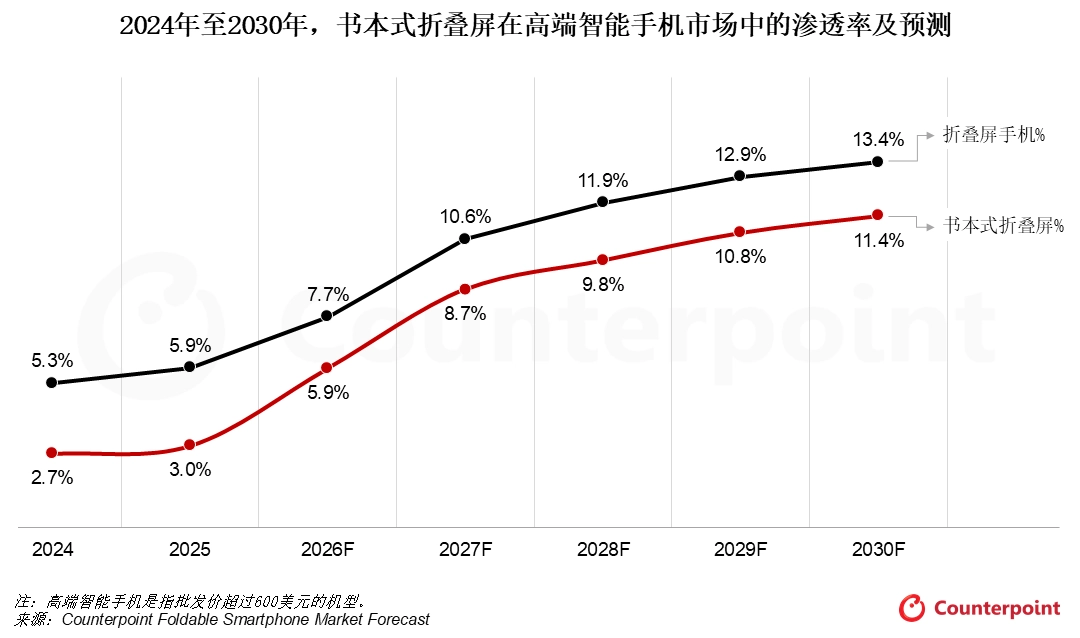
Counterpoint의 예측에 따르면, 프리미엄 스마트폰 시장에서 북 타입 폴더블 디스플레이의 점유율은 2024년 2.7%에서 2030년 11.4%로 4배 이상 급증할 전망입니다. AI 지원 워크플로우가 하이엔드 사용자의 중요성이 지속적으로 높아짐에 따라, 폴더블 디스플레이 중에서도 생산성과 멀티태스킹 능력을 가장 강조하는 북 타입 폴더블의 중요성은 프리미엄 스마트폰 시장에서 더욱 강화될 것으로 예상됩니다.
총평
AI가 시스템 수준의 상호작용으로 진화함에 따라, 복잡한 워크플로우를 시각화하고 처리할 수 있는 대형 폴더블 디스플레이의 가치가 더욱 부각되고 있습니다. 특히 북 타입 폴더블은 단순한 화면 확장을 넘어 AI 생산성을 극대화하는 핵심 플랫폼으로서 프리미엄 시장에서 중요한 역할을 할 것으로 전망됩니다.
AI 交互逻辑的演进
Counterpoint 发布报告指出,手机中的 AI 正从独立功能演变为系统级交互入口。用户需求正从单轮问答转向跨应用、多步骤的任务执行,要求 AI 直接调用来完成复杂任务而非仅在应用层手动操作。
大折叠屏作为 AI 生产力平台
由于复杂任务需要同时查看原始内容并比对 AI 生成结果,书本式 foldble display(大折叠)凭借更大的内屏和更强的多任务承载能力,成为了理想的“工作流画布”。其核心价值已从单纯提供大屏幕空间转变为成为高效的 AI 任务执行平台。
不同形态的差异化定位
在书本式 foldble display 中,不同的屏幕比例形成了明确的差异化定位:
- 传统比例大折叠:强调生产力与便携性的平衡,更适合文档处理、信息整理和 AI 辅助编辑。
- 阔折叠:侧重于内容体验,提供接近平板电脑的视觉感受,更适合阅读、网页浏览和视频观看。
市场预测
Counterpoint 预测,随着 AI 辅助工作流对高端用户的重要性提升,书本式 foldble display 在高端智能手机市场的份额将显著增长:
- 2024 年预计占比:2.7%
- 2030 年预测占比:11.4%(预计增长逾四倍)
总结
随着 AI 演进为系统级交互,书本式 foldble display 因其强大的多任务处理能力和“工作流画布”属性,成为承载复杂 AI 工作流的关键硬件。预测显示,到 2030 年,该类产品在高端智能手机市场的份额将大幅提升。
AIとシステムの統合
ITホームの報道によると、調査機関Counterpointは最新のレポートにおいて、スマートフォン内のAIが独立した機能からシステムレベルの相互作用へのゲートウェイへと進化していることを明らかにしました。ユーザーの要求も、単発の質疑応答からアプリの境界を越えた多段階のタスク遂行へと変化しており、インタラクションのロジックはもはやアプリケーション層での手動実行に依存するのではなく、AIを直接呼び出してタスクを完了させる方式へと移行しています。
折りたたみ式ディスプレイの役割と価値
このような変化は、ディスプレイに対してより高度な要求を突きつけています。複雑なタスクを実行する際、ユーザーは元のコンテンツを確認しながらAIが生成した結果を比較し、次のステップを決定する必要があるため、頻繁なアプリの切り替えは効率を著しく低下させます。ブック型(大型)折りたたみスマートフォンは、より大きな内画面と強力なマルチタスク処理能力に基づいてこれらの要求を満たし、複雑なワークフローを視覚化し、情報を並列に処理して一度に解決できる環境を提供します。これにより、AIの生産性を最大化し、単なる大型ディスプレイを超えた「効率的なAI作業実行プラットフォーム」としての価値を証明しています。
Counterpointは、AIが折りたたみ式ディスプレイの需要を新たに創出するわけではないものの、大型折りたたみデバイスの価値を数倍に増幅させると分析しています。多くのAI支援タスクにおいて、ユーザーは単一の回答だけを求めているのではなく、元データを照らし合わせ、AIの結果を検証し、それに応じた次のアクションを決定する必要があります。ブック型折りたたみ式の大きな内画面は、より多くの作業プロセスを継続的に視覚化することを可能にし、デバイスの価値を単なる形状的な特徴から、複雑なタスク実行のための「ワークフロー・キャンバス」へと進化させています。
ディスプレイ比率による差別化
ブック型折りたたみディスプレイ内でも、画面の比率によって異なるポジショニングが形成されます。伝統的な比率の大型折りたたみ機は、生産性と携帯性のバランスを重視しており、分割画面、マルチウィンドウ、およびタスク切り替えの最適化を通じて、文書処理、情報の整理、AI支援による編集などのシナリオに適しています。一方、ワイド(Wide)型の折りたたみ機はコンテンツ体験により重点を置いており、広い表示領域を通じてタブレットに近い視覚体験を提供し、読書、ウェブ閲覧、動画視聴、および文書のプレビューをより没入感のあるものにします。したがって、これら2つの形態は単純な優劣の問題ではなく、それぞれ「モバイル生産性」と「没入型コンテンツ消費」という異なる方向性を目指しています。
市場予測
Counterpointの予測によると、プレミアムスマートフォン市場におけるブック型折りたたみディスプレイのシェアは、以下の通り急増する見込みです。
- 2024年:2.7%
- 2030年:11.4%
AI支援ワークフローの重要性がハイエンドユーザーの間で高まるにつれ、折りたたみ式ディスプレイの中でも特に生産性とマルチタスク能力を強調するブック型折りたたみデバイスの重要性は、プレミアムスマートフォン市場においてさらに強化されると予想されます。
まとめ
AIがシステムレベルの相互作用へと進化する中で、複雑なワークフローを視覚化し処理できる大型折りたたみ式ディスプレイの価値が再評価されています。特にブック型は、単なる画面の拡張を超え、AI生産性を最大化するための重要なプラットフォームとしてプレミアム市場で重要な役割を果たすと予測されます。
AI and System Integration
According to a report by Counterpoint, AI within smartphones is evolving from independent features into system-level interaction gateways. User demands are shifting from one-off Q&A interactions toward multi-step tasks that cross application boundaries. Consequently, interaction logic is moving away from manual execution at the application layer toward a model where AI is directly invoked to complete complex tasks.
The Role and Value of Foldable Displays
This shift places higher demands on display technology. Because complex tasks require users to view original content while simultaneously comparing it with AI-generated results to determine the next steps, frequent app switching significantly degrades efficiency. Book-type foldables (large foldables) meet these requirements by providing larger internal screens and powerful multitasking capabilities, creating an environment where complex workflows can be visualized and information can be processed in parallel.
Counterpoint analysis suggests that while AI does not necessarily create new demand for foldable displays, it significantly amplifies the value of large foldable devices. In many AI-supported tasks, users do not just want a single answer; they need to verify results against original sources and decide on subsequent actions. The large internal screens of book-type foldables allow these processes to be visualized continuously, evolving the device's value from a mere aesthetic feature into a "workflow canvas" for complex task execution.
Differentiation by Display Ratio
Even within book-type foldables, different positioning is emerging based on screen ratios:
- Traditional Ratios: These emphasize a balance between productivity and portability. They are optimized for scenarios such as document processing, information organization, and AI-assisted editing through split screens, multi-window support, and seamless task switching.
- Wide Formats: These focus more on the content experience. By providing a wider display area, they offer a tablet-like visual experience that makes reading, web surfing, watching videos, and previewing documents more immersive.
Therefore, these two forms are not a matter of superiority but rather serve different goals: mobile productivity versus immersive content consumption.
Market Outlook
Counterpoint predicts that the share of book-type foldable displays in the premium smartphone market will surge from 2.7% in 2024 to 11.4% by 2030, an increase of more than fourfold. As the importance of AI-supported workflows continues to rise among high-end users, the significance of book-type foldables—which emphasize productivity and multitasking—is expected to strengthen further in the premium market.
Summary
As AI evolves into a system-level interaction gateway, large foldables are becoming essential platforms for managing complex, multi-step workflows. These devices provide a "workflow canvas" that maximizes AI productivity by allowing users to process information in parallel on larger screens. Consequently, the market share of book-type foldables in the premium segment is projected to grow significantly through 2030.
AI 功能演进与交互变革
根据 Counterpoint 的调研报告,手机中的 AI 正在从独立功能演变为系统级交互入口。用户需求正从简单的单轮问答转向跨应用、多步骤的任务执行,要求 AI 直接参与并完成复杂的任务流。
大折叠屏作为 AI 生产力平台
由于复杂任务需要用户同时查看原始内容、比对 AI 生成结果并决定后续操作,频繁切换应用会降低效率。书本式(大折叠)手机凭借更大的内屏和更强的多任务承载能力,能够提供持续的视觉化工作流,其价值已从单纯的大屏幕空间转变为高效的 AI 任务执行平台。
不同折叠形态的差异化定位
在书本式折叠屏中,不同的比例对应不同的用户场景:
- 传统比例大折叠:侧重生产力与便携性的平衡,适合分屏、多窗口操作及 AI 辅助编辑。
- 阔折叠:更侧重内容体验,提供接近平板电脑的视觉感受,适用于阅读、网页浏览和视频观看。
市场预测与增长趋势
Counterpoint 预测,随着 AI 工作流对高端用户的重要性提升,书本式折叠屏在高端智能手机市场的份额将大幅增长:
- 2024 年预计市场份额为 2.7%。
- 到 2030 年预计将飙升至 11.4%(增长逾四倍)。
总结
随着 AI 从单一功能转向系统级任务执行,书本式折叠屏因其强大的多任务处理能力,正成为承载复杂 AI 工作流的关键平台。Counterpoint 预测到 2030 年,此类设备在高端智能手机市场的份额将显著增长至 11.4%。
AIとシステムの統合
ITホームの報道によると、市場調査機関Counterpointは最新のレポートにおいて、スマートフォン内のAIが独立した機能からシステムレベルのインタラクション・ゲートウェイへと進化していることを明らかにしました。ユーザーの要求も単発的な質疑応答から、アプリの境界を越えて複数のステップを実行するタスクへと変化しており、操作ロジックはアプリケーション層での手動実行に依存せず、AIを直接呼び出してタスクを完遂する仕組みへと移行しています。
折りたたみ式ディスプレイの役割と価値
この変化は、ディスプレイに対してより高度な要求を突きつけています。複雑なタスクを実行する際、ユーザーは元のコンテンツを確認しながらAIが生成した結果を比較し、次のステップを決定する必要があるため、頻繁なアプリの切り替えは効率を著しく低下させます。ブック型(大型)折りたたみスマートフォンは、より大きな内側画面と強力なマルチタスク処理能力を武器にこれらの要求を満たします。複雑なワークフローを視覚化し、情報を並列に処理することで、一度に解決できる環境を提供します。これにより、単なる大型ディスプレイの枠を超え、効率的なAI作業実行プラットフォームとしての価値を証明しています。
Counterpointは、AIが折りたたみ式ディスプレイの需要を新たに創出するわけではないものの、大型デバイスの価値を数倍に増幅させると分析しています。多くのAI支援タスクにおいて、ユーザーは単一の回答だけを求めているのではなく、元の情報を確認し、AIの結果を検証しながら次のアクションを決定する必要があります。ブック型折りたたみ式の広大な内蔵画面は、より多くの作業プロセスを継続的に視覚化することを可能にし、デバイスの価値を「ワークフロー・キャンバス」へと進化させています。
ディスプレイ比率による差別化
ブック型折りたたみディスプレイにおいても、画面比率によって異なるポジショニングが形成されています。
- 伝統的な比率の大型折りたたみ:生産性と携帯性のバランスを重視。分割画面、マルチウィンドウ、タスク切り替えの最適化を通じて、文書処理、情報の整理、AI支援による編集などのシナリオに適しています。
- ワイド(Wide)型の折りたたみ:コンテンツ体験に重点。広い表示領域によりタブレットに近い視覚体験を提供し、読書、ウェブ閲覧、動画視聴、ドキュメントのプレビューなどをより没入感のあるものにします。
これら2つの形態は単純な優劣の問題ではなく、それぞれ「モバイル生産性」と「没入型コンテンツ消費」という異なる方向性を目指しています。
市場予測
Counterpointの予測によると、プレミアムスマートフォン市場におけるブック型折りたたみディスプレイのシェアは、2024年の2.7%から2030年には11.4%へと4倍以上に急増する見込みです。AI支援ワークフローの重要性がハイエンドユーザーの間で高まるにつれ、生産性とマルチタスク能力を最も強調するブック型折りたたみデバイスの重要性は、プレミアム市場においてさらに強化されると予想されます。
まとめ
AIがシステムレベルのインタラクションへと進化する中で、複雑なワークフローを視覚化し処理できる大型折りたたみディスプレイの価値が再定義されています。特にブック型は、単なる画面の拡大を超え、AI生産性を最大化するための重要なプラットフォームとしてプレミアム市場で大きな役割を果たすと予測されます。
AI and System Integration
According to a report from Counterpoint via IT Home, AI in smartphones is evolving from standalone features into system-level interaction gateways. User demands are shifting from simple, one-off Q&A interactions toward multi-step tasks that cross application boundaries. Consequently, the logic of interaction is moving away from manual execution at the application layer to a model where AI is directly invoked to complete complex tasks.
The Role and Value of Foldable Displays
This evolution places higher demands on display technology. Because complex tasks require users to view original content while simultaneously comparing it with AI-generated results to decide on next steps, frequent app switching significantly reduces efficiency. Book-type foldables (large foldables) meet these requirements by providing larger internal screens and powerful multitasking capabilities. These devices offer an environment where complex workflows can be visualized and information can be processed in parallel, establishing their value as efficient platforms for executing AI tasks rather than just large displays.
Counterpoint analysis suggests that while AI does not necessarily create new demand for foldable displays, it significantly amplifies the value of large foldable devices. In many AI-assisted workflows, users do not want a single answer; they need to verify results against the original source and determine subsequent actions. The large internal screens of book-type foldables allow these processes to be visualized continuously, evolving the device's role from a mere aesthetic feature into a "workflow canvas" for complex task execution.
Differentiation by Display Aspect Ratio
Even within book-type foldable displays, distinct positioning emerges based on screen aspect ratios:
- Traditional Ratios: These emphasize a balance between productivity and portability. They are optimized for scenarios such as document processing, information organization, and AI-assisted editing through split screens, multi-window support, and optimized task switching.
- Wide Formats: These focus more on the content experience. By providing a larger display area similar to a tablet, they offer a more immersive experience for reading, web browsing, watching videos, and previewing documents.
Therefore, these two forms are not a matter of superiority but rather serve different goals: mobile productivity versus immersive content consumption.
Market Outlook
Counterpoint predicts that the market share of book-type foldable displays in the premium smartphone market will surge from 2.7% in 2024 to 11.4% by 2030. As the importance of AI-supported workflows continues to grow among high-end users, the significance of book-type foldables—which prioritize productivity and multitasking capabilities—is expected to be further reinforced in the premium segment.
Summary
As AI transitions into system-level interactions, large foldable displays are becoming essential "workflow canvases" for managing complex, multi-step tasks. These devices provide a critical platform for maximizing AI productivity by allowing users to process and visualize information more efficiently than standard smartphones. Consequently, book-type foldables are expected to see significant growth in the premium market through 2030.
AI 功能演进与交互变革
根据 Counterpoint 的调研报告,手机中的 AI 正在从独立的单一功能演进为系统级的交互入口。用户需求正从简单的单轮问答转向跨应用、多步骤的任务执行,要求 AI 直接参与并完成复杂的工作流。
大折叠屏成为 AI 生产力平台
复杂的 AI 任务需要用户同时查看原始内容、比对 AI 生成结果并决定下一步操作。书本式 foldble display(大折叠)凭借更大的内屏和更强的多任务承载能力,能够提供持续的可视化工作流。其核心价值已从单纯的“大屏幕”转变为高效的“AI 任务执行平台”。
不同折叠形态的差异化定位
在书本式 foldble display 领域,不同的屏幕比例对应不同的应用场景:
- 传统比例的大折叠:强调生产力与便携性的平衡,更适合分屏、多窗口以及 AI 辅助编辑等任务。
- 阔折叠:侧重内容体验,提供更宽的显示区域,使阅读、网页浏览和视频观看更具沉浸感。
市场预测与增长趋势
Counterpoint 预测,随着 AI 工作流对高端用户的重要性提升,大折叠手机在高端智能手机市场的地位将显著增强:
- 2024 年市场份额:2.7%
- 2030 年预计份额:11.4%(预计增长超过四倍)
总结
随着 AI 演进为系统级多任务执行工具,大折叠手机凭借其强大的多任务承载能力成为核心的 AI 执行平台。Counterpoint 预测到 2030 年,大折叠手机在高端市场的份额将大幅增长至 11.4%。
AIとシステムの統合
ITホームの報道によると、調査機関Counterpointは最新のレポートにおいて、スマートフォン内のAIが独立した機能からシステムレベルの相互作用へのゲートウェイへと進化していることを明らかにしました。ユーザーの要求も、単発の質疑応答からアプリの境界を越えた多段階のタスク遂行へと変化しており、インタラクションのロジックはもはやアプリケーション層での手動実行に依存するのではなく、AIを直接呼び出してタスクを完了させる方式へと移行しています。
折りたたみ式ディスプレイの役割と価値
この変化は、ディスプレイに対してより高度な要求を突きつけています。複雑なタスクを実行する際、ユーザーは元のコンテンツを確認しながらAIが生成した結果を比較し、次のステップを決定する必要があるため、頻繁なアプリの切り替えは効率を著しく低下させます。ブック型(大型)折りたたみスマートフォンは、より大きな内画面と強力なマルチタスク処理能力に基づいてこれらの要求を満たし、複雑なワークフローを視覚化し、情報を並列に処理して一度に解決できる環境を提供します。これにより、AIの生産性を最大化し、単なる大型ディスプレイを超えた「効率的なAI作業実行プラットフォーム」としての価値を証明しています。
Counterpointは、AIが折りたたみ式ディスプレイの需要を新たに創えるわけではないものの、大型折りたたみデバイスの価値を数倍に増幅させると分析しています。多くのAI支援タスクにおいて、ユーザーは単一の回答だけを求めているのではなく、元データを照らし合わせ、AIの結果を検証し、それに応じた次のアクションを決定する必要があります。ブック型折りたたみ式の大きな内画面は、より多くの作業プロセスを継続的に視覚化することを可能にし、デバイスの価値を単なる形状的な特徴から、複雑なタスク実行のための「ワークフロー・キャンバス」へと進化させています。
ディスプレイ比率による差別化
ブック型折りたたみディスプレイ内でも、画面の比率によって異なるポジショニングが形成されます。伝統的な比率の大型折りたたみ機は、生産性と携帯性のバランスを重視しており、分割画面、マルチウィンドウ、およびタスク切り替えの最適化を通じて、文書処理、情報の整理、AI支援による編集などのシナリオに適しています。一方、ワイド(Wide)型の折りたたみ機はコンテンツ体験により重点を置いており、広い表示領域を通じてタブレットに近い視覚体験を提供し、読書、ウェブ閲覧、動画視聴、および文書のプレビューをより没入感のあるものにします。したがって、これら2つの形態は単純な優劣の問題ではなく、それぞれ「モバイル生産性」と「没入型コンテンツ消費」という異なる方向性を目指しています。
市場予測
Counterpointの予測によると、プレミアムスマートフォン市場におけるブック型折りたたみディスプレイのシェアは、以下のように急増する見込みです。
- 2024年:2.7%
- 2030年:11.4%(4倍以上の成長)
AI支援ワークフローの重要性がハイエンドユーザーの間で高まるにつれ、折りたたみ式ディスプレイの中でも特に生産性とマルチタスク能力を強調するブック型折りたたみデバイスの重要性は、プレミアムスマートフォン市場においてさらに強化されると予想されます。
まとめ
AIがシステムレベルの相互作用へと進化する中で、複雑なワークフローを視覚化し処理できる大型折りたたみ式ディスプレイの価値が再評価されています。特にブック型は、単なる画面の拡張を超え、AI生産性を最大化するための「ワークフロー・キャンバス」として、プレミアム市場で重要な役割を果たすと予測されます。
AI and System Integration
According to a report from Counterpoint, AI within smartphones is evolving from standalone features into system-level interaction gateways. User demands are shifting from simple, one-off Q&A interactions toward multi-step tasks that cross application boundaries. Consequently, the logic of interaction is moving away from manual execution at the application layer toward a model where AI is directly invoked to complete complex workflows.
The Role and Value of Foldable Displays
This evolution places higher demands on display technology. Because complex tasks require users to view original content while simultaneously comparing it with AI-generated results to determine the next steps, frequent app switching significantly degrades efficiency. Book-type foldables (large foldables) meet these requirements by providing larger internal screens and powerful multitasking capabilities, creating an environment where complex workflows can be visualized and information can be processed in parallel.
Counterpoint analysis suggests that while AI does not necessarily create new demand for foldable displays, it significantly amplifies the value of large foldable devices. In many AI-supported tasks, users do not just want a single answer; they need to verify results against original sources and decide on subsequent actions. The large internal screens of book-type foldables allow these processes to be visualized continuously, evolving the device's value from a mere aesthetic feature into a "workflow canvas" for complex task execution.
Differentiation by Display Ratio
Even within book-type foldables, different positioning is emerging based on screen ratios:
- Traditional Ratios: These emphasize a balance between productivity and portability. They are optimized for split-screen, multi-window, and rapid task switching, making them ideal for document processing, information organization, and AI-assisted editing.
- Wide Form Factor: These focus on the content experience. By providing a larger display area, they offer a tablet-like visual experience that makes reading, web browsing, video watching, and document previewing more immersive.
These two forms are not a matter of superiority but rather serve different goals: mobile productivity versus immersive content consumption.
Market Outlook
Counterpoint predicts that the share of book-type foldable displays in the premium smartphone market will see a significant surge as AI-assisted workflows become increasingly important to high-end users:
- 2024 Forecast: 2.7%
- 2030 Forecast: 11.4% (an increase of over fourfold)
Summary
As AI evolves into a system-level interaction tool, book-type foldables are becoming essential hardware for managing complex workflows by serving as a "workflow canvas." These devices allow users to process information in parallel and verify AI results against original content without frequent app switching. Consequently, these large foldable displays are expected to see a significant increase in market share within the premium segment by 2030.