2026년 전국 대학수학능력시험 개요
IT之家에 따르면, 2026년 전국 대학수학능력시험이 오늘 시작되었으며, 오전에는 국어 과목 시험을 치렀습니다. 교육부 교육시험원에서 출제한 국어 작문 문제는 총 2개였고, 베이징, 상하이, 톈진은 자체적으로 문제를 출제했습니다. 현재 각 지역의 작문 문제가 공개되었습니다.
Xiaomi 임원 루웨이빙의 에세이 분석
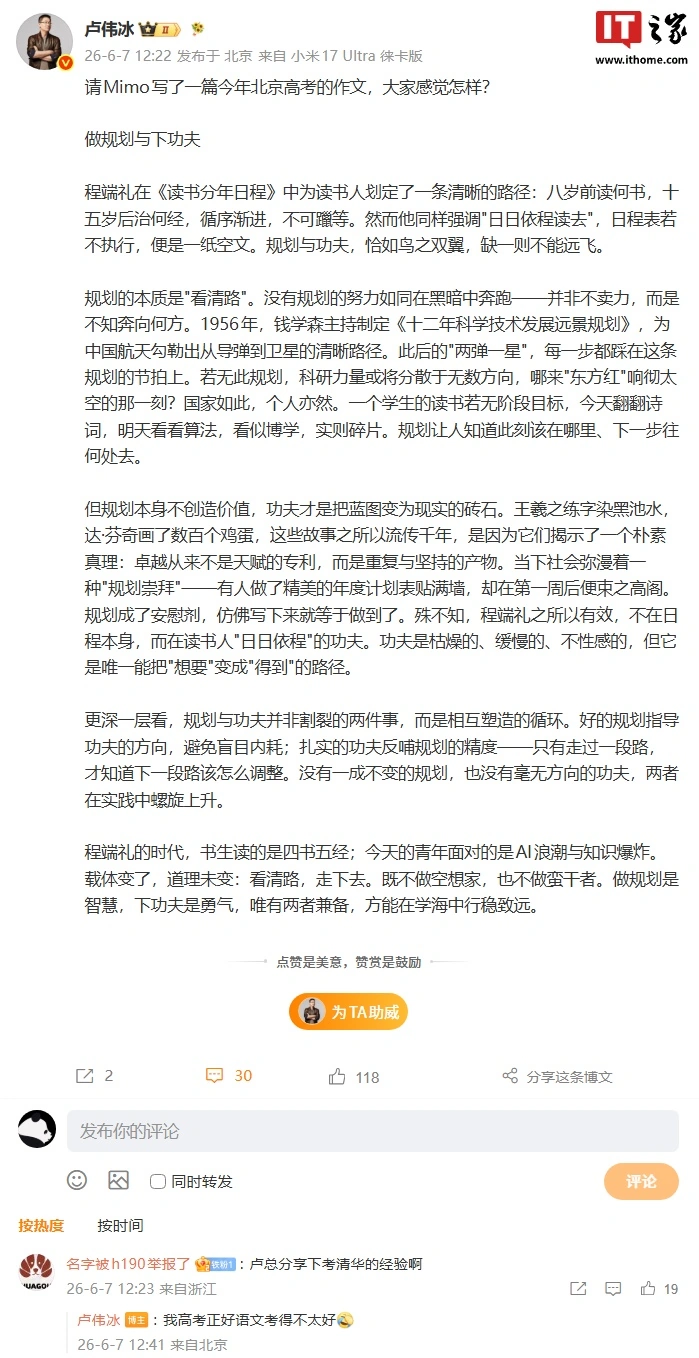
IT之家는 Xiaomi 그룹 파트너 겸 사장, 휴대폰 부문 총괄, Xiaomi 브랜드 총지배인인 Lu Weibing(루웨이빙)이 자신이 Xiaomi Mimo 대규모 언어 모델을 활용하여 작성한 베이징 지역 작문 문제에 대한 글을 공유한 것을 주목했습니다. 이 에세이는 '계획과 노력'이라는 주제를 다루고 있습니다.
글쓴이는 청단례(程端礼)가 『독서 연도 일정』에서 독자들에게 명확한 경로를 제시했다고 언급합니다. 즉, 여덟 살 이전에는 어떤 책을 읽고, 열다섯 살 이후에는 어떤 경전을 공부해야 하며, 순차적으로 점진해야 하므로 건너뛰어서는 안 된다는 것입니다. 하지만 그는 동시에 "매일 일정에 따라 독서하라"며, 계획표를 실행하지 않으면 그저 공허한 종이에 불과하다고 강조합니다.
그는 계획과 노력은 새의 두 날개와 같아, 어느 하나가 부족하면 멀리 날 수 없다고 주장합니다. 계획의 본질은 '길을 명확히 보는 것'입니다. 계획 없는 노력은 어둠 속에서 달리는 것과 같아서, 열심히 하는 것이 아니라 어디로 달려야 할지 모르는 상태라는 것입니다.
글쓴이는 1956년 첸쉐민(钱学森)이 '12년간의 과학기술 발전 원경 계획'을 수립하여 중국 항공우주에 미사일에서 위성으로 이어지는 명확한 경로를 제시했던 사례를 들며, 국가적 차원뿐 아니라 개인의 학업에도 단계별 목표가 필요하다고 역설합니다. 그렇지 않으면 지식은 파편화될 뿐입니다.
계획과 실행력의 관계
그러나 글쓴이는 계획 자체가 가치를 창출하는 것은 아니며, 노력이 청사진을 현실로 만드는 벽돌이라는 점을 강조합니다. 왕희지(王羲之)가 붓글씨를 연습하며 먹물을 검게 물들인 이야기나 다 빈치(达·芬奇)가 수백 개의 달걀 그림을 그린 이야기가 전해지는 이유는, 탁월함이 타고난 재능의 특권이 아니라 반복과 꾸준한 노력의 산물이기 때문이라고 설명합니다.
현대 사회에는 '계획 숭배'가 만연하여, 사람들은 벽에 아름다운 연간 계획표를 붙여놓지만 첫 주만 지나면 방치하는 경향이 있다고 지적합니다. 계획은 일종의 위약(placebo)처럼 느껴져서, 적어 놓기만 해도 이룬 것 같은 착각을 불러일으킨다고 비판합니다.
진정으로 중요한 것은 일정표 자체가 아니라 독자가 '매일 일정에 따라' 노력하는 꾸준함입니다. 노력은 지루하고 느리며 매력적이지 않을 수 있지만, '원하는 것'을 '얻는 것'으로 바꿀 수 있는 유일한 경로라고 말합니다.
더 깊이 들어가면, 계획과 노력은 분리된 것이 아니라 서로를 형성하는 순환 과정입니다. 좋은 계획은 노력의 방향을 안내하여 맹목적인 소모를 막고, 탄탄한 노력은 다시 계획의 정밀도를 높여줍니다. 이 둘은 실천 속에서 나선형으로 상승합니다.
총평
이 에세이는 학문적 성취에 있어 '명확한 비전(계획)'과 '꾸준한 실행력(노력)'의 균형이 필수적임을 강조합니다. 단순히 계획을 세우는 지혜만으로는 부족하며, 그 계획을 매일 실천하는 끈기와 용기가 결합될 때 학문적인 목표를 안정적으로 달성할 수 있다는 메시지를 전달하고 있습니다.
2026年高考语文作文题公布
2026年全国统一高考于6月7日开考。其中,北京、上海、天津采用自主命题,相关作文题目已正式公布。
Xiaomi高管展示AI生成内容
Xiaomi集团合伙人及手机部总裁卢伟冰在社交平台分享了由Xiaomi Mimo大模型生成的北京卷作文——《做规划与下功夫》。
AI生成文章核心观点
该篇由Xiaomi Mimo大模型创作的作文探讨了“规划”与“功夫”的辩证关系:
- 规划的作用是“看清路”,提供清晰的路径,避免在没有目标的情况下盲目努力。
- 功夫是将蓝图变为现实的关键,强调通过重复与坚持来获得成果。
- 两者并非割裂,而是相互塑造的循环:好的规划指导方向,扎实的功夫反哺规划的精度。
相关互动
在社交媒体互动中,卢伟冰还透露自己当年高考语文成绩并不理想。
总结
Xiaomi高管卢伟冰通过展示由Xiaomi Mimo大模型生成的优质高考作文,展示了AI在复杂逻辑和深度内容创作方面的能力。该文章核心围绕“规划”与“功夫”的辩证关系展开,旨在体现AI对高质量内容的生成能力。
2026年全省大学入試の概要
IT之家によると、本日より2026年の全国大学入学能力試験が開始され、午前中には国語科の試験が行われました。教育部試験院が出題した国語作文問題は計2問で、北京、上海、天津の3都市は独自の問題を策 ধরেইしました。現在、各地域の作文問題が公開されています。
Xiaomi幹部Lu Weibing氏によるエッセイ分析
IT之家は、Xiaomiグループのパートナー兼社長、スマートフォン部門総括、およびXiaomiブランド総支配人であるLu Weibing氏が、自ら「Xiaomi Mimo」大規模言語モデルを活用して執筆した北京地域の作文問題に関する記事を共有したことに注目しています。このエッセイは「計画と努力」というテーマを扱っています。
執筆者は、程端礼(Cheng Dianli)の『読書年度日程』が読者に明確な経路を提示していると述べています。つまり、8歳以前にどのような本を読み、15歳以降にはどの経典を学ぶべきかといった段階的な進展を示しており、飛ばしてはならないことを強調しています。しかし同時に、「毎日、計画に従って読書せよ」と説き、計画表を実行しなければ単なる空虚な紙に過ぎないとも指摘しています。
彼は、計画と努力を「鳥の二つの翼」に例え、どちらかが欠けても遠くへ飛ぶことはできないと主張します。計画の本質は「道筋を明確にすること」です。計画のない努力は暗闇の中を走るようなものであり、一生懸命なのではなく、どこへ向かえばよいか分かっていない状態であるというのです。
執筆者は、1956年に銭学森(Qian Xuesem)が「12年間の科学技術発展遠景計画」を策定し、中国の航空宇宙分野においてミサイルから衛星へと至る明確なルートを示した事例を挙げ、国家レベルだけでなく個人の学習においても段階的な目標が必要であると強調しています。そうしなければ、知識は断片化するだけだからです。
計画と実行力の関係
しかし執筆者は、計画そのものが価値を生むのではなく、努力が青写真を現実に変える「レンガ」であることを強調しています。王羲子が書道において墨を塗り重ねたことや、ダ・ヴィンチが数百の卵の絵を描いた逸話が語り継がれているのは、卓越した才能が天性の特権ではなく、反復と継続的な努力の産物だからです。
現代社会には「計画崇拝」が蔓延しており、人々は壁に美しい年間計画表を貼るものの、最初の1週間で放置する傾向があると指摘します。計画は一種のプラセボ(偽薬)のように機能し、書き出すだけで達成したかのような錯覚を引き起こすことを批判しています。
本当に重要なのはスケジュール表そのものではなく、読者が「毎日、計画に従って」取り組む継続性です。努力は退屈で遅く、魅力に欠けるものかもしれませんが、「望むもの」を「手に入れるもの」に変える唯一の経路なのです。
さらに深く掘り下げると、計画と努力は分離されたものではなく、互いを形成する循環プロセスです。優れた計画は努力の方向を導き、盲目的な消耗を防ぎます。そして堅実な努力は再び計画の精度を高めます。これら二つは実践の中で螺旋状に上昇していくのです。
まとめ
このエッセイは、学問的達成において「明確なビジョン(計画)」と「継続的な実行力(努力)」のバランスが不可欠であることを強調しています。単に計画を立てる知恵だけでは不十分であり、その計画を毎日実践する忍耐と勇心が組み合わさって初めて、目標を安定して達成できるというメッセージを伝えています。
Overview of the 2026 National College Entrance Examination
According to IT Home, the 2026 National College Entrance Examination began today with the Chinese language exam held in the morning session. The Education Testing Center under the Ministry of Education provided a total of two writing prompts for the national curriculum, while Beijing, Shanghai, and Tianjin developed their own specific questions. These regional writing prompts have now been released to the public.
Analysis by Xiaomi Executive Lu Weibing
IT Home noted that Lu Weibing—Partner & President, Head of Mobile Business, and Brand Chief Officer at Xiaomi—shared an essay regarding the Beijing region's writing prompt on the theme of "Planning and Effort." Notably, this essay was generated using the Xiaomi Mimo large language model.
The Relationship Between Planning and Execution
The essay references Cheng Xianli’s "Reading Year Schedule," which provides readers with a clear roadmap based on their age. The author emphasizes that while a plan defines the path, it remains "empty paper" unless it is executed daily according to the schedule.
The text argues that planning and effort are like the two wings of a bird; without both, one cannot fly far. Planning provides clarity on the route, whereas effort without a plan is akin to running in the dark—expending energy without knowing where to go. To illustrate this, the author cites Qian Xuesen’s 1956 "12-Year Development Plan for Science and Technology," which established a clear trajectory for Chinese aerospace from missiles to satellites. The author stresses that both national goals and individual studies require staged objectives to prevent knowledge from becoming fragmented.
Furthermore, the essay distinguishes between the value of a plan and the reality of execution. While a plan is a blueprint, effort provides the bricks to turn that vision into reality. By citing figures like Wang Xizhi and Leonardo da Vinci, the author argues that excellence is not a privilege of innate talent but a product of repetitive, consistent effort.
The author criticizes modern "plan worship," where individuals create elaborate annual schedules but abandon them after the first week. Such plans can act as a "placebo," creating an illusion of achievement simply by writing them down. True progress comes from the persistent, often unglamorous work required to turn "wanting" into "getting."
Ultimately, planning and effort are not separate entities but a symbiotic cycle. A good plan guides effort to prevent aimless waste, while consistent effort refines the precision of the plan. The two must advance together in a spiral of continuous improvement.
Summary
The essay emphasizes that academic success requires a balance between "clear vision" (planning) and "persistent execution" (effort). It warns against the trap of "plan worship," where intentions are not followed by action, concluding that only the combination of a clear roadmap and consistent practice can lead to stable achievement.
2026年高考语文作文题目公布
2026年全国统一高考于6月7日开考。教育部教育考试院命制的语文作文试题共2道,其中北京、上海、天津采用自主命题,相关作文题已在各地区公布。
Xiaomi利用大模型生成范文
Xiaomi集团合伙人及相关负责人卢伟冰分享了由Xiaomi Mimo大模型生成的北京卷作文——《做规划与下功夫》。该文章针对当前AI浪潮与知识爆炸的背景,探讨了“规划”与“功夫”在个人成长中的核心作用。
范文核心内容要点
该篇由Xiaomi Mimo生成的内容强调以下观点:
- 规划的作用: 规划是“看清路”,旨在提供清晰的路径,避免在没有目标的情况下盲目消耗精力。
- 功夫的价值: 功夫是将蓝图变为现实的动力,通过重复与坚持来克服枯燥,将“想要”变为“得到”。
- 双向协同: 规划指导方向以避免内耗,而扎实的功夫能反哺规划的精度。两者在实践中相互塑造,共同助力个体在复杂环境中行稳致远。
相关互动
在相关的社交媒体互动中,卢伟冰透露自己当年高考语文成绩并不理想。
总结
2026年高考期间,Xiaomi高管分享了由Xiaomi Mimo大模型生成的北京卷范文。该内容展示了AI在高质量文学创作上的应用能力,并深入探讨了规划与执行的辩证关系。
2026年全国大学入学共通試験(高考)の概要
IT之家の報道によると、2026年の全国統一高考が本日開始され、午前には国語の試験が行われました。教育試験院が出題する国語作文問題は計2問ですが、北京、上海、天津の3都市については独自の問題を策定しており、現在これらの作文問題が公開されています。
Xiaomi幹部によるAI生成コンテンツの公開
IT之家は、Xiaomiグループのパートナー兼スマートフォン部門総裁、ブランド総支配人であるLu Weibing氏が、自社の「Xiaomi Mimo」大規模言語モデル(LLM)を活用して作成した北京地域の作文を共有したことに注目しています。このエッセイのテーマは「計画と努力」です。
「計画と努力」に関する論理構成
このエッセイでは、計画と努力を「鳥の二つの翼」に例え、どちらか一方が欠けても遠くまで飛ぶことはできないと説いています。計画の本質は「道筋を明確にすること」であり、計画のない努力は暗闇の中を走るようなものであり、単に一生懸命なのではなく、どこへ向かうべきか分からずに動いている状態であると指摘しています。
また、1956年に銭学森(Qian Xuesen)が「12年間の科学技術発展遠景計画」を策定し、中国の航空宇宙分野においてミサイルから衛星へと至る明確なルートを示した例を引き合いに出し、国家レベルだけでなく個人の学習においても段階的な目標が必要であることを強調しています。これがないと、知識は断片化されるだけだからです。
計画と実行力の相関関係
しかし、筆者は計画そのものが価値を生むのではなく、努力こそが設計図を現実に変える「レンガ」であると強調しています。王羲子の書道練習やダ・ヴィンチの膨大なスケッチの例を引き、卓越した成果は天賦の才による特権ではなく、反復と継続的な努力の産物であることを説明しています。
さらに、現代社会における「計画崇拝」への警鐘を鳴らしています。多くの人が壁に美しい年間計画表を貼るものの、最初の1週間で放置してしまう傾向があり、書くだけで達成したかのような錯覚(プラセボ効果)に陥っていると批判します。本当に重要なのはスケジュール表そのものではなく、読者が「毎日計画に従って」取り組む継続性です。
結論として、計画と努力は分離されたものではなく、互いを形成する循環的なプロセスであると述べています。優れた計画は努力の方向を導き、無謀な消耗を防ぎ、確かな努力は再び計画の精度を高めます。これら二つは実践の中で螺旋状に向上していくのです。
まとめ
XiaomiのLu Weibing氏が、自社の「Xiaomi Mimo」LLMを用いて生成された「計画と努力」に関するエッセイを公開しました。この内容は、学問的達成において「明確なビジョン(計画)」と「継続的な実行力(努力)」の両立が不可欠であることを強調しており、単なる計画の策定に満足するのではなく、日々の実践を通じて両者を循環させることの重要性を説いています。
Overview of the 2026 National College Entrance Examination
According to IT Home, the 2026 National College Entrance Examination (Gaokao) began today with the Chinese language exam in the morning. While there were two writing prompts issued by the Ministry of Education's examination center, Beijing, Shanghai, and Tianjin produced their own independent questions. These regional essays have now been released.
Analysis of Essay by Xiaomi Executive Lu Weibing
IT Home noted that Lu Weibing, Partner and President of Mobile Business at Xiaomi Group, shared an essay generated by the Xiaomi Mimo large language model for the Beijing region's writing prompt. The essay is titled "Planning and Effort."
The text references Cheng Dianli’s "Reading Year Schedule," which provides a clear roadmap for readers. It emphasizes that progress must be sequential—moving from specific books before age eight to classical texts after age fifteen—without skipping steps. The author notes that without following a daily schedule, even the best plan remains nothing more than empty paper.
The essay argues that planning and effort are like the two wings of a bird; one cannot fly far without both. Planning is defined as "seeing the path clearly." Effort without a plan is compared to running in the dark—not truly working toward a goal, but moving blindly without knowing where to go.
The author cites Qian Xuesen’s 1956 "12-Year Plan for Scientific and Technological Development," which established a clear path from missiles to satellites in Chinese aerospace. This highlights the necessity of staged goals, not just for national projects but for individual studies, to prevent knowledge from becoming fragmented.
The Relationship Between Planning and Execution
The essay emphasizes that plans alone do not create value; effort is the "brick" that turns a blueprint into reality. The author cites figures like Wang Xizhi (whose calligraphy was perfected through endless practice) and Leonardo da Vinci (who drew hundreds of sketches) to illustrate that excellence is a product of repetitive, consistent effort rather than just innate talent.
The text critiques modern "planning worship," where people create beautiful annual schedules but abandon them after the first week. Such plans can act as a placebo, providing the illusion of achievement simply by writing them down.
True success lies in the consistency of following a daily schedule. While effort may be tedious and slow, it is the only path to turning "desire" into "attainment." Ultimately, planning and effort are not separate; they form a cycle where good plans guide effort, and consistent effort refines the precision of the plan.
Conclusion
The essay highlights that academic achievement requires a balance between a clear vision (planning) and steady execution (effort). It conveys the message that success is achieved only when the wisdom of planning is combined with the courage to practice daily, ensuring that goals are met reliably.
Summary
Xiaomi executive Lu Weibing shared an essay generated by the Xiaomi Mimo large language model regarding the 2026 Gaokao writing prompt. The piece argues that academic success requires a symbiotic relationship between clear, staged planning and consistent, repetitive effort. It warns against "planning worship" and emphasizes that only the combination of vision and execution can turn goals into reality.
高考作文与AI参与
2026年全国统一高考于6月7日开考。在语文考试中,北京、上海、天津采用自主命题。Xiaomi集团高管卢伟冰分享了由Xiaomi Mimo大模型生成的北京卷作文——《做规划与下功夫》,展示了AI在文学创作领域的应用。
Xiaomi Mimo 生成的作文核心内容
该篇作文探讨了“规划”与“功夫”在个人成长中的辩证关系:
- 规划的作用: 被定义为“看清路”,旨在提供清晰路径以避免盲目内耗。文中引用1956年钱学森主持制定的《十二年科学技术发展远景规划》作为历史例证。
- 功夫的价值: 被视为将蓝图变为现实的执行力,强调卓越源于重复与坚持。
- 协同关系: 好的规划指导方向,扎实的功夫反哺精度,两者在实践中相互塑造。
相关互动及其他动态
针对网友询问其考入清华的经验,卢伟冰透露自己当年高考语文成绩并不理想。此外,报道提及上海卷作文题目聚焦于“科技改造世界时,也改造着我们的想象”。
总结
Xiaomi高管分享了由Xiaomi Mimo大模型生成的北京高考作文,展示了AI在处理复杂逻辑与文学创作方面的能力。文章强调了规划与执行的协同重要性,并提及了相关考试动态及个人经历。
2026年全国大学入学能力試験の概要
IT之家の報道によると、本日より2026年度の全国大学入学能力試験(高考)が開始され、午前中には国語の試験が行われました。教育試験院が出題した国語作文問題は計2問で、北京、上海、天津の3都市については独自の設問が採用されています。現在、各地域の作文問題が公開されています。
Xiaomi幹部によるエッセイ分析
IT之家は、Xiaomiグループのパートナー兼社長、スマートフォン部門総括、およびブランドチーフオフィサーであるLu Weibing氏が、自ら「Xiaomi Mimo」大規模言語モデルを活用して執筆した北京地域の作文問題に関する記事を共有したことに注目しています。このエッセイは「計画と努力」というテーマを扱っています。
AI生成コンテンツの核心的な見解
Xiaomi Mimoモデルによって作成されたこの作文では、「計画」と「努力(功夫)」の弁証法的な関係が深く掘り下げられています。主なポイントは以下の通りです。
- 計画の役割は「道筋を明確にすること」であり、目標のない盲目的な努力を防ぐための指針を提供します。
- 努力は青写真を現実に変えるための「レンガ」であり、反復と継続によって成果を生み出すことを強調しています。
- これら二つは切り離されたものではなく、互いを補完し合う循環プロセスです。優れた計画は努力の方向を導き、地道な努力は再び計画の精度を高めます。
執筆者は、1956年に銭学森(Qian Xuesem)が策定した「12年間の科学技術発展遠景計画」を引き合いに出し、国家レベルの目標と同様に個人の学習においても段階的な目標が必要であることを強調しています。また、王羲子やダ・ヴィンチの例を挙げ、卓越した成果は天性の才能ではなく、継続的な努力の産物であると述べています。
さらに、現代社会における「計画への崇拝」を批判しています。これは、単に美しい計画表を作成するだけで満足し、実際の実行を伴わない状態を指します。執筆者は、真に重要なのはスケジュール表そのものではなく、毎日計画に従って取り組む継続性であると説いています。
関連するやり取り
SNS上での交流において、Lu Weibing氏は自身の過去の高考における国語の成績が芳しくなかったことを明かしています。
まとめ
Xiaomi幹部のLu Weibing氏は、自社の「Xiaomi Mimo」モデルを用いて生成された高品質な作文を公開し、AIが複雑な論理構造や深い内容の創作において高い能力を持つことを実証しました。このエッセイでは「計画」と「努力」の相乗効果が強調されており、AIによる高度なコンテンツ生成能力が示されています。
Overview of the 2026 National College Entrance Examination
The 2026 National College Entrance Examination (Gaokao) began today, with the Chinese language exam held during the morning session. While the Education Testing Center under the Ministry of Education provided two national writing prompts, the cities of Beijing, Shanghai, and Tianjin developed their own specific questions. These regional writing prompts have now been released to the public.
Analysis by Xiaomi Executive Lu Weibing
Lu Weibing—Partner & President, Head of Mobile Business, and Brand Chief Officer at Xiaomi—shared an essay regarding the Beijing region's writing prompt titled "Planning and Effort." Notably, this essay was generated using the Xiaomi Mimo large language model (LLM).
The Relationship Between Planning and Execution
The AI-generated essay explores the dialectical relationship between "planning" and "effort":
- Planning as a Roadmap: The text cites Cheng Xianli’s "Reading Year Schedule" to argue that a plan provides a clear path. Without a plan, effort is like running in the dark—expending energy without knowing the destination.
- Effort as the Foundation: While a plan is a blueprint, effort provides the "bricks" to turn that vision into reality. The essay cites figures such as Wang Xizhi and Leonardo da Vinci to illustrate that excellence is the result of repetitive, consistent work rather than just innate talent.
- Critique of "Planning Worship": The author warns against "planning worship," where individuals create beautiful schedules but fail to act on them. In such cases, a plan acts as a placebo, creating an illusion of achievement simply by writing it down.
- A Symbiotic Cycle: Ultimately, the essay argues that planning and effort are not separate entities but a continuous cycle. A good plan guides the direction of effort to prevent wasted energy, while consistent effort refines the precision of the plan.
Summary
Lu Weibing showcased Xiaomi Mimo's capability to generate high-quality content with complex logic by producing an essay on "Planning and Effort." The piece highlights how AI can synthesize deep themes, demonstrating its ability to produce sophisticated content that explores the synergy between vision and execution.