상하이 서비스 산업 발전 '15차 계획' 요약 및 분석
상하이시 인민정부 사무처에서 발표한 '상하이 서비스 산업 발전 15차 계획(十五五)'은 상하이를 고도화된 글로벌 경쟁력을 갖춘 경제 허브로 만들기 위한 청사진을 제시합니다. 이 계획의 핵심은 첨단 기술과 서비스를 결합하여 도시의 전반적인 기능을 혁신하고, 새로운 성장 동력을 확보하는 데 중점을 두고 있습니다.
핵심 기술 트렌드: AI와 디지털 전환
상하이시는 서비스 산업 전반에 걸쳐 인공지능(AI)과 첨단 기술의 결합을 최우선 과제로 설정했습니다. 특히, 생성형 AI 기술 개발을 강력하게 추진하며 다양한 분야에서 'AI+'를 접목하는 것이 핵심 전략입니다.
- AI 소프트웨어 및 서비스: 얼굴/이미지 인식, 증강현실(AR)/가상현실(VR) 기술, 스마트 교통, 스마트 물류, 온라인 교육, 에너지 등 광범위한 분야에서 AI 산업 클러스터를 구축합니다.
- 'AI+' 연구 개발: 생물 의약품, 신소재, 신에너지 등의 핵심 분야에서 기술적 돌파구를 마련하고 데이터 관리 및 제도적 안전장치를 강화할 계획입니다.
- 체화 지능(Embodied Intelligence) 서비스: 가정, 노인 케어, 문화 관광, 상업 등 다양한 시나리오를 위한 완제품 개발을 지원하며, 로봇이 단순 임무 수행 단계를 넘어 범용적인 지능과 정교한 현장 서비스를 제공하도록 가속화합니다.
- 지능형 클라우드 서비스: 컴퓨팅(算), 운용(运), 저장(存)의 협력적 배치 기반의 지능형 클라우드 네트워크를 강화하고, AI 기술과 클라우드 혁신을 결합하여 모델 즉시 서비스(MaaS) 확산을 주도합니다.
- AI 에이전트 및 스마트 주행: 다중 모드(Multi-modal) AI 에이전트 개발 및 응용을 지원하며, 지능형 고객 서비스, 운영 관리, 의사 결정 도구 등의 규모화된 적용을 목표로 합니다. 또한, 공유 이동 수단과 물류 운송 등 다양한 환경에서 스마트 주행 기술의 순차적 확산을 추진합니다.
서비스 산업의 질적 성장을 위해 금융, 무역, 의료/교육, 문화 관광 등 각 분야의 전문성을 강화하는 데 초점을 맞추고 있습니다.
금융 및 상업 서비스
- 글로벌 금융 인프라 강화: 중국 위안화 국경 간 결제 시스템(CIPS)의 글로벌 네트워크 커버리지를 높이고, 주식 발행 등록제 개혁과 퇴출 메커니즘을 정비합니다.
- 신금융 및 녹색 금융: 신탁 재산 등기 제도 시범 사업을 심화하고, 녹색 금융 표준 및 지속 가능한 금융 표준의 다영역 적용을 확대하며 포용 금융(Inclusive Finance) 발전을 지원합니다.
- 무역 연결성 강화: 글로벌 무역 기업 활동을 유치하고, 국제 공급망 관리 센터 설립을 장려합니다. 서비스 무역, 디지털 무역, 국경 간 전자상거래 등 신규 무역 형태의 혁신 개발에 박차를 가합니다.
생활 및 전문 서비스
- 문화·관광·체육 융합: 문화 콘텐츠 산업의 영향력을 높이고, 영화 제작, 예술품 거래, e스포츠, 관광 등 다양한 분야를 지원하여 고품질의 현지 서비스 브랜드를 조성합니다.
- 의료 및 교육 전문화: 국제적인 영향력을 가진 의학 센터와 임상 핵심 학과를 육성하고, 의료 데이터를 표준화하며, 중국 전통 의학(TCM) 특색 서비스를 강화합니다. 또한, 산학 연계형 인재 양성을 통해 교육 훈련의 전문화를 추진합니다.
- 노인 케어 및 돌봄 서비스: 실버 이코노미 발전을 촉진하고, 지역사회 기반 노인 케어와 재택 간병을 다각화하며, 스마트 노인 케어 시설과 기술 적용 환경 구축을 지원합니다.
- 가정 및 숙박 산업 혁신: 가사 서비스의 전문화, 표준화, 규범화를 높이고, 호텔업계는 운영 장소의 품질 향상과 관리 효율성 증대를 통해 중고급 숙박 서비스를 육성합니다.
미래 성장 동력 확보 및 공간 배치
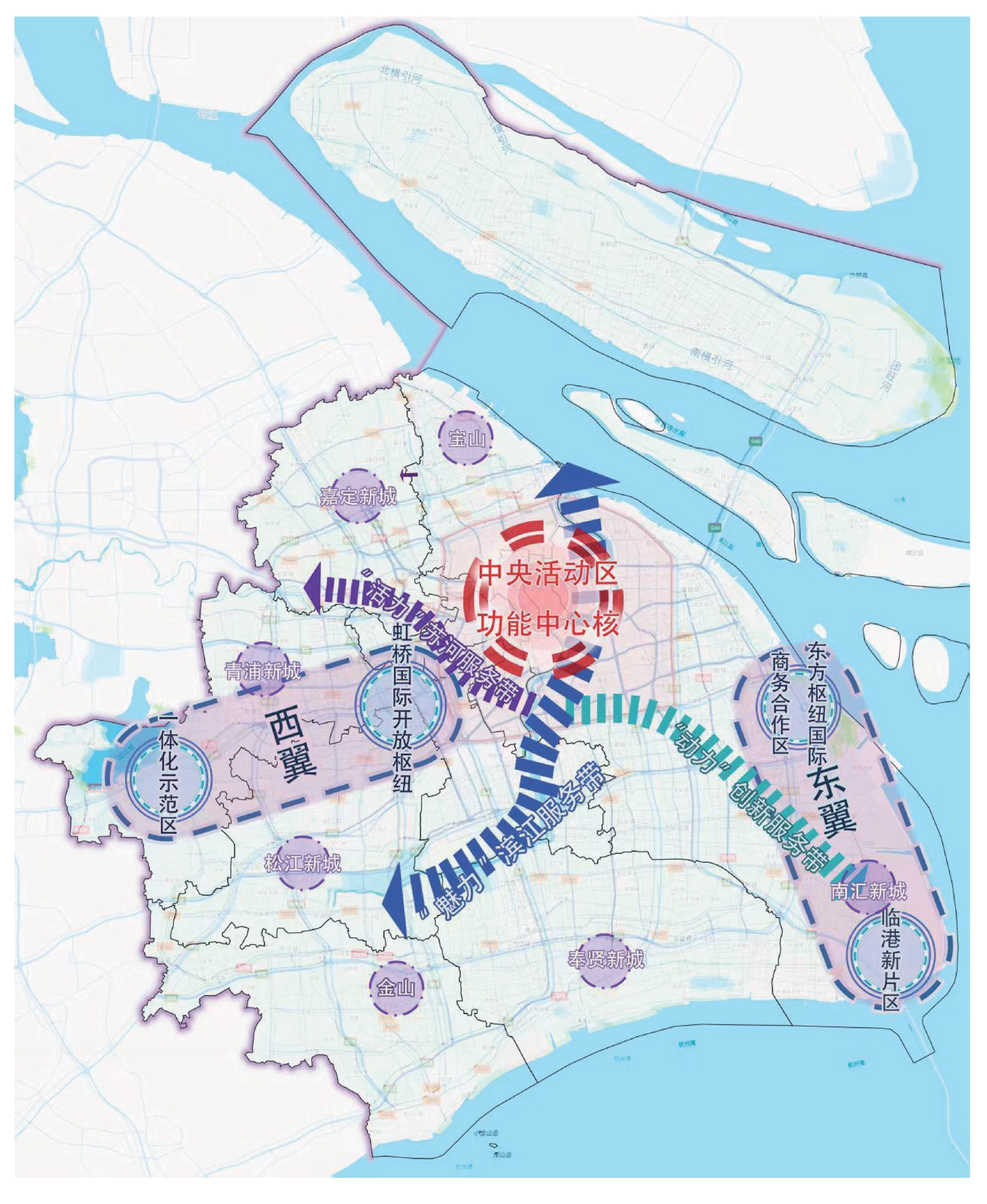
상하이시는 서비스 산업을 '하나의 핵심(一核), 두 개의 날개(两翼), 세 개의 벨트(三带)'로 구조화하여 발전하는 전략적 공간 구상을 제시했습니다. 이는 도시 전역에 걸쳐 기능적 연계성을 극대화하려는 시도입니다.
- 핵심 거점 (一核): 중앙 활동 지구를 중심으로 본사 경제, 국제 금융, 전문 서비스, 현대 상업 무역 등 고밀도의 첨단 서비스를 집중 육성합니다.
- 주요 축 (两翼): 동쪽 날개(링강 신구)와 서쪽 날개(훙차오 국제 CBD)는 각각 해양금융, 신규 무역, 글로벌 공급망 관리 기능을 강화하여 개방성과 혁신을 주도합니다.
- 연결 벨트 (三带): '매력' 강변 서비스 벨트는 세계적 수준의 수변 공간과 연계된 문화 관광 서비스를, '활력' 수원(蘇河) 서비스 벨트는 지역 간 협력을 통한 경제 활력을, '동력' 혁신 서비스 벨트는 장강 과학 지구와 연결되어 첨단 기술 및 금융 기능을 통합하는 역할을 합니다.
총평
상하이의 15차 계획은 단순한 산업 확장을 넘어, AI, 디지털 전환을 핵심 동력으로 삼아 서비스 산업 전반의 구조적 고도화를 목표로 합니다. 특히 금융, 무역, 의료 등 전통적인 강점 분야에 첨단 기술(AI 에이전트, 스마트 물류)을 결합하고, 지역별 특화된 기능을 '핵심-날개-벨트'라는 입체적 공간 전략으로 연결하려는 점이 주목됩니다. 이를 통해 상하이 서비스 산업은 높은 수준의 글로벌 경쟁력을 갖춘 경제 성장 '회복탄력성 기반(Resilience Base)'을 구축할 것으로 기대됩니다.
上海市服务业发展“十五五”规划发布
上海市人民政府办公厅印发《上海市服务业发展“十五五”规划》,旨在推动服务业高质量发展。目标到2030年,服务业增加值达到6万亿元左右,构建以高能级城市核心服务功能为引领、高端生产性服务业为主体、高品质生活性服务业为支撑的优质高效服务业新体系。
“AI+”与前沿技术布局
规划特别强调了人工智能及相关前沿技术的深度融合,旨在打造相关产业集群并推动技术突破:
- AI软件技术: 重点发展生成式人工智能、人脸和图像识别、增强现实/虚拟现实(AR/VR)、智能交通、智慧物流、在线教育及能源领域。
- “AI+”研发: 聚焦生物医药、新材料、新能源等领域的技术突破与数据管理。
- 具身智能: 支持面向家庭、养老、文旅、商业场景的整机产品开发,推动机器人向通用智能和场景化精细服务转型。
- 智算云与MaaS: 做强算运存协同布局的智算云网络,推广模型即服务(MaaS),并推动AI技术与云计算融合。
- AI智能体: 支持多模态智能体开发,在智能客服、智能运营、智能决策等领域规模化应用。
- 智能驾驶与家居: 推进智能驾驶在共享出行、物流运输中的应用;发展全方位感知和智能化控制的智能家居设施。
生产性与生活性服务业升级
在传统及专业服务领域,上海将推动数字化转型与高端化布局:
- 金融与贸易: 提升人民币跨境支付系统(CIPS)全球覆盖度;发展大宗商品交易、数字贸易和跨境电商。
- 航运与物流: 推进航运绿色化转型,建立国际航运绿色燃料加注中心;支持低空物流、无人配送等智慧物流新业态。
- 工业服务: 推行“生产制造一体化”,推动工业互联网平台建设,并在智能设计和产品服务集成方面寻求突破。
- 医疗与教育: 打造国际影响力的医学中心,推进产教融合;针对养老、托育等领域提供高品质的专业服务。
新兴赛道与空间布局
规划涵盖了多个前瞻性领域的探索,包括脑机接口(用于神经退行性疾病及康复)、细胞与基因治疗、以及基于AI的心理健康服务。在空间布局上,上海采取“一核、两翼、三带、多片区”(1+2+3+N)的策略,通过浦东新区、临港新片区、虹桥国际中央商务区等核心区域,协同推动不同功能区的联动发展。
总结
上海市发布的“十五五”规划明确了到2030年服务业增加值达到6万亿元的目标。该规划高度重视AI技术在智能制造、医疗健康及城市治理中的应用,旨在通过“AI+”驱动生产性与生活性服务业的深度转型升级。
上海サービス産業発展「第15次計画」の要約と分析
上海市政府が発表した「上海サービス産業発展第15次計画(十五五)」は、上海を高度な国際競争力を備えた経済拠点へと進化させるための青写真です。この計画の核心は、先端技術とサービスを融合させることで都市の機能を刷新し、新たな成長エンジンを確保することに重点を置いています。
主要な技術トレンド:AIとデジタルトランスフォーメーション
上海市は、サービス産業全般における人工知能(AI)と先端技術の融合を最優先課題として設定しています。特に、生成AI技術の開発を強力に推進し、多様な分野において「AI+」を統合することが核心的な戦略となります。
- AIソフトウェアおよびサービス: 顔・画像認識、拡張現実(AR)/仮想現実(VR)、スマート交通、スマート物流、オンライン教育、エネルギーなど、幅広い分野でAI産業クラスターを構築します。
- 「AI+」の研究開発: バイオ医薬品、新素材、新エネルギーなどの重要分野において技術的な突破口を切り開き、データ管理および制度的な安全策を強化する計画です。
- 身体知能(Embodied Intelligence)サービス: 家庭、高齢者ケア、文化観光、商業など、多様なシナリオに向けた完成品の開発を支援します。ロボットが単なる任務遂行の段階を超え、汎用的な知能と精緻な現場サービスを提供できるよう加速させます。
- インテリジェント・クラウドサービス: 計算(算)、運用(運)、保存(存)の協調的な配置に基づくインテリジェント・クラウドネットワークを強化し、AI技術とクラウド革新を融合させてモデル即時サービス(MaaS)の普及を主導します。
- AIエージェントおよびスマート走行: マルチモーダル(Multi-modal)AIエージェントの開発と応用を支援し、インテリジェントなカスタマーサービス、運用管理、意思決定ツールなどの大規模な適用を目指します。また、共有移動手段や物流輸送など、多様な環境でのスマート走行技術の段階的な普及を推進します。
主要産業別の発展戦略
サービス産業の質的な成長に向け、金融、貿易、医療・教育、文化観光など各分野の専門性を強化することに焦点を当てています。
金融および商業サービス
- グローバルな金融インフラの強化: 中国人民元国際決済システム(CIPS)のグローバルネットワークを拡大し、株式発行登録制度の改革と撤退メカニズムを整備します。
- 新金融およびグリーン金融: 信託資産登記制度の試行事業を深化させ、グリーン金融および持続可能な金融の標準を多分野に展開するとともに、包摂的金融(Inclusive フィナンス)の発展を支援します。
- 貿易コネクティビティの強化: グローバルな貿易企業の活動を誘致し、国際サプライチェーン管理センターの設立を奨励します。サービス貿易、デジタル貿易、クロスボーダー電子商取引など、新しい形態の貿易における革新的な開発に拍車をかけます。
生活および専門サービス
- 文化・観光・スポーツの融合: 文化コンテンツ産業の影響力を高め、映画制作、美術品取引、eスポーツ、観光など多様な分野を支援し、高品質なローカルサービスブランドを構築します。
- 医療および教育の高度化: 国際的な影響力を持つ医療センターと臨床の核心科目を育成し、医療データの標準化を進めるとともに、中国伝統医学(TCM)の特色あるサービスを強化します。また、産学連携による人材育成を通じて、教育訓練の専門化を推進します。
- 高齢者ケアおよび介護サービス: シルバーエコノミーの発展を促進し、地域社会に基づいた高齢者ケアや在宅介護を多角化するとともに、スマートな高齢者ケア施設と技術適用環境の構築を支援します。
- 家庭および宿泊産業の革新: 家事サービスの専門化、標準化、規範化を高め、ホテル業界は運営場所の品質向上と管理効率の向上を通じて、中高級宿泊サービスを育成します。
将来の成長動力の確保と空間配置
上海市は、サービス産業を「一つの核(一核)、二つの翼(両翼)、三つのベルト(三帯)」として構造化し、発展させるための戦略的な空間構想を提示しました。これは都市全域における機能的な連携を最大化しようとする試みです。
- 核心拠点(一核): 中央活動地区を中心に、本社経済、国際金融、専門サービス、現代商業貿易など、高密度な先端サービスを集中的に育成します。
- 主要な軸(両翼): 東の「臨港新区」と西の「虹橋国際CBD」は、それぞれ海洋金融、新規貿易、グローバルサプライチェーン管理機能を強化し、開放性と革新を牽引します。
- 接続ベルト(三帯): 「魅力」川辺サービスベルトは世界水準の水辺空間と連携した文化観光サービスを、「活力」蘇河(Suhe)サービスベルトは地域間の協力による経済の活力を、そして「動力」革新サービスベルトは長江科学地区と連結し、先端技術と金融機能を統合する役割を果たします。
まとめ
上海の第15次計画は、単なる産業拡大を超え、AIとデジタルトランスフォーメーションを核とした構造的な高度化を目指しています。伝統的な強みである金融や医療に最新技術を融合させ、独自の空間戦略で都市機能を統合することで、グローバルな競争力を備えた経済成長の基盤(レジリエンス)を構築することを目指しています。
Summary and Analysis of Shanghai's "15th Five-Year Plan" for Service Industry Development
The "15th Five-Year Plan (十五五)" for the service industry, released by the Shanghai Municipal People's Government, provides a comprehensive blueprint to establish Shanghai as an advanced global economic hub. The core of this plan lies in integrating cutting-edge technologies with services to innovate urban functions and secure new growth engines.
Key Technology Trends: AI and Digital Transformation
Shanghai has prioritized the integration of Artificial Intelligence (AI) and advanced technologies across the entire service industry. A central strategy is the robust promotion of generative AI technology and the implementation of "AI+" across various sectors.
- AI Software and Services: Establishing AI industrial clusters in wide-ranging fields, including face/image recognition, Augmented Reality (AR)/Virtual Reality (VR), smart transportation, smart logistics, online education, and energy.
- "AI+" Research and Development: Seeking technical breakthroughs in core areas such as biopharmaceuticals, new materials, and new energy, while strengthening data management and institutional safety measures.
- Embodied Intelligence Services: Supporting the development of finished products for scenarios including home care, elderly care, cultural tourism, and commerce. The goal is to accelerate robots beyond simple task execution toward providing general intelligence and sophisticated on-site services.
- Intelligent Cloud Services: Strengthening intelligent cloud networks based on the collaborative deployment of computing (算), operation (运), and storage (存). This includes leading the expansion of Model as a Service (MaaS) by combining AI technology with cloud innovation.
- AI Agents and Smart Driving: Supporting the development and application of multi-modal AI agents for scaled use in intelligent customer service, operations management, and decision-making tools. Additionally, the plan promotes the sequential expansion of smart driving technologies across various environments, including shared mobility and logistics transportation.
Sector-Specific Development Strategies
To achieve qualitative growth in the service industry, Shanghai is focusing on enhancing expertise in fields such as finance, trade, medical/education, and culture/tourism.
Finance and Commercial Services
- Strengthening Global Financial Infrastructure: Expanding the global network coverage of the Cross-Border Interbank Payment System (CIPS) and refining the registration system for share issuance and exit mechanisms.
- New Finance and Green Finance: Deepening pilot projects for the registration of trust assets, expanding the application of green finance and sustainable finance standards across multiple sectors, and supporting the development of inclusive finance.
- Enhancing Trade Connectivity: Attracting global trade enterprises, encouraging the establishment of international supply chain management centers, and accelerating the innovation of new trade forms such as service trade, digital trade, and cross-border e-commerce.
Lifestyle and Professional Services
- Integration of Culture, Tourism, and Sports: Increasing the influence of the cultural content industry and supporting various fields including film production, art trading, e-sports, and tourism to create high-quality local service brands.
- Specialization in Medical and Education: Cultivating medical centers and core clinical departments with international influence, standardizing medical data, and strengthening specialized services for Traditional Chinese Medicine (TCM). Furthermore, it aims to professionalize education and training through industry-linked talent cultivation.
- Elderly Care and Support Services: Promoting the growth of the "Silver Economy," diversifying community-based elderly care and home nursing, and supporting the construction of smart elderly care facilities and technology-integrated environments.
- Innovation in Household and Hospitality: Increasing the professionalism, standardization, and normalization of household services while fostering high-end hospitality through improved management efficiency and quality at accommodation sites.
Future Growth Drivers and Spatial Layout
Shanghai has proposed a strategic spatial vision for the service industry structured as "One Core, Two Wings, and Three Belts" to maximize functional connectivity across the city.
- Core Hub (一核): Focusing on the central activity area to cultivate high-density advanced services such as headquarters economy, international finance, professional services, and modern commercial trade.
- Main Axes (两翼): The East Wing (Lingang New City) and West Wing (Hongqiao International CBD) will focus on strengthening maritime finance, new trade, and global supply chain management to lead openness and innovation.
- Connecting Belts (三带): The "Attractive" Riverside service belt focuses on cultural tourism linked to world-class waterfront spaces; the "Vitality" Suhe service belt promotes economic vitality through regional cooperation; and the "Power" Innovation service belt connects with the Yangtze River Science District to integrate advanced technology and financial functions.
Overall Assessment
Shanghai's 15th Five-Year Plan goes beyond simple industrial expansion, aiming for a structural upgrade of the entire service industry by utilizing AI and digital transformation as core drivers. Notably, it integrates high-tech elements (such as AI agents and smart logistics) into traditional strengths like finance, trade, and healthcare, while linking these functions through a multi-dimensional "Core-Wing-Belt" spatial strategy. This approach is expected to establish a "Resilience Base" for Shanghai's service industry, ensuring high levels of global competitiveness.
Summary
Shanghai’s 15th Five-Year Plan aims to transform the city into a premier global economic hub by integrating advanced technologies like AI and "Embodied Intelligence" into core services. The strategy focuses on modernizing traditional sectors such as finance, healthcare, and logistics while implementing a structured spatial layout of "One Core, Two Wings, and Three Belts." Ultimately, the plan seeks to build a resilient, high-tech infrastructure that enhances Shanghai's global competitiveness through digital transformation.
总体目标与战略定位
上海市发布《上海市服务业发展“十五五”规划》,旨在到2030年推动服务业增加值达到6万亿元左右。核心目标是构建以高能级城市核心服务功能为引领、高端生产性服务业为主体、高品质生活性服务业为支撑的优质高效服务业新体系,提升上海服务的全球辐射力和国际竞争力。
核心职能与基础领域强化
在金融、贸易、航运及科技创新等关键基础设施领域,规划明确了以下重点:
- 金融服务: 提高CIPS(人民币跨境支付系统)全球网络覆盖度,推动绿色金融标准应用,推广数字人民币。
- 贸易链接: 发展大宗商品交易、跨境电商及离岸贸易,构建具有国际影响力的供应链管理中心。
- 航运服务: 提升港口基础设施,推进“空量通”平台建设,并布局绿色航运技术和燃料认证体系。
- 科技创新: 构建高能级概念验证与中试平台,完善知识产权保护、评估及数据要素流通机制。
生产性与生活性服务升级
推动工业、信息以及民生领域的深度融合与提质:
- 信息与工业: 强化操作系统、数据库等基础软件能力,推广“AI+”相关应用,推进工业数智化转型及智能设计。
- 专业服务: 支持法律科技、ESG咨询、数字广告(AI+数字广告)以及信用服务等高附加值领域。
- 生活性服务: 推动文商旅体展一体化联动;提升医疗健康服务(如“海派中医”品牌)、教育培训及养老托幼的品质化水平。
前瞻布局新兴技术赛道
上海将重点布局基于人工智能、智能硬件及生命科学的前沿领域:
- AI相关: 大力发展生成式人工智能、AR/VR、具身智能(面向家庭、养老等场景)、智算云网络以及MaaS(模型即服务)。
- 智能应用: 推动智能驾驶在共享出行和物流领域的应用,推广多模态智能体及智能化控制的智能家居。
- 生命健康: 聚焦靶向药物研发、数字医疗(AI辅助诊断)、脑机接口技术以及细胞与基因治疗。
空间布局规划
采取“一核、两翼、三带、多片区”的布局策略,通过浦东新区、临港新片区、虹桥国际中央商务区等核心区域,协同联动推动不同功能区的服务业转型升级。
总结
该规划旨在通过“十五五”期间的战略布局,推动上海服务业向高水平、数智化转型。其核心逻辑是利用AI+、具身智能及MaaS等前沿技术赋能生产性服务,并构建涵盖金融、贸易、医疗等多维度的优质高效服务体系。
上海サービス産業発展「第15次計画」の要約と分析
上海市人民政府事務処が発表した「上海サービス産業発展第15次計画(十五五)」は、上海を高度な国際競争力を備えた経済ハブへと進化させるための青写真を示しています。この計画の核心は、先端技術とサービスを融合させ、都市の全般的な機能を革新し、新たな成長動力を確保することに重点を置いています。
主要な技術トレンド:AIとデジタルトランスフォーメーション
上海市は、サービス産業全般における人工知能(AI)と先端技術の融合を最優先課題として設定しました。特に、生成AI技術の開発を強力に推進し、多様な分野で「AI+」を統合することが核心戦略です。
- AIソフトウェアおよびサービス: 顔・画像認識、拡張現実(AR)/仮想現実(VR)、スマート交通、スマート物流、オンライン教育、エネルギーなど、広範な分野においてAI産業クラスターを構築します。
- 「AI+」の研究開発: バイオ医薬品、新素材、新エネルギーなどの重要分野で技術的な突破口を確立し、データ管理および制度的な安全策を強化する計画です。
- 身体知能(Embodied Intelligence)サービス: 家庭、高齢者ケア、文化観光、商業など、多様なシナリオ向けの完成品開発を支援します。ロボットが単なる任務遂行の段階を超え、汎用的な知能と精緻な現場サービスを提供できるよう加速させます。
- インテリジェント・クラウドサービス: 計算(算)、運用(運)、保存(存)の協調的な配置に基づくインテリジェントなクラウドネットワークを強化し、AI技術とクラウド革新を融合させてモデル即時サービス(MaaS)の普及を牽引します。
- AIエージェントおよびスマート走行: マルチモーダル(Multi-modal)AIエージェントの開発と応用を支援し、インテリジェントなカスタマーサービス、運用管理、意思決定ツールの規模的な適用を目指します。また、シェアリング移動手段や物流輸送など、多様な環境におけるスマート走行技術の段階的な普及を推進します。
主要産業別の発展戦略
サービス産業の質的成長に向け、金融、貿易、医療・教育、文化観光など、各分野の専門性を強化することに焦点を当てています。
金融および商業サービス
- グローバルな金融インフラの強化: 中国人民幣国際決済システム(CIPS)のグローバルネットワークを拡大し、株式発行登録制度の改革と上場廃止メカニズムを整備します。
- 新金融およびグリーン金融: 信託資産登記制度の試行事業を深化させ、グリーン金融や持続可能な金融の標準を多分野に展開し、包摂的金融(Inclusive Finance)の発展を支援します。
- 貿易コネクティビティの強化: グローバルな貿易企業の活動を誘致し、国際サプライチェーン管理センターの設立を促進します。サービス貿易、デジタル貿易、クロスボーダー電子商取引など、新たな形態の貿易における革新的な開発に拍車をかけます。
生活および専門サービス
- 文化・観光・スポーツの融合: 文化コンテンツ産業の影響力を高め、映画制作、美術品取引、eスポーツ、観光など多岐にわたる分野を支援し、高品質なローカルサービスブランドを構築します。
- 医療および教育の高度化: 国際的な影響力を持つ医療センターと臨床の核心科目を育成し、医療データの標準化を進めるとともに、中国伝統医学(TCM)の特色あるサービスを強化します。また、産学連携による人材育成を通じて、教育訓練の専門化を推進します。
まとめ
上海市は「第15次計画」を通じて、AIやデジタルトランスフォーメーションを軸とした高度な経済ハブへの変革を目指しています。特に生成AI、ロボティクス(身体知能)、スマート交通といった先端技術とサービス産業の融合に注力する方針です。金融、医療、文化など各分野での専門性を強化することで、都市の国際競争力を高める戦略が示されています。
Summary and Analysis of Shanghai's "15th Five-Year Plan" for Service Industry Development
The "15th Five-Year Plan" (十五五) for service industry development, released by the Shanghai Municipal People's Government, provides a blueprint to establish Shanghai as an economic hub with advanced global competitiveness. The plan focuses on integrating cutting-edge technologies with services to innovate urban functions and secure new growth engines.
Key Technology Trends: AI and Digital Transformation
Shanghai has prioritized the integration of Artificial Intelligence (AI) and advanced technologies across the entire service sector. A core strategy involves aggressively promoting Generative AI development and integrating "AI+" into various fields.
- AI Software and Services: Establishing an AI industry cluster covering a wide range of fields, including face/image recognition, Augmented Reality (AR)/Virtual Reality (VR) technologies, smart transportation, smart logistics, online education, and energy.
- "AI+" Research and Development: Aiming for technical breakthroughs in core sectors such as biopharmaceuticals, new materials, and new energy, while strengthening data management and institutional safeguards.
- Embodied Intelligence Services: Supporting the development of end-products for various scenarios including home use, elderly care, cultural tourism, and commerce; accelerating robots to move beyond simple task execution toward providing general intelligence and sophisticated field services.
- Intelligent Cloud Services: Strengthening intelligent cloud networks based on the collaborative deployment of computing (算), operation (运), and storage (存); leading the expansion of Model as a Service (MaaS) by combining AI technology with cloud innovation.
- AI Agents and Smart Driving: Supporting the development and application of multi-modal AI agents for large-scale implementation in intelligent customer service, operational management, and decision-making tools; promoting the sequential rollout of smart driving technologies across various environments, including shared mobility and logistics transport.
Development Strategies by Key Industries
To achieve qualitative growth in the service industry, Shanghai is focusing on enhancing expertise in sectors such as finance, trade, healthcare/education, and culture/tourism.
Finance and Commercial Services
- Strengthening Global Financial Infrastructure: Expanding the global network coverage of China's Cross-Border Interbank Payment System (CIPS) and refining the registration system for stock issuance and delisting mechanisms.
- New Finance and Green Finance: Deepening pilot programs for trust property registration, expanding the application of green finance and sustainable finance standards across multiple sectors, and supporting the development of inclusive finance.
- Enhancing Trade Connectivity: Attracting global trade enterprises and encouraging the establishment of international supply chain management centers; accelerating innovation in new trade forms such as service trade, digital trade, and cross-border e-commerce.
Lifestyle and Professional Services
- Integration of Culture, Tourism, and Sports: Increasing the influence of the cultural content industry and supporting various fields including film production, art trading, e-sports, and tourism to create high-quality local service brands.
- Specialization in Healthcare and Education: Cultivating medical centers and core clinical departments with international influence, standardizing medical data, and strengthening specialized services for Traditional Chinese Medicine (TCM); promoting the specialization of education and training through industry-linked talent development.
Summary
Shanghai's "15th Five-Year Plan" aims to transform the city into a premier global economic hub by integrating advanced technologies like Generative AI, Embodied Intelligence, and MaaS into its service infrastructure. The plan emphasizes heavy investment in AI-driven industrial clusters while modernizing financial systems, trade connectivity, and specialized services such as healthcare and cultural tourism.
总体目标与核心战略
上海市人民政府办公厅印发《上海市服务业发展“十五五”规划》,旨在推动服务业高质量发展。到2030年,目标是使服务业增加值达到6万亿元左右,构建以高能级城市核心功能为引领、高端生产性服务业为主体、高品质生活性服务业为支撑的优质高效服务业新体系。
AI与前沿技术布局
规划重点强调了“AI+”技术的深度融合,旨在打造相关领域的产业集群:
- AI软件技术及服务: 大力发展生成式人工智能技术,聚焦人脸和图像识别、增强现实/虚拟现实(AR/VR)、智能交通、智慧物流、在线教育、能源等领域。
- “AI+”研发: 聚焦生物医药、新材料、新能源等领域加强技术突破、数据管理和制度保障。
- 具身智能服务: 支持开发面向家庭、养老、文旅、商业等场景的整机产品,推动机器人向通用智能、场景化精细服务功能跨越。
- 智算云与云平台: 推广模型即服务(MaaS),在金融、医疗、文旅等垂直领域打造“AI+”服务标杆场景。
- AI智能体: 支持多模态智能体开发,推动智能客服、智能运营、智能决策工具的规模化应用。
- 其他前沿技术: 推进智能驾驶(共享出行、物流运输)、智能家居以及脑机接口等领域的创新发展。
多元领域服务升级
除了人工智能相关内容,规划还涵盖了多个关键领域的深度变革:
- 金融与贸易: 提高人民币跨境支付系统(CIPS)全球网络覆盖度,推广数字人民币;推动跨境电商、离岸贸易及数字化转型。
- 航运与物流: 推进智慧航道建设、绿色燃料加注中心等;支持低空物流、无人配送、智能云仓等新业态。
- 工业服务: 推动生产制造一体化,聚焦工业数智化转型、智能设计及“两件融合”的深度发展。
- 生活性服务: 涵盖医疗健康(如中医品牌)、教育培训、养老托幼以及家政餐饮等领域的品质提升。
空间布局规划
上海将采取“一核、两翼、三带、多片区”(1+2+3+N)的布局策略:
- 一核: 中央活动区的高能级、高密度服务业功能中心。
- 两翼: 临港新片区(东翼)与虹桥国际中央商务区(西翼)。
- 三带: “魅力”滨江服务带、“活力”苏河服务带和“动力”创新服务带。
总结
上海发布的《服务业发展“十五五”规划》旨在到2030年实现约6万亿元的产值目标。该规划高度聚焦生成式AI、具身智能、MaaS等前沿技术与传统产业(如金融、航运、工业)的深度融合,通过科技赋能构建高水平的现代服务业体系。
上海サービス産業発展「第15次計画」の概要
上海市政府が発表した「上海サービス産業発展『十五五』計画(第15次計画)」は、上海を高度な国際競争力を備えた経済拠点へと進化させるためのロードマップです。この計画の核心は、先端技術とサービスを融合させることで都市の機能を刷新し、新たな成長エンジンを確保することに重点を置いています。
主要な技術トレンド:AIとデジタルトランスフォーメーション
上海市は、サービス産業全般における人工知能(AI)と先端技術の融合を最優先課題として設定しています。特に、生成AI技術の開発を強力に推進し、多様な分野において「AI+」を統合することが核心的な戦略となります。
- AIソフトウェアおよびサービス: 顔・画像認識、拡張現実(AR)/仮想現実(VR)、スマート交通、スマート物流、オンライン教育、エネルギーなど、広範な分野でAI産業クラスターを構築します。
- 「AI+」の研究開発: バイオ医薬品、新素材、新エネルギーなどの重要分野において技術的な突破口を切り開き、データ管理および制度的な安全策を強化する計画です。
- 身体知能(Embodied Intelligence)サービス: 家庭、高齢者ケア、文化観光、商業など、多様なシナリオに向けた完成品の開発を支援します。ロボットが単なる任務遂行の段階を超え、汎用的な知能と精緻な現場サービスを提供できるよう加速させます。
- インテリジェント・クラウドサービス: 計算(算)、運用(運)、保存(存)の協調的な配置に基づくインテリジェント・クラウドネットワークを強化し、AI技術とクラウド革新を融合させてモデル即時サービス(MaaS)の普及を主導します。
- AIエージェントおよびスマート走行: マルチモーダル(Multi-modal)AIエージェントの開発と応用を支援し、インテリジェントなカスタマーサービス、運用管理、意思決定ツールなどの大規模な適用を目指します。また、共有移動手段や物流輸送など、多様な環境でのスマート走行技術の段階的な普及を推進します。
主要産業別の発展戦略
サービス産業の質的な成長に向け、金融、貿易、医療・教育、文化観光など各分野の専門性を強化することに焦点を当てています。
- 金融および商業サービス: 中国人民元国際決済システム(CIPS)のグローバルネットワークを拡大し、株式発行登録制度の改革と撤退メカニズムを整備します。また、グリーン金融や持続可能な金融の標準を多分野に展開し、包摂的金融(Inclusive Finance)の発展を支援します。
- 貿易コネクティビティの強化: グローバルな貿易企業の活動を誘致し、国際サプライチェーン管理センターの設立を奨励します。サービス貿易、デジタル貿易、クロスボーダー電子商取引など、新しい形態の貿易革新を推進します。
- 物流・製造の高度化: 航運のグリーン化転換や、低空物流、無人配送などのスマート物流の新業態を支援します。また、工業インターネットプラットフォームの構築を通じて「生産と製造の一体化」を推進します。
- 医療および教育の専門化: 国際的な影響力を持つ医学センターの育成、医療データの標準化、中国伝統医学(TCM)の特質あるサービスの強化を図ります。また、産学連携による高度な人材育成を進めます。
- 生活サービスと文化観光: 文化コンテンツ産業の影響力を高め、eスポーツや高品質な宿泊サービスを育成します。高齢者ケアや託児などの分野で、スマート技術を活用した質の高い専門サービスを提供します。
将来の成長動機と空間配置
上海市は、サービス産業を「一核(1つの中心)、両翼(2つの翼)、三帯(3つのベルト)」という戦略的な空間構想で構造化し、都市全域での機能的連携を最大化します。
- 核心拠点(一核): 中心部において、高度なサービス、国際金融、専門サービス、現代商務貿易などの高密度な機能を集中育成します。
- 主要軸(両翼): 臨港新区や虹橋国際CBDなどを通じて、海洋金融、新規貿易、グローバルサプライチェーン管理の機能を強化し、開放性と革新を主導します。
- 接続ベルト(三帯): 「魅力」河岸サービスベルトによる文化観光、「活力」水源(蘇河)サービスベルトによる地域連携、そして「動力」革新サービスベルトによる先端技術と金融の統合を推進します。
まとめ
上海の「第15次計画」は、AIやデジタルトランスフォーメーションを中核的な動力源とし、サービス産業の構造的な高度化を目指すものです。特に、金融や医療といった伝統的な強みを持つ分野にAIエージェントやスマート物流などの先端技術を融合させ、「一核・両翼・三帯」という立体的な空間戦略によって都市全体の競争力を強化する方針です。
Shanghai's "15th Five-Year Plan" for Service Industry Development
The Shanghai Municipal Government has released the "15th Five-Year Plan for the Development of the Service Industry," which serves as a blueprint to transform Shanghai into an economic hub with high global competitiveness. The plan focuses on integrating advanced technologies with services to innovate urban functions and secure new growth engines. By 2030, the city aims for the service industry's added value to reach approximately 6 trillion RMB, establishing a system led by high-level urban core functions and supported by high-quality lifestyle services.
AI+ and Frontier Technology Integration
A primary pillar of the plan is the integration of Artificial Intelligence (AI) across all service sectors. The "AI+" strategy focuses on building industrial clusters and driving technological breakthroughs in several key areas:
- AI Software and Services: Developing generative AI, facial/image recognition, AR/VR, smart transportation, smart logistics, online education, and energy management systems.
- "AI+" R&D: Focusing on technical breakthroughs in biopharmaceuticals, new materials, and new energy, while strengthening data management and institutional safety measures.
- Embodied Intelligence: Supporting the development of finished products for home use, elderly care, cultural tourism, and commerce, pushing robots beyond simple task execution toward general intelligence and sophisticated field services.
- Intelligent Cloud & MaaS: Strengthening intelligent cloud networks based on integrated computing, operation, and storage, while promoting "Model as a Service" (MaaS) to merge AI technology with cloud innovation.
- AI Agents & Smart Driving: Supporting the development of multi-modal AI agents for large-scale applications in customer service, operations management, and decision-making tools; expanding smart driving across shared mobility and logistics transportation.
Strategic Growth in Key Industries
To achieve high-quality growth, Shanghai is focusing on enhancing the professionalism of finance, trade, medical/education, and cultural tourism through digitalization:
- Finance & Trade: Expanding the global reach of the Cross-Border Interbank Payment System (CIPS), developing green finance standards, and promoting digital trade and cross-border e-commerce.
- Maritime & Logistics: Promoting the green transition of shipping, establishing international green fuel refueling centers, and supporting new models such as low-altitude logistics and unmanned delivery.
- Industrial Services: Implementing "production and manufacturing integration" and building industrial internet platforms to improve design and service integration.
- Medical & Education: Establishing medical centers with international influence, promoting industry-education integration, and providing high-quality professional services for elderly care and childcare.
Emerging Fields and Spatial Layout
The plan also covers forward-looking fields such as brain-computer interfaces (BCI) for neurological diseases and rehabilitation, cell and gene therapy, and AI-driven mental health services.
To maximize functional connectivity across the city, Shanghai will implement a "One Core, Two Wings, Three Belts" spatial strategy:
- One Core: A central hub focusing on high-density advanced services such as headquarters economy, international finance, and modern trade.
- Two Wings: The Lingang New Area (East) and Hongqiao International CBD (West), which will focus on maritime finance, new trade, and global supply chain management.
- Three Belts: The "Charming" riverside belt for cultural tourism; the "Vibrant" Suhe (Source River) belt for regional economic cooperation; and the "Dynamic" innovation belt linked to the Yangtze River Science District to integrate advanced technology and finance.
Summary
Shanghai's 15th Five-Year Plan aims to reach a service industry value of 6 trillion RMB by 2030 by utilizing AI as a core engine for industrial transformation. The strategy integrates cutting-edge technologies like MaaS and Embodied Intelligence into traditional sectors such as finance, trade, and healthcare while utilizing a structured "One Core, Two Wings, Three Belts" spatial layout to enhance global competitiveness.