Apple, 양자내성암호학(PQC) 핵심 라이브러리 공개
IT之家에 따르면, 기술 매체 9to5Mac은 지난 5월 22일 기사를 통해 Apple이 GitHub에 corecrypto 코드 저장소를 공개하고 관련 기술 문서를 함께 배포했다고 보도했습니다. 이 자료는 Apple의 양자내성암호학(Post-Quantum Cryptography) 작업이 iPhone, Mac 등 실제 제품에 어떻게 적용되는지를 집중적으로 설명합니다.
양자 시대 대비: iMessage 및 시스템 업데이트
이번 업데이트는 Apple이 2024년부터 지속적으로 추진해 온 양자내성암호학 로드맵의 연장선상에 있습니다. Apple은 미래의 양자 컴퓨터가 가져올 잠재적인 암호 해독 위험에 대비하여, iOS 17.4 시스템부터 iMessage에 PQ3 프로토콜을 도입했습니다. 이 프로토콜은 세션 구축 단계와 이후 키를 새로고침하는 과정에 양자내성 보호 기능을 추가합니다.
corecrypto 코드 저장소의 기능 및 구성
Apple이 GitHub에 공개한 corecrypto는 시스템의 근간을 이루는 핵심 암호화 라이브러리입니다. 이 라이브러리는 Security framework, CryptoKit, CommonCrypto 등 다양한 프레임워크에서 호출되어 사용되며, 암호화, 해시 생성, 난수 생성 및 디지털 서명 등의 필수 기능을 담당합니다.
저장소에는 단순한 소스 코드 외에도 다음과 같은 핵심 요소들이 포함되어 있습니다:
- ML-KEM과 ML-DSA: Apple이 corecrypto에 채택한 양자내성 알고리즘 두 가지입니다.
- 테스트 및 성능 도구: 구현된 기능의 안정성과 효율성을 검증할 수 있는 도구들입니다.
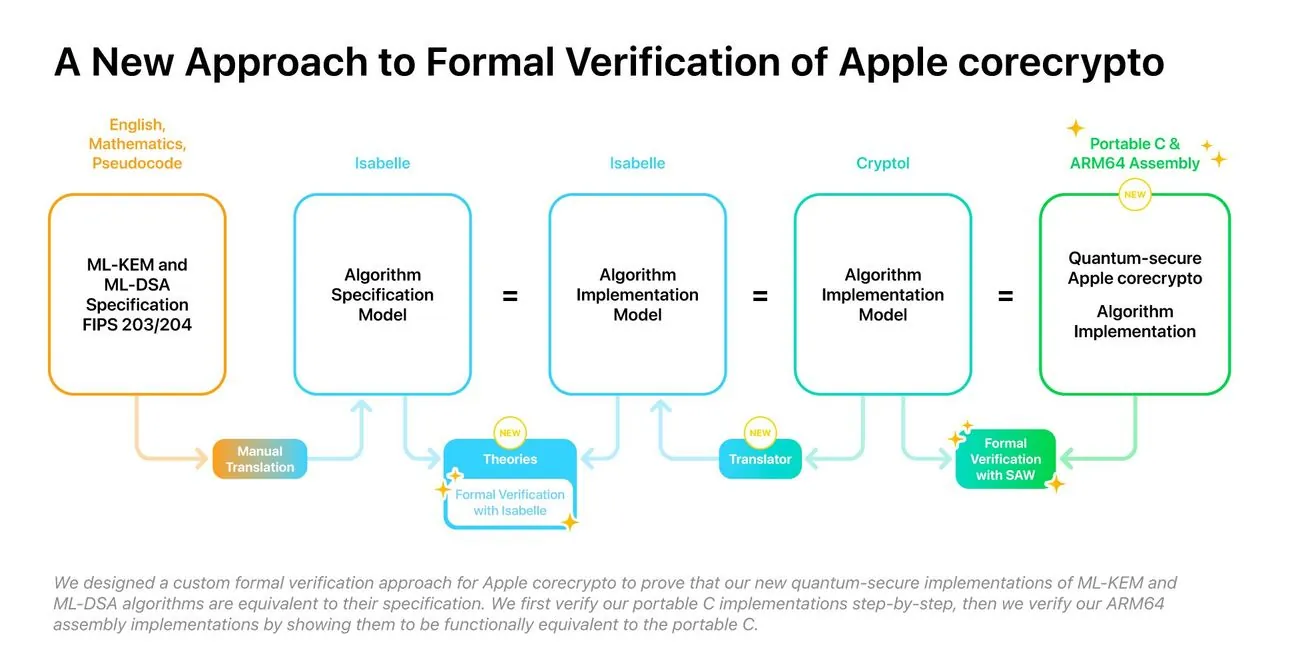
- 형식화 검증(Formal Verification) 디렉토리: 이 섹션은 증명 자료와 관련 도구를 포함하여, 구현이 FIPS 203 및 FIPS 204 표준을 준수하는지 확인하는 데 사용됩니다.
표준 준수 및 검증 과정의 강조
Apple은 이 프로세스가 일반적인 테스트를 대체하는 것이 아니라, 기존 테스트, 시뮬레이션, 독립적 검토, 그리고 형식화 검증을 결합하여 다층적으로 적용하는 방식임을 강조했습니다.
특히, FIPS 표준 준수 여부는 다음과 같이 나뉩니다:
- FIPS 203: ML-KEM에 해당하며, 주로 안전한 암호 키를 설정하는 데 사용됩니다.
- FIPS 204: ML-DSA에 해당하며, 주로 디지털 서명 생성에 사용됩니다.
코드 저장소 외에도 관련 지원 자료로는 다음과 같은 문서들이 제공되었습니다:
- 《Formal verification for Apple corecrypto》 논문
- Cryptol-to-Isabelle 변환 도구
- 소스 코드 패키지 내의 Isabelle 이론 파일
총평
Apple이 corecrypto 라이브러리와 관련 문서를 공개한 것은 단순한 기술 발표를 넘어, 미래 컴퓨팅 환경에 대비하는 강력한 보안 인프라 구축 의지를 보여줍니다. 특히 양자내성 알고리즘을 도입하고 FIPS 표준과 형식 검증이라는 최고 수준의 검증 과정을 거쳤다는 점은 이 시스템의 신뢰도를 극대화합니다. 이는 Apple 제품군 전반의 보안성을 한 단계 끌어올리는 중요한 전환점이 될 것으로 평가됩니다.
Apple 发布核心加密库代码
Apple 在 GitHub 上公开了 corecrypto 代码仓库,并同步发布技术长文。该项目是底层加密库,为 Security framework、CryptoKit 和 CommonCrypto 提供基础能力,涵盖加密、哈希、随机数生成和数字签名等功能。
后量子密码学(PQC)布局
作为 2024 年推进后量子密码学路线的一部分,Apple 已在 iOS 17.4 系统中为 iMessage 引入 PQ3 协议。此次发布的 corecrypto 仓库旨在应对未来量子计算机可能带来的安全威胁。
核心算法与技术标准
该仓库包含的核心技术内容包括:
- 核心算法: 选用了 ML-KEM(对应 FIPS 203 标准,用于建立加密密钥)和 ML-DSA(对应 FIPS 204 标准,用于数字签名)。
- 配套工具: 提供测试、性能工具、构建目标以及专门的“形式化验证”目录。
- 验证材料: 包括《Formal verification for Apple corecrypto》论文、Cryptol-to-Isabelle 转换工具以及 Isabelle 理论文件,用于确保实现符合相关安全标准。
总结
Apple 在 GitHub 上公开了核心加密库 corecrypto,旨在通过引入 ML-KEM 和 ML-DSA 等后量子算法来强化 iPhone 和 Mac 的安全性。此次更新结合了形式化验证和严格的 FIPS 标准,旨在构建抵御未来量子计算威胁的底层防御体系。
Apple、耐量子計算機暗号(PQC)のコアライブラリを公開
IT之家の報道によると、テックメディアの9to5Macは5月22日付の記事で、AppleがGitHubに「corecrypto」コードリポジトリを公開し、関連する技術文書を配布したことを報じました。この資料は、Appleの耐量子計算機暗号(Post-Quantum Cryptography)への取り組みが、iPhoneやMacといった実製品においてどのように適用されるかを重点的に解説しています。
量子時代への備え:iMessageおよびシステムアップデート
今回のアップデートは、Appleが2024年から継続的に推進している耐量子計算機暗号ロードマップの延長線上にあります。Appleは、将来の量子コンピューターによる潜在的な暗号解読のリスクに対処するため、iOS 17.4からiMessageにPQ3プロトコルを導入しました。このプロトコルは、セッション構築段階およびその後のキー更新プロセスにおいて、耐量子保護機能を追加するものです。
corecryptoコードリポジトリの機能と構成
AppleがGitHubで公開したcorecryptoは、システムの基盤となる重要な暗号化ライブラリです。このライブラリは、Security framework、CryptoKit、CommonCryptoなど、さまざまなフレームワークから呼び出されて使用され、暗号化、ハッシュ生成、乱数生成、およびデジタル署名などの必須機能を担います。
リポジトリには、単なるソースコードだけでなく、以下のような重要な要素が含まれています:
- ML-KEMとML-DSA:Appleがcorecryptoに採用した2つの耐量子アルゴリズムです。
- テストおよびパフォーマンスツール:実装された機能の安定性と効率性を検証するためのツール群です。
- 形式検証(Formal Verification)ディレクトリ:このセクションには証明データや関連ツールが含まれており、実装がFIPS 203およびFIPS 204標準に準拠しているかを確認するために使用されます。
標準への準拠と検証プロセスの強調
Appleは、このプロセスが一般的なテストに代わるものではなく、既存のテスト、シミュレーション、独立したレビュー、そして形式検証を組み合わせた多層的なアプローチを採用していることを強調しています。
特に、FIPS標準への準拠は以下のように分類されます:
- FIPS 203:ML-KEMに対応し、主に安全な暗号キーの設定に使用されます。
- FIPS 204:ML-DSAに対応し、主にデジタル署名の生成に使用されます。
コードリポジトリのほか、以下の関連資料も提供されています:
- 「Formal verification for Apple corecrypto」論文
- Cryptol-to-Isabelle変換ツール
- ソースコードパッケージ内のIsabelle理論ファイル
まとめ
Appleは、将来の量子コンピューティングによる脅威に備え、耐量子計算機暗号(PQC)を統合した「corecrypto」ライブラリと関連文書を公開しました。FIPS標準への準拠や形式検証といった高度な検証プロセスを経ることで、iPhoneやMacを含む製品群のセキュリティ基盤を強固に強化しています。
Apple Releases Core Library for Post-Quantum Cryptography (PQC)
According to IT Home, tech outlet 9to5Mac reported on May 22 that Apple has released the corecrypto code repository and accompanying technical documentation on GitHub. This release focuses on how Apple's Post-Quantum Cryptography (PQC) initiatives are integrated into actual products such as iPhone and Mac.
Preparing for the Quantum Era: iMessage and System Updates
This update is an extension of the PQC roadmap that Apple has been pursuing since 2024. To prepare for potential decryption risks posed by future quantum computers, Apple introduced the PQ3 protocol to iMessage starting with iOS 17.4. This protocol adds quantum-resistant protection during both the session establishment phase and subsequent key refreshing processes.
Features and Composition of the corecrypto Repository
The corecrypto library released on GitHub is a fundamental encryption library for the system. It is utilized by various frameworks, including Security framework, CryptoKit, and CommonCrypto, to handle essential functions such as encryption, hash generation, random number generation, and digital signatures.
In addition to the source code, the repository includes the following key elements:
- ML-KEM and ML-DSA: The two quantum-resistant algorithms adopted by Apple in corecrypto.
- Testing and Performance Tools: Tools used to verify the stability and efficiency of the implemented features.
- Formal Verification Directory: This section contains proof data and related tools to ensure that the implementation complies with FIPS 203 and FIPS 204 standards.
Emphasis on Standards Compliance and Verification Processes
Apple emphasized that this process is not a simple replacement for standard testing; rather, it is a multi-layered approach that combines existing tests, simulations, independent reviews, and formal verification.
Specifically, FIPS standard compliance is divided as follows:
- FIPS 203: Corresponds to ML-KEM, primarily used for establishing secure cryptographic keys.
- FIPS 204: Corresponds to ML-DSA, primarily used for generating digital signatures.
In addition to the code repository, the following supporting documents were provided:
- "Formal verification for Apple corecrypto" paper
- Cryptol-to-Isabelle conversion tool
- Isabelle theory files within the source code package
Summary
Apple has released its corecrypto repository and documentation to demonstrate a robust security infrastructure against future quantum computing threats. By adopting ML-KEM and ML-DSA algorithms and undergoing rigorous formal verification for FIPS compliance, Apple aims to significantly enhance the security of its entire product lineup.
Apple 发布 corecrypto 代码仓库
Apple 在 GitHub 上公开了核心加密库 corecrypto 的代码仓库,并同步发布技术长文。该举措旨在详细说明如何将后量子密码学(PQC)应用于 iPhone 和 Mac 等产品。此项更新延续了 Apple 在 2024 年推进的 PQC 路线图,此前 iOS 17.4 已在 iMessage 中引入 PQ3 协议以应对未来量子计算带来的安全风险。
核心技术与算法标准
corecrypto 是一个底层的加密库,为 Security framework、CryptoKit 和 CommonCrypto 提供基础能力。该仓库包含以下关键内容:
- 核心算法: 采用 ML-KEM(用于安全建立密钥)和 ML-DSA(用于数字签名)。
- 符合标准: 相关实现遵循 FIPS 203(对应 ML-KEM)与 FIPS 204(对应 ML-DSA)标准。
- 配套工具: 提供测试、性能工具、构建目标以及专门的“形式化验证”目录,包含证明材料和相关工具。
严谨的验证流程
Apple 强调,其采用的并非单一测试手段,而是将常规测试、模拟、独立审查和形式化验证(Formal Verification)相结合。此外,Apple 还提供了《Formal verification for Apple corecrypto》论文、Cryptol-to-Isabelle 转换工具以及源码包中的 Isabelle 理论文件,以确保代码实现的安全性。
总结
Apple 通过在 GitHub 上公开核心加密库 corecrypto 的源码及相关技术文档,推进其后量子密码学防御体系。该项目采用符合 FIPS 标准的 ML-KEM 和 ML-DSA 算法,并通过严谨的形式化验证确保 iPhone 与 Mac 等设备的底层安全。
Apple、耐量子計算機暗号(PQC)のコアライブラリを公開
IT之家の報道および技術メディア9to5Macの報じた内容によると、AppleはGitHub上で「corecrypto」コードリポジトリを公開し、関連する技術文書を同時に配布しました。この資料は、iPhoneやMacといった実製品において、Appleの耐量子計算機暗号(Post-Quantum Cryptography: PQC)がどのように実装されているかを詳述するものです。
量子時代への備え:iMessageおよびシステムアップデート
今回の更新は、Appleが2024年から継続的に推進しているPQCロードマップの一環です。将来の量子コンピューティングによる暗号解読のリスクに備えるため、AppleはiOS 17.4からiMessageにPQ3プロトコルを導入しました。このプロトコルは、セッション構築段階およびその後のキー更新プロセスにおいて、耐量子保護機能を追加するものです。
corecryptoコードリポジトリの機能と構成
AppleがGitHubで公開した「corecrypto」は、システムの基盤となる核心的な暗号化ライブラリです。このライブラリは、Security framework、CryptoKit、CommonCryptoといった多様なフレームワークから呼び出され、暗号化、ハッシュ生成、乱数生成、およびデジタル署名などの必須機能を担います。
公開されたリポジトリには、ソースコードに加えて以下の主要要素が含まれています:
- ML-KEMおよびML-DSA:Appleがcorecryptoに採用した2つの耐量子計算機暗号アルゴリズム。
- テストおよび性能ツール:実装された機能の安定性と効率性を検証するためのツール群。
- 形式検証(Formal Verification)ディレクトリ:証明データや関連ツールを含み、実装がFIPS 203およびFIPS 204標準に準拠しているかを確認するために使用されます。
標準準拠と検証プロセスの強化
Appleは、このプロセスが単なるテストの代替ではなく、既存のテスト、シミュレーション、独立したレビュー、そして形式検証を組み合わせた多層的なアプローチを採用していることを強調しています。
特に、FIPS標準への準拠については以下のように分類されています:
- FIPS 203:ML-KEMに対応。主に安全な暗号キーの設定に使用されます。
- FIPS 204:ML-DSAに対応。主にデジタル署名の生成に使用されます。
リポジトリのほか、以下のサポート資料も提供されています:
- 「Formal verification for Apple corecrypto」論文
- Cryptol-to-Isabelle変換ツール
- ソースコードパッケージ内のIsabelle理論ファイル
まとめ
Appleは、将来の量子コンピューティングによる脅威に対抗するため、耐量子計算機暗号(PQC)を組み込んだ「corecrypto」ライブラリと関連技術文書を公開しました。ML-KEMやML-DSAといったアルゴリズムの採用に加え、FIPS標準への準拠や形式検証といった高度な検証プロセスを経ることで、Apple製品のセキュリティ基盤を次世代レベルへと強化しています。
Apple Releases Core Post-Quantum Cryptography (PQC) Library
According to IT Home, tech outlet 9to5Mac reported on May 22 that Apple has released its corecrypto code repository on GitHub along with accompanying technical documentation. This release focuses specifically on how Apple's Post-Quantum Cryptography (PQC) initiatives are implemented in actual products such as the iPhone and Mac.
Preparing for the Quantum Era: iMessage and System Updates
This update is an extension of the PQC roadmap that Apple began pushing in 2024. To prepare for potential decryption risks posed by future quantum computers, Apple introduced the PQ3 protocol to iMessage starting with iOS 17.4. This protocol adds quantum-resistant protection during both the session establishment phase and subsequent key refreshing processes.
Features and Composition of the corecrypto Repository
The corecrypto repository released by Apple is a fundamental encryption library for the system. It is utilized by various frameworks, including Security framework, CryptoKit, and CommonCrypto, to handle essential functions such as encryption, hash generation, random number generation, and digital signatures.
In addition to the source code, the repository includes several key components:
- ML-KEM and ML-DSA: The two quantum-resistant algorithms adopted by Apple within corecrypto.
- Testing and Performance Tools: Tools designed to verify the stability and efficiency of the implemented features.
- Formal Verification Directory: This section contains proof data and related tools used to ensure that implementations comply with FIPS 203 and FIPS 204 standards.
Emphasis on Standards Compliance and Verification
Apple emphasized that this process does not replace standard testing; rather, it employs a multi-layered approach combining existing tests, simulations, independent reviews, and formal verification.
Specifically, the FIPS standards are divided as follows:
- FIPS 203: Corresponds to ML-KEM, primarily used for establishing secure cryptographic keys.
- FIPS 204: Corresponds to ML-DSA, primarily used for generating digital signatures.
In addition to the code repository, the following supporting documents were provided:
- "Formal verification for Apple corecrypto" research paper
- Cryptol-to-Isabelle conversion tools
- Isabelle theory files within the source code package
Summary
Apple's release of the corecrypto library and associated documentation demonstrates a proactive commitment to building robust security infrastructure against future quantum computing threats. By integrating PQC algorithms like ML-KEM and ML-DSA while adhering to FIPS standards through formal verification, Apple is significantly enhancing the security reliability across its entire product ecosystem.
核心代码库发布
Apple 在 GitHub 上公开了 corecrypto 代码仓库,并同步发布技术长文。此举旨在详细说明如何将后量子密码学(PQC)应用于 iPhone 和 Mac 等产品,是延续 Apple 2024 年推进的后量子密码学路线的重要步骤。此前,Apple 已在 iOS 17.4 系统中为 iMessage 上线 PQ3 协议以应对未来量子计算带来的风险。
核心组件与算法支持
corecrypto 是一个底层的加密库,作为基础架构支撑多个关键框架:
- 涉及框架:Security framework、CryptoKit 和 CommonCrypto。
- 核心功能:负责加密、哈希、随机数生成和数字签名等能力。
- 选用的后量子算法:ML-KEM(用于安全建立加密密钥)和 ML-DSA(用于数字签名)。
验证标准与技术工具
为了确保安全性,Apple 采用了一套结合常规测试、模拟、独立审查和形式化验证的综合保障体系。相关配套内容包括:
- 符合标准:遵循 FIPS 203(对应 ML-KEM)与 FIPS 204(对应 ML-DSA)标准。
- 提供工具:包含测试工具、性能工具、构建目标以及专门的形式化验证目录。
- 配套材料:包括《Formal verification for Apple corecrypto》论文、Cryptol-to-Isabelle 转换工具,以及源码包中的 Isabelle 理论文件。
总结
Apple 通过在 GitHub 上开源核心加密库 corecrypto,正式推进后量子密码学技术的落地。通过引入 ML-KEM 和 ML-DSA 算法并结合严格的形式化验证标准,旨在提升 iPhone 和 Mac 等设备的长期安全性。
Apple、耐量子計算機暗号(PQC)のコアライブラリを公開
ITのニュースサイト「IT之家」およびテックメディア「9to5Mac」の報道によると、AppleはGitHub上で「corecrypto」コードリポジトリを公開し、関連する技術ドキュメントを配布しました。この資料では、iPhoneやMacといった実製品において、Appleの耐量子計算機暗号(Post-Quantum Cryptography: PQC)への取り組みがどのように実装されているかが詳しく解説されています。
量子時代への備え:iMessageおよびシステムアップデート
今回のアップデートは、Appleが2024年から継続的に推進しているPQCロードマップの一環です。将来の量子コンピューターによる潜在的な暗号解読のリスクに対処するため、AppleはiOS 17.4からiMessageにPQ3プロトコルを導入しました。このプロトコルは、セッション構築段階およびその後のキー更新プロセスにおいて、耐量子保護機能を追加するものです。
corecryptoコードリポジトリの機能と構成
AppleがGitHubで公開した「corecrypto」は、システムの基盤となる重要な暗号化ライブラリです。このライブラリは、Security framework、CryptoKit、CommonCryptoなど、さまざまなフレームワークから呼び出されて使用され、暗号化、ハッシュ生成、乱数生成、およびデジタル署名などの必須機能を担います。
リポジトリには、単なるソースコードだけでなく、以下のような重要な要素が含まれています:
- ML-KEMとML-DSA:Appleがcorecryptoに採用した2つの耐量子アルゴリズムです。
- テストおよびパフォーマンスツール:実装された機能の安定性と効率性を検証するためのツール群です。
- 形式検証(Formal Verification)ディレクトリ:このセクションには証明データや関連ツールが含まれており、実装がFIPS 203およびFIPS 204標準に準拠しているかを確認するために使用されます。
標準への準拠と検証プロセスの強調
Appleは、このプロセスが一般的なテストに代わるものではなく、既存のテスト、シミュレーション、独立したレビュー、そして形式検証を組み合わせた多層的なアプローチを採用していることを強調しています。
特に、FIPS標準への準拠は以下のように分類されます:
- FIPS 203:ML-KEMに対応し、主に安全な暗号キーの設定に使用されます。
- FIPS 204:ML-DSAに対応し、主にデジタル署名の生成に使用されます。
コードリポジトリのほか、以下の関連資料も提供されています:
- 「Formal verification for Apple corecrypto」論文
- Cryptol-to-Isabelle変換ツール
- ソースコードパッケージ内のIsabelle理論ファイル
まとめ
Appleは、将来の量子コンピューティングによる脅威に備え、耐量子計算機暗号(PQC)を統合した「corecrypto」ライブラリと関連ドキュメントを公開しました。この更新により、iMessageを含む製品群において、FIPS標準への準拠や形式検証といった高度なプロセスを経て構築された強固なセキュリティ基盤が提供されます。
Apple Releases Core Library for Post-Quantum Cryptography (PQC)
According to IT Home, tech outlet 9to5Mac reported on May 22 that Apple has released the corecrypto code repository and accompanying technical documentation on GitHub. This release focuses on how Apple's Post-Quantum Cryptography (PQC) initiatives are integrated into actual products such as iPhone and Mac.
Preparing for the Quantum Era: iMessage and System Updates
This update is an extension of the PQC roadmap that Apple has been pursuing since 2024. To prepare for potential decryption risks posed by future quantum computers, Apple introduced the PQ3 protocol to iMessage starting with iOS 17.4. This protocol adds quantum-resistant protection during both the session establishment phase and subsequent key refreshing processes.
Features and Composition of the corecrypto Repository
The corecrypto library released on GitHub is a fundamental encryption library for the system. It is utilized by various frameworks, including Security framework, CryptoKit, and CommonCrypto, to handle essential functions such as encryption, hash generation, random number generation, and digital signatures.
In addition to the source code, the repository includes the following key elements:
- ML-KEM and ML-DSA: The two quantum-resistant algorithms adopted by Apple in corecrypto.
- Testing and Performance Tools: Tools used to verify the stability and efficiency of the implemented features.
- Formal Verification Directory: This section contains proof data and related tools to ensure that the implementation complies with FIPS 203 and FIPS 204 standards.
Emphasis on Standards Compliance and Verification Processes
Apple emphasized that this process is not a replacement for standard testing; rather, it is a multi-layered approach combining existing tests, simulations, independent reviews, and formal verification.
Specifically, FIPS standard compliance is categorized as follows:
- FIPS 203: Corresponds to ML-KEM, primarily used for establishing secure encryption keys.
- FIPS 204: Corresponds to ML-DSA, primarily used for generating digital signatures.
In addition to the code repository, the following supporting materials were provided:
- "Formal verification for Apple corecrypto" paper
- Cryptol-to-Isabelle conversion tool
- Isabelle theory files within the source code package
Summary
Apple has released its corecrypto repository and technical documentation to bolster the security of iPhone and Mac devices against future quantum computing threats. By adopting ML-KEM and ML-DSA algorithms alongside rigorous formal verification and FIPS standards, Apple is establishing a robust infrastructure for long-term data protection.