AGenUI 프레임워크 공개
Amap은 Huawei HarmonyOS 시스템 최초의 생성형 UI 오픈소스 프레임워크인 AGenUI를 출시했다고 발표했습니다. 이 프레임워크는 AI 애플리케이션 개발 진입 장벽을 크게 낮추고, 다양한 기기 인터페이스의 적응을 간소화할 수 있다고 합니다. 현재 개발자와 학계에 전면 오픈소스화되었으며, 프로젝트 GitHub 주소는 (https://github.com/AGenUI/AGenUI)입니다.
이 프레임워크는 Google A2UI 프로토콜을 기반으로 하며 C++를 핵심으로 합니다. AI 대규모 모델이 생성한 인터페이스 의도를 HarmonyOS 네이티브 컴포넌트 렌더링으로 직접 변환할 수 있어, 하나의 범용 인터페이스 프로토콜만으로 HarmonyOS 휴대폰, 태블릿, 차량용 시스템, 스마트 스크린, 웨어러블 등 다양한 단말 장치에 원활하게 적용할 수 있습니다.
Amap은 AGenUI가 HarmonyOS 1+8+N 전면 분산 아키텍처에 깊이 통합되어 있어, 각기 다른 장치에 대해 개별적인 적응 및 디버깅이 필요 없다고 밝혔습니다. 이 프레임워크는 HarmonyOS 시스템 수준의 렌더링, 동적 효과 및 분산 핵심 기능과 직접 연결되어 중간 계층 손실이 없으며, Xiaoyi 및 HarmonyOS 의도 프레임워크와 자연스럽게 협력하여 생성형 UI가 HarmonyOS 생태계의 시스템 수준 표준 기능이 되도록 추진합니다.
성능
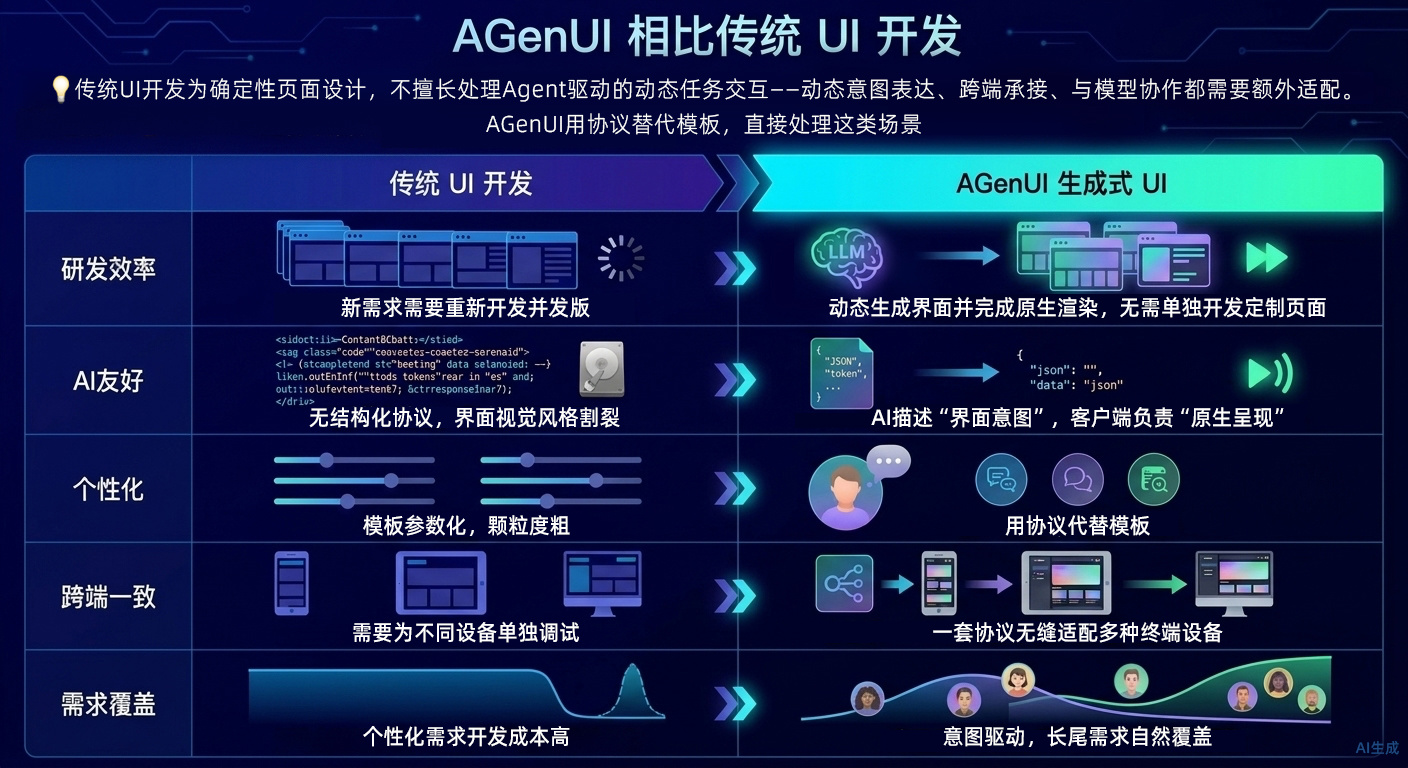
성능 측면에서 HarmonyOS 버전 AGenUI는 iOS 및 Android 버전과 비교하여 렌더링 성능이 20% 향상되었고, 메모리 점유율은 18% 감소했습니다. 다양한 기기 인터페이스의 표현과 상호작용 경험이 고도로 통일되어 HarmonyOS 분산 멀티 디바이스 협업의 핵심 장점을 충분히 발휘합니다. 기술 경로 측면에서 전통적인 UI 개발은 확정적인 페이지 디자인을 지향하여 Agent 기반의 동적 작업 상호작용 처리에 능숙하지 않았지만, AGenUI는 템플릿을 프로토콜로 대체하여 개발 효율성, AI 친화성, 개인화, 요구사항 커버리지 등 여러 측면에서 더 우수한 성능을 보여줍니다.
총평
Amap이 공개한 AGenUI는 Huawei HarmonyOS 시스템을 위한 최초의 생성형 UI 오픈소스 프레임워크로, AI 애플리케이션 개발을 간소화하고 다양한 HarmonyOS 기기 간의 인터페이스 적응을 용이하게 합니다. 이 프레임워크는 HarmonyOS의 분산 아키텍처를 활용하여 뛰어난 렌더링 성능과 낮은 메모리 사용량을 제공하며, AI 기반의 동적 상호작용 처리에 효율적인 솔루션을 제시합니다.
产品发布与开源
高德宣布推出“Huawei 鸿蒙 HarmonyOS 系统首个生成式 UI 开源框架”AGenUI,旨在降低 AI 应用开发门槛并简化多设备界面适配。该项目已面向开发者和学术界全面开源。
- GitHub 项目地址:https://github.com/AGenUI/AGenUI
技术架构与兼容性
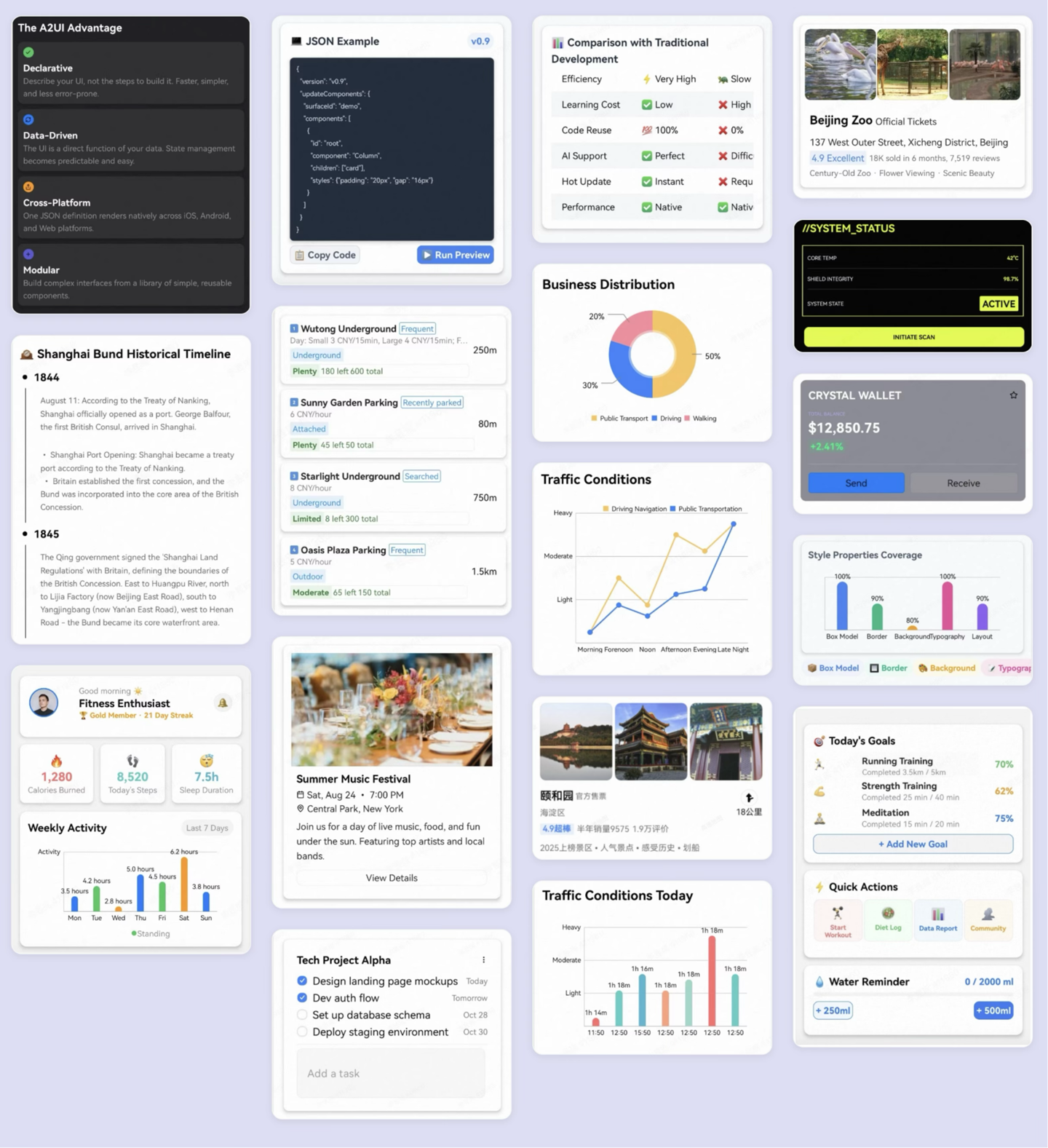
AGenUI 基于谷歌 A2UI 协议,以 C++ 为核心,能够将 AI 大模型生成的界面意图直接转化为鸿蒙原生组件渲染。
- 多端适配:通过一套通用界面协议,可无缝适配手机、平板、车机、智慧屏、穿戴等多种终端。
- 系统深度融合:深度适配 HarmonyOS 1+8+N 全场景分布式架构,直连系统级渲染、动效及分布式核心能力,并与小艺、鸿蒙意图框架协同。
性能表现与技术优势
相比于 iOS 和 Android 端对应版本,HarmonyOS 版 AGenUI 在性能指标上更具优势。
- 渲染性能提升 20%。
- 内存占用降低 18%。
- 采用“协议替代模板”的技术路径,在处理 Agent 驱动的动态任务交互时,比传统 UI 开发更具效率和灵活性。
总结
高德推出的 AGenUI 是 HarmonyOS 首个生成式 UI 开源框架,旨在通过统一协议简化多设备适配并提升 AI 应用开发效率。该框架不仅在渲染性能和内存占用上优于移动端竞品,还深度融合了鸿蒙系统的分布式能力与意图框架。
AGenUIフレームワークの公開
Amapは、Huawei HarmonyOSシステム向け初の生成型UIオープンソースフレームワークである「AGenUI」を発表しました。このフレームワークは、AIアプリケーションの開発における参入障壁を大幅に下げ、多様なデバイスインターフェースへの適応を簡略化します。現在、開発者および学術機関に向けて全面的にオープンソース化されており、プロジェクトのGitHubリポジトリは(https://github.com/AGenUI/AGenUI)です。
このフレームワークはGoogle A2UIプロトコルをベースとしており、C++をコアとしています。大規模言語モデル(LLM)が生成したインターフェースの意図をHarmonyOSネイティブコンポーネントのレンダリングに直接変換できるため、単一の汎用インターフェースプロトコルだけで、HarmonyOS搭載スマートフォン、タブレット、車載システム、スマートスクリーン、ウェアラブルなど、多様な端末へスムーズに適用することが可能です。
Amapは、AGenUIがHarmonyOSの「1+8+N」分散アーキテクチャに深く統合されているため、各デバイスごとに個別の適応やデバッグを必要としないと述べています。このフレームワークは、HarmonyOSシステムレベルのレンダリング、動的エフェクト、および分散コア機能と直接連携するため中間層での損失がなく、XiaoyiおよびHarmonyOS意図(Intent)フレームワークと自然に連携することで、生成型UIをHarmonyOSエコシステムのシステムレベルの標準機能へと昇華させることを目指しています。
パフォーマンス
性能面において、HarmonyOS版AGenUIはiOSおよびAndroidバージョンと比較してレンダリング性能が20%向上し、メモリ消費量が18%削減されました。多様なデバイスインターフェースの表現とインタラクション体験が一貫しており、HarmonyOSの分散マルチデバイス連携の利点を十分に引き出します。技術的なアプローチにおいて、従来のUI開発は確定的なページデザインを志向していたため、Agentベースの動的な作業インタラクション処理には不向きでしたが、AGenUIはテンプレートをプロトコルに置き換えることで、開発効率、AI親和性、パーソナライズ、要件カバー率など、多くの側面で優れた性能を示しています。
まとめ
Amapが公開したAGenUIは、Huawei HarmonyOS向け初の生成型UIオープンソースフレームワークであり、AIアプリの開発を簡略化し、多様なデバイス間でのインターフェース適応を容易にします。HarmonyOSの分散アーキテクチャを活用することで高いレンダリング性能と低いメモリ消費を実現しており、AIベースの動的なインタラクション処理に対して効率的なソリューションを提供します。
AGenUI Framework Released
Amap has announced the launch of AGenUI, the first open-source generative UI framework for the Huawei HarmonyOS system. This framework aims to significantly lower the barrier to entry for AI application development and simplify the adaptation of interfaces across various devices. It has been fully open-sourced for developers and academia; the project is available on GitHub at (https://github.com/AGenUI/AGenUI).
Based on the Google A2UI protocol with C++ as its core, this framework allows interface intentions generated by large AI models to be converted directly into HarmonyOS native component renderings. By utilizing a single universal interface protocol, it can be seamlessly applied across a wide range of devices, including HarmonyOS phones, tablets, vehicle systems, smart screens, and wearables.
Amap stated that AGenUI is deeply integrated into the HarmonyOS "1+8+N" distributed architecture, eliminating the need for individual adaptation and debugging for different devices. The framework connects directly to system-level rendering, dynamic effects, and distributed core functions without intermediate layer loss. It also works seamlessly with Xiaoyi and the HarmonyOS intent framework to promote generative UI as a system-level standard feature within the HarmonyOS ecosystem.
Performance
In terms of performance, the HarmonyOS version of AGenUI demonstrates significant improvements over iOS and Android versions:
- Rendering performance improved by 20%
- Memory occupancy reduced by 18%
The framework provides a highly unified experience for representation and interaction across various devices, fully leveraging the core advantages of HarmonyOS's distributed multi-device collaboration. From a technical standpoint, while traditional UI development focuses on fixed page designs—making it less capable of handling dynamic task interactions based on Agents—AGenUI replaces templates with protocols. This approach delivers superior performance in terms of development efficiency, AI friendliness, personalization, and requirement coverage.
Summary
Amap's AGenUI is the first open-source generative UI framework for Huawei HarmonyOS, designed to simplify AI application development and streamline multi-device interface adaptation. By leveraging HarmonyOS's distributed architecture, it provides superior rendering performance and lower memory usage while offering an efficient solution for handling AI-driven dynamic interactions.