AI 기반 천문학 데이터 분석의 혁신
최근 인공지능(AI) 이미지 처리 기술이 발전하면서 미국 NASA의 James Webb Space Telescope 데이터를 분석하는 데 걸리는 시간이 수년에서 불과 며칠, 혹은 그 이하로 단축되었습니다. 이 기술은 이전에는 불가능했을 법한 대규모 과학적 발견을 가능하게 했으며, 천문학 연구 분야에 혁신적인 변화를 가져오고 있습니다.
베라 C 루빈 천문대와 관측 과제
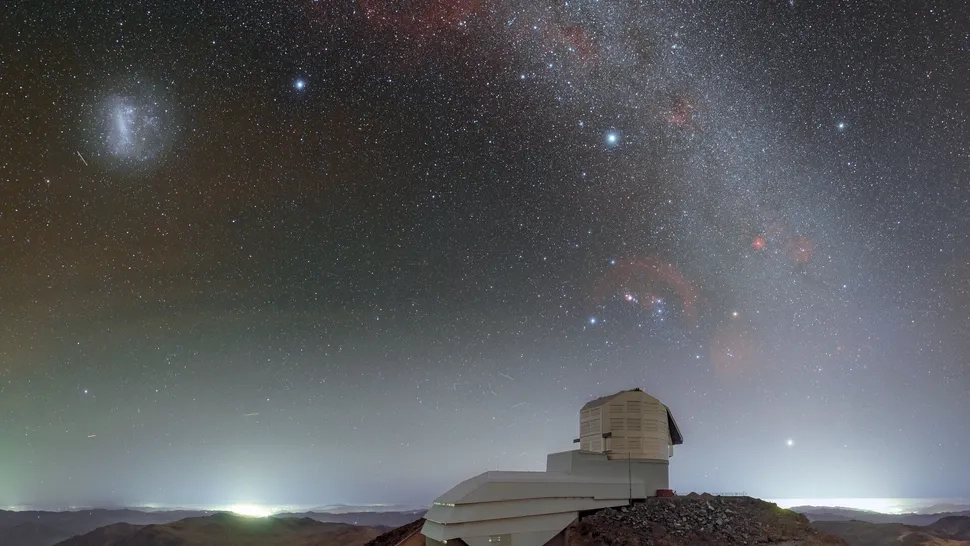
이러한 AI 기술은 현재 칠레의 Vera C. Rubin Observatory에서 촬영되는 이미지의 화질을 향상하는 데 활용되고 있습니다. 신흥 천체 관측 거점으로 떠오른 이 시설의 이미지는 최적화 과정을 거치면서 우주에서 직접 촬영한 수준의 선명도를 갖게 될 전망입니다.
베라 C. 루빈 Observatory는 미국의 천문학자 Vera C. Rubin의 이름을 따 명명되었으며, 암흑 물질 존재에 대한 중요한 증거를 발견하는 데 기여했습니다. 이 시설은 칠레 안데스 산맥 고지대(해발 2673m)의 Pampa Lluta 지역에 위치하며, 지난 해 정식 운영을 시작했습니다.
이 천문대는 매 3일 밤 전체 하늘을 스캔하여 약 10년 동안 천체의 움직이는 궤적을 기록할 계획입니다. 관측지는 지구상에서 가장 건조한 아타카마 사막에 위치해 있어, 건조하고 맑은 대기가 최적의 천문 관측 환경을 제공합니다.
AI를 통한 대기 왜곡 제거 기술
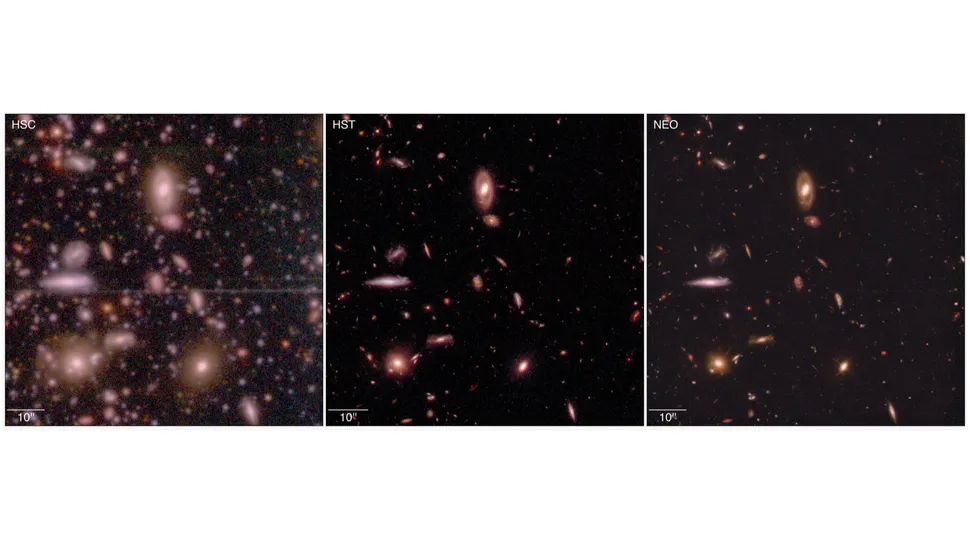
하지만 아무리 좋은 관측지라 할지라도, 먼 우주에서 오는 빛이 지구 대기를 통과하는 과정에서 심각한 왜곡(대기 난류)이 발생하여 관측 이미지에 영향을 미칩니다. 이에 커낼 대학교 샌타크루즈 지점의 연구팀은 이러한 대기 왜곡을 제거하고 이미지 해상도를 높여, 지상에서 촬영된 사진이 마치 우주 망원경으로 찍은 것처럼 보이게 하는 새로운 AI 알고리즘을 개발했습니다.
개발 책임자인 브랜트 로버슨 교수는 "지상 망원경의 빛이 대기를 통과할 때 발생하는 난류로 인한 흐릿함 문제를 해결하기 위해 막대한 투자가 이루어졌습니다. 이제는 인공지능 머신러닝 모델을 훈련시켜 이러한 왜곡 문제를 효과적으로 약화시킬 수 있게 되었습니다"라고 설명했습니다.
Neo 모델의 작동 원리와 성능
연구팀은 일본 Subaru Telescope의 지상 관측 이미지와 Hubble Space Telescope가 촬영한 동일 영역 이미지를 활용하여 'Neo'라는 생성형 AI 모델을 훈련시켰습니다. 이 모델의 핵심 임무는 지상 관측 이미지에서 누락된 세부 정보를 보완하는 것이며, 그 결과는 매우 인상적입니다.
- 정확도 향상: Neo 모델은 천체 형태 매개변수 측정의 정확도를 2배에서 최대 10배까지 향상시킬 수 있습니다.
- 세부 식별력: 해상도가 크게 높아지면서, 원래 흐릿하고 얼룩 같았던 화면 속에서도 무수한 독립적인 별과 은하의 정밀한 윤곽을 구분할 수 있게 됩니다.
로버슨 교수는 "이 모델은 관측 데이터의 공간적 이미징 품질을 최적화하여 통계학적 차원에서 우주 망원경 시점의 은하 특징을 복원해냅니다"라고 강조했습니다.
기술적 배경 및 활용 가치
Neo 모델은 조건부 생성 적대 신경망(Conditional Generative Adversarial Network, GAN)에 속하며, 두 그룹의 신경망이 협력하여 작동하는 AI 이미지 생성 분야에서 흔히 사용되는 구조입니다.
- 작동 방식: 한 그룹은 원본 관측 영상으로부터 최적화된 고해상도 이미지를 생성하고, 다른 그룹은 이 이미지의 화질을 평가하고 검증합니다.
이 모델은 로버슨 팀이 James Webb Space Telescope의 이미지 처리를 가속화하기 위해 개발했던 기술에서 파생되었습니다. 100억 달러에 달하는 JWST는 방대한 양의 관측 데이터를 생성하며, 천문학자가 수동으로 분석하는 것만으로는 이를 제때 처리할 수 없습니다.
로버슨 교수는 "방대한 데이터가 쏟아져 들어오는데, 사람의 분석 속도를 따라잡기 어렵습니다. 기존의 이미지 분석 방식은 이미 한계에 도달했습니다"라고 지적했습니다.
이 알고리즘은 NVIDIA GPU 슈퍼컴퓨터 위에서 구동되며, JWST 시대에 초기 우주에 존재할 것으로 예상되지 않았던 복잡한 은하를 포함하여 여러 중요한 천문학적 발견을 이끌었습니다. 모델은 이미지의 모든 픽셀을 분석하여 그것이 우주 공간인지 아니면 실제 천체 실체인지를 판별하며, 만약 천체라면 나선형 은하, 타원형 은하, 별 등의 구성 요소까지 구분할 수 있습니다.
총평
AI 기술은 천문학 연구의 속도와 깊이를 근본적으로 변화시키고 있습니다. 이 알고리즘은 단순히 이미지를 개선하는 것을 넘어, 데이터에서 인간이 놓치기 쉬운 패턴과 특징을 추출하여 과학적 발견 과정을 극대화합니다. 다만, 로버슨 교수는 AI가 천문학자를 대체하는 것이 아니라, 연구자들이 더 빠르고 효율적으로 발견에 도달하도록 돕는 강력한 보조 수단임을 강조했습니다.
AI 技术提升地面望远镜成像质量
加州大学圣克鲁兹分校的研究团队开发出名为 Neo 的生成式模型,旨在消除地表观测中因大气湍流导致的光线畸变。该技术应用于智利的薇拉·C·鲁宾(Vera C. Rubin)天文台,旨在让地面拍摄的图像清晰度达到与太空望远镜相当的水准。
Neo 模型核心功能与性能
Neo 模型属于条件生成对抗网络(cGAN),由两组神经网络协同工作:一组负责从原始观测影像中生成优化后的高清图像,另一组则负责对图像画质进行评估校验。该模型在实际应用中表现出色:
- 将天体形态参数的测量准确度提升 2 至 10 倍。
- 能够从模糊的画面中分辨出海量独立恒星及星系的精准轮廓。
- 能解析图像中的每一个像素,判断其属于宇宙空域还是特定类型的实体(如盘状或椭球状星系)。
技术背景与科研价值
该模型源于研究团队此前为詹姆斯·韦布空间望远镜(JWST)开发的算法。该项技术利用 NVIDIA GPU 超级计算机运行,旨在最大化昂贵天文设施的科研产出。相关项目涉及的关键数据如下:
- 薇拉·C·鲁宾天文台:配备 8.4 米口径反射镜,建造成本为 8 亿美元。
- 詹姆斯·韦布空间望远镜(JWST):造价约为 100 亿美元。
- 效率提升:人工智能算法将原本耗时数年的数据分析缩短至数日甚至更短时间。
总结
研究团队开发的 Neo 模型利用 AI 技术显著提升了地面望远镜的成像分辨率,使其能够克服大气干扰达到太空级清晰度。该技术大幅提高了天体测量精度并极大加速了海量观测数据的处理效率。人工智能在此过程中作为科研工具与人类专家互补,旨在帮助科学家更快速地发现宇宙规律。
AIによる天文学データ分析の革新
近年、人工知能(AI)画像処理技術の進歩により、NASAのJames Webb Space Telescope(JWST)データの解析に要する時間が数年からわずか数日、あるいはそれ以下に短縮されました。この技術は、従来は不可能であった大規模な科学的発見を可能にし、天文学研究分野に革新的な変化をもたらしています。
ベラ・C・ルビン天文台と観測の課題
このAI技術は現在、チリのVera C. Rubin Observatoryで撮影される画像の画質向上に活用されています。新興の天体観測拠点として注目されるこの施設の画像は、最適化プロセスを経て、宇宙から直接撮影されたレベルの鮮明度を備える見通しです。
Vera C. Rubin Observatoryは米国の天文学者Vera C. Rubinの名を冠しており、暗黒物質(ダークマター)の存在に関する重要な証拠を発見することに寄与してきました。この施設はチリのアンデス山脈高地(標高2673m)のPampa Lluta地域に位置し、昨年から正式な運用を開始しています。
この天文台は3日ごとに全天をスキャンし、約10年間にわたり天体の移動軌跡を記録する計画です。観測地は地球上で最も乾燥したアタカマ砂漠に位置しており、乾燥した澄んだ大気が最適な天体観測環境を提供しています。
AIによる大気歪みの除去技術
しかし、いかに優れた観測地であっても、遠方の宇宙から届く光が地球の大気を通過する際に深刻な歪み(大気揺らぎ)が発生し、観測画像に影響を与えます。これに対し、カリフォルニア大学サンタクルーズ校の研究チームは、この大気歪みを取り除き画像の解像度を高め、地上の望遠鏡で撮影された写真をまるで宇宙望遠鏡で捉えたかのような品質へと変換する新しいAIアルゴリズムを開発しました。
開発責任者のブラント・ロバートソン教授は、「地上の望遠鏡の光が大気を通過する際に発生する揺らぎによるぼやけの問題を解決するために、これまで多大な投資が行われてきました。現在では、人工知能の機械学習モデルを訓練させることで、これらの歪み問題を効果的に緩和できるようになりました」と説明しています。
Neoモデルの動作原理と性能
研究チームは、日本のSubaru Telescopeによる地上の観測画像とHubble Space Telescopeが撮影した同一領域の画像を活用し、「Neo」という生成AIモデルを学習させました。このモデルの主な任務は、地上の観測画像で失われた詳細情報を補完することであり、その結果は非常に印象的なものです。
- 精度の向上: Neoモデルは天体の形態パラメータ測定の精度を2倍から最大10倍まで向上させることができます。
- 詳細な識別能力: 解像度が大幅に向上することで、元々はぼやけていた領域から無数の独立した星や銀河の精密な輪郭を判別できるようになります。
ロバートソン教授は、「このモデルは観測データの空間的なイメージ品質を最適化し、統計学的な次元で宇宙望遠鏡視点の銀河の特徴を復元します」と強調しました。
技術的背景と活用価値
Neoモデルは条件付き生成敵対ネットワーク(Conditional Generative Adversarial Network, GAN)に属しており、2つのニューラルネットワークが協力して動作するAI画像生成分野で一般的に使用される構造です。
- 動作の仕組み: 一方のグループが元の観測映像から最適化された高解量度画像を生成し、もう一方のグループがその画像の画質を評価し検証します。
このモデルは、ロバートソンチームがJames Webb Space Telescopeの画像処理を加速するために開発した技術から派生したものです。100億ドル規模のJWSTは膨大な量の観語データを生成するため、天文学者が手動で分析するだけでは適時に処理することができません。
ロバートソン教授は、「膨大なデータが押し寄せてくる中で、人間の分析速度を追い越すことは困難です。従来の画像分析手法はすでに限界に達しています」と指摘しました。
このアルゴリズムはNVIDIAのGPUスーパーコンピューター上で動作し、JWST時代において初期宇宙に存在すると予想されなかった複雑な銀河を含む、多くの重要な天文学的発見をもたらしました。モデルは画像のすべてのピクセルを分析し、それが宇宙空間なのか、あるいは実際の天体であるかを判別し、もし天体であれば渦巻銀河、楕円銀河、星などの構成要素まで識別することができます。
まとめ
AI技術の導入により、地上の望遠鏡で撮影された画像の大気歪みが除去され、宇宙望遠鏡に近い高解像度なデータを得ることが可能になりました。特に「Neo」モデルは、天体パラメータの測定精度を最大10倍向上させ、膨大な観測データの解析を加速させる強力なツールとして機能しています。この技術は単なる画像改善にとどまらず、人間が見落としがちなパターンを抽出することで、天文学における科学的発見のプロセスを劇的に効率化しています。
Innovation in AI-Driven Astronomical Data Analysis
With recent advancements in artificial intelligence (AI) image processing technology, the time required to analyze data from NASA's James Webb Space Telescope has been slashed from years to just a few days or even less. This technology is enabling large-scale scientific discoveries that were previously thought impossible and is bringing revolutionary changes to the field of astronomical research.
Vera C. Rubin Observatory and Observation Challenges
This AI technology is currently being utilized to improve the image quality captured by the Vera C. Rubin Observatory in Chile. As an emerging hub for celestial observation, images from this facility are expected to achieve clarity comparable to those captured directly from space after undergoing optimization processes.
The Vera C. Rubin Observatory was named after the American astronomer Vera C. Rubin and has contributed significantly to finding crucial evidence regarding the existence of dark matter. The facility is located in the Pampa Lluta region of the Chilean Andes (at an altitude of 2,673m) and began official operations last year.
The observatory plans to scan the entire sky every three nights for approximately 10 years to record the moving trajectories of celestial bodies. The observation site is located in the Atacama Desert, one of the driest places on Earth, where the dry and clear atmosphere provides an optimal environment for astronomical observations.
Removing Atmospheric Distortion via AI
However, regardless of how favorable the observation site is, light from deep space undergoes significant distortion (atmospheric turbulence) as it passes through Earth's atmosphere, affecting the quality of captured images. To address this, a research team at the University of California, Santa Cruz has developed a new AI algorithm that removes these atmospheric distortions and enhances image resolution, making ground-based photos appear as if they were taken by space telescopes.
Lead researcher Professor Brant Robertson explained, "Massive investments have been made to solve the problem of blurriness caused by turbulence when light from ground-based telescopes passes through the atmosphere. We can now train artificial intelligence machine learning models to effectively mitigate these distortion issues."
Operation Principles and Performance of the Neo Model
The research team trained a generative AI model called "Neo" using ground observation images from Japan's Subaru Telescope and images of the same regions captured by the Hubble Space Telescope. The core mission of this model is to fill in missing details in ground-based observation images, yielding impressive results.
- Accuracy Improvement: The Neo model can improve the accuracy of celestial morphological parameter measurements by 2 to 10 times.
- Detail Identification: With significantly higher resolution, it becomes possible to distinguish the precise outlines of countless independent stars and galaxies that previously appeared as blurry, mottled shapes.
Professor Robertson emphasized, "This model optimizes the spatial imaging quality of observation data to reconstruct galactic features from a space-telescope perspective in a statistical dimension."
Technical Background and Practical Value
The Neo model belongs to the category of Conditional Generative Adversarial Networks (cGAN), a structure commonly used in AI image generation where two groups of neural networks work together.
- Operation Method: One group generates optimized high-resolution images from original observation footage, while the other group evaluates and validates the quality of these images.
This model was derived from technology developed by Robertson's team to accelerate the processing of James Webb Space Telescope (JWST) images. The $10 billion JWST generates a massive amount of observation data that cannot be processed in a timely manner through manual analysis by astronomers alone.
Professor Robertson noted, "A vast amount of data is pouring in, and it is difficult for human analysis to keep pace. Traditional methods of image analysis have already reached their limits."
The algorithm runs on NVIDIA GPU supercomputers and has led to several significant astronomical discoveries, including complex galaxies in the early universe that were not expected to exist. The model analyzes every pixel in an image to determine whether it is empty space or a physical celestial body; if it is a celestial body, it can further distinguish components such as spiral galaxies, elliptical galaxies, and stars.
Overall Review
AI technology is fundamentally changing the speed and depth of astronomical research. This algorithm goes beyond simply improving images; it maximizes the scientific discovery process by extracting patterns and features from data that humans might easily overlook. However, Professor Robertson emphasized that AI is not replacing astronomers but serves as a powerful tool to help researchers reach discoveries more quickly and efficiently.
Summary
The "Neo" model, a generative AI based on Conditional Generative Adversarial Networks (cGAN), significantly enhances the clarity of ground-based astronomical images by removing atmospheric distortions. By utilizing NVIDIA GPU supercomputers, it improves measurement accuracy by up to 10 times and allows for the identification of complex galactic structures in massive datasets from telescopes like JWST. Ultimately, this AI serves as a powerful tool to accelerate scientific discovery rather than replacing human researchers.
人工智能赋能天文观测
人工智能图像处理技术已显著提升天文数据的分析效率。此前,该技术将NASA詹姆斯·韦布空间望远镜(James Webb Space Telescope)的数据分析耗时从数年缩短至数日甚至更短。目前,这项技术正被应用于智利薇拉·C·鲁宾天文台(Vera C. Rubin Observatory),旨在消除大气湍流导致的图像畸变,使地面观测的画质达到与太空望远镜相当的水平。
Neo 模型技术细节
加州大学圣克鲁兹分校研究团队开发了名为 Neo 的生成式模型。该模型属于条件生成对抗网络(cGAN),由两组神经网络协同工作:一组负责从原始观测影像中生成优化后的高清图像,另一组则对图像画质进行评估校验。
- 训练数据:利用日本昴星望远镜的地面观测影像及哈勃空间望远镜(Hubble Space Telescope)拍摄的同区域图像。
- 性能提升:Neo 模型可将天体形态参数的测量准确度提高 2 至 10 倍。
- 核心功能:能够识别并区分盘状星系、椭球状星系以及恒星组成部分,从统计学层面还原出太空望远镜视角下的星系特征。
科研价值与硬件支持
该技术旨在最大化天文设施的投资回报。薇拉·C·鲁宾天文台配备 8.4 米口径反射镜,建造成本为 8 亿美元;相比之下,空间望远镜如韦布望远镜的造价高达数十亿美元。通过在 NVIDIA GPU 超级计算机上运行 AI 算法,科研人员可以更快地处理海量数据,捕捉人类可能忽略的天体规律与特征。
总结
研究团队开发的 Neo 模型利用生成式人工智能技术,显著提升了地面望远镜的成像质量并大幅缩短了天文数据的分析周期。该技术能够将测量准确度提高 2 至 10 倍,旨在通过 AI 技术最大化昂贵天文设施的科研价值。
AI 기반 천문학 데이터 분석의 혁신
최근 인공지능(AI) 이미지 처리 기술이 발전하면서 미국 NASA의 James Webb Space Telescope 데이터를 분석하는 데 걸리는 시간이 수년에서 불과 며칠, 혹은 그 이하로 단축되었습니다. 이 기술은 이전에는 불가능했을 법한 대규모 과학적 발견을 가능하게 했으며, 천문학 연구 분야에 혁신적인 변화를 가져오고 있습니다.
베라 C 루빈 천문대와 관측 과제
이러한 AI 기술은 현재 칠레의 Vera C. Rubin Observatory에서 촬영되는 이미지의 화질을 향상하는 데 활용되고 있습니다. 신흥 천체 관측 거점으로 떠오른 이 시설의 이미지는 최적화 과정을 거치면서 우주에서 직접 촬영한 수준의 선명도를 갖게 될 전망입니다.
베라 C. 루빈 Observatory는 미국의 천문학자 Vera C. Rubin의 이름을 따 명명되었으며, 암흑 물질 존재에 대한 중요한 증거를 발견하는 데 기여했습니다. 이 시설은 칠레 안데스 산맥 고지대(해발 2673m)의 Pampa Lluta 지역에 위치하며, 지난 해 정식 운영을 시작했습니다.
이 천문대는 매 3일 밤 전체 하늘을 스캔하여 약 10년 동안 천체의 움직이는 궤적을 기록할 계획입니다. 관측지는 지구상에서 가장 건조한 아타카마 사막에 위치해 있어, 건조하고 맑은 대기가 최적의 천문 관측 환경을 제공합니다.
AI를 통한 대기 왜곡 제거 기술
하지만 아무리 좋은 관측지라 할지라도, 먼 우주에서 오는 빛이 지구 대기를 통과하는 과정에서 심각한 왜곡(대기 난류)이 발생하여 관측 이미지에 영향을 미칩니다. 이에 커낼 대학교 샌타크루즈 지점의 연구팀은 이러한 대기 왜곡을 제거하고 이미지 해상도를 높여, 지상에서 촬영된 사진이 마치 우주 망원경으로 찍은 것처럼 보이게 하는 새로운 AI 알고리즘을 개발했습니다.
개발 책임자인 브랜트 로버슨 교수는 "지상 망원경의 빛이 대기를 통과할 때 발생하는 난류로 인한 흐릿함 문제를 해결하기 위해 막대한 투자가 이루어졌습니다. 이제는 인공지능 머신러닝 모델을 훈련시켜 이러한 왜곡 문제를 효과적으로 약화시킬 수 있게 되었습니다"라고 설명했습니다.
Neo 모델의 작동 원리와 성능
연구팀은 일본 Subaru Telescope의 지상 관측 이미지와 Hubble Space Telescope가 촬영한 동일 영역 이미지를 활용하여 'Neo'라는 생성형 AI 모델을 훈련시켰습니다. 이 모델의 핵심 임무는 지상 관측 이미지에서 누락된 세부 정보를 보완하는 것이며, 그 결과는 매우 인상적입니다.
- 정확도 향상: Neo 모델은 천체 형태 매개변수 측정의 정확도를 2배에서 최대 10배까지 향상시킬 수 있습니다.
- 세부 식별력: 해상도가 크게 높아지면서, 원래 흐릿하고 얼룩 같았던 화면 속에서도 무수한 독립적인 별과 은하의 정밀한 윤곽을 구분할 수 있게 됩니다.
로버슨 교수는 "이 모델은 관측 데이터의 공간적 이미징 품질을 최적화하여 통계학적 차원에서 우주 망원경 시점의 은하 특징을 복원해냅니다"라고 강조했습니다.
기술적 배경 및 활용 가치
Neo 모델은 조건부 생성 적대 신경망(Conditional Generative Adversarial Network, GAN)에 속하며, 두 그룹의 신경망이 협력하여 작동하는 AI 이미지 생성 분야에서 흔히 사용되는 구조입니다.
- 작동 방식: 한 그룹은 원본 관측 영상으로부터 최적화된 고해상도 이미지를 생성하고, 다른 그룹은 이 이미지의 화질을 평가하고 검증합니다.
이 모델은 로버슨 팀이 James Webb Space Telescope의 이미지 처리를 가속화하기 위해 개발했던 기술에서 파생되었습니다. 100억 달러에 달하는 JWST는 방대한 양의 관측 데이터를 생성하며, 천문학자가 수동으로 분석하는 것만으로는 이를 제때 처리할 수 없습니다.
로버슨 교수는 "방대한 데이터가 쏟아져 들어오는데, 사람의 분석 속도를 따라잡기 어렵습니다. 기존의 이미지 분석 방식은 이미 한계에 도달했습니다"라고 지적했습니다.
이 알고리즘은 NVIDIA GPU 슈퍼컴퓨터 위에서 구동되며, JWST 시대에 초기 우주에 존재할 것으로 예상되지 않았던 복잡한 은하를 포함하여 여러 중요한 천문학적 발견을 이끌었습니다. 모델은 이미지의 모든 픽셀을 분석하여 그것이 우주 공간인지 아니면 실제 천체 실체인지를 판별하며, 만약 천체라면 나선형 은하, 타원형 은하, 별 등의 구성 요소까지 구분할 수 있습니다.
총평
AI 기술은 천문학 연구의 속도와 깊이를 근본적으로 변화시키고 있습니다. 이 알고리즘은 단순히 이미지를 개선하는 것을 넘어, 데이터에서 인간이 놓치기 쉬운 패턴과 특징을 추출하여 과학적 발견 과정을 극대화합니다. 다만, 로버슨 교수는 AI가 천문학자를 대체하는 것이 아니라, 연구자들이 더 빠르고 효율적으로 발견에 도달하도록 돕는 강력한 보조 수단임을 강조했습니다.
AI 技术提升地面望远镜成像质量
加州大学圣克鲁兹分校的研究团队开发出名为 Neo 的生成式模型,旨在消除地表观测中因大气湍流导致的光线畸变。该技术应用于智利的薇拉·C·鲁宾(Vera C. Rubin)天文台,旨在让地面拍摄的图像清晰度达到与太空望远镜相当的水准。
Neo 模型核心功能与性能
Neo 模型属于条件生成对抗网络(cGAN),由两组神经网络协同工作:一组负责从原始观测影像中生成优化后的高清图像,另一组则负责对图像画质进行评估校验。该模型在实际应用中表现出色:
- 将天体形态参数的测量准确度提升 2 至 10 倍。
- 能够从模糊的画面中分辨出海量独立恒星及星系的精准轮廓。
- 能解析图像中的每一个像素,判断其属于宇宙空域还是特定类型的实体(如盘状或椭球状星系)。
技术背景与科研价值
该模型源于研究团队此前为詹姆斯·韦布空间望远镜(JWST)开发的算法。该项技术利用 NVIDIA GPU 超级计算机运行,旨在最大化昂贵天文设施的科研产出。相关项目涉及的关键数据如下:
- 薇拉·C·鲁宾天文台:配备 8.4 米口径反射镜,建造成本为 8 亿美元。
- 詹姆斯·韦布空间望远镜(JWST):造价约为 100 亿美元。
- 效率提升:人工智能算法将原本耗时数年的数据分析缩短至数日甚至更短时间。
总结
研究团队开发的 Neo 模型利用 AI 技术显著提升了地面望远镜的成像分辨率,使其能够克服大气干扰达到太空级清晰度。该技术大幅提高了天体测量精度并极大加速了海量观测数据的处理效率。人工智能在此过程中作为科研工具与人类专家互补,旨在帮助科学家更快速地发现宇宙规律。
AIによる天文学データ分析の革新
近年、人工知能(AI)画像処理技術の進歩により、NASAのJames Webb Space Telescope(JWST)データの解析に要する時間が数年からわずか数日、あるいはそれ以下に短縮されました。この技術は、従来は不可能であった大規模な科学的発見を可能にし、天文学研究分野に革新的な変化をもたらしています。
ベラ・C・ルビン天文台と観測の課題
このAI技術は現在、チリのVera C. Rubin Observatoryで撮影される画像の画質向上に活用されています。新興の天体観測拠点として注目されるこの施設の画像は、最適化プロセスを経て、宇宙から直接撮影されたレベルの鮮明度を備える見通しです。
Vera C. Rubin Observatoryは米国の天文学者Vera C. Rubinの名を冠しており、暗黒物質(ダークマター)の存在に関する重要な証拠を発見することに寄与してきました。この施設はチリのアンデス山脈高地(標高2673m)のPampa Lluta地域に位置し、昨年から正式な運用を開始しています。
この天文台は3日ごとに全天をスキャンし、約10年間にわたり天体の移動軌跡を記録する計画です。観測地は地球上で最も乾燥したアタカマ砂漠に位置しており、乾燥した澄んだ大気が最適な天体観測環境を提供しています。
AIによる大気歪みの除去技術
しかし、いかに優れた観測地であっても、遠方の宇宙から届く光が地球の大気を通過する際に深刻な歪み(大気揺らぎ)が発生し、観測画像に影響を与えます。これに対し、カリフォルニア大学サンタクルーズ校の研究チームは、この大気歪みを取り除き画像の解像度を高め、地上の望遠鏡で撮影された写真をまるで宇宙望遠鏡で捉えたかのような品質へと変換する新しいAIアルゴリズムを開発しました。
開発責任者のブラント・ロバートソン教授は、「地上の望遠鏡の光が大気を通過する際に発生する揺らぎによるぼやけの問題を解決するために、これまで多大な投資が行われてきました。現在では、人工知能の機械学習モデルを訓練させることで、これらの歪み問題を効果的に緩和できるようになりました」と説明しています。
Neoモデルの動作原理と性能
研究チームは、日本のSubaru Telescopeによる地上の観測画像とHubble Space Telescopeが撮影した同一領域の画像を活用し、「Neo」という生成AIモデルを学習させました。このモデルの主な任務は、地上の観測画像で失われた詳細情報を補完することであり、その結果は非常に印象的なものです。
- 精度の向上: Neoモデルは天体の形態パラメータ測定の精度を2倍から最大10倍まで向上させることができます。
- 詳細な識別能力: 解像度が大幅に向上することで、元々はぼやけていた領域から無数の独立した星や銀河の精密な輪郭を判別できるようになります。
ロバートソン教授は、「このモデルは観測データの空間的なイメージ品質を最適化し、統計学的な次元で宇宙望遠鏡視点の銀河の特徴を復元します」と強調しました。
技術的背景と活用価値
Neoモデルは条件付き生成敵対ネットワーク(Conditional Generative Adversarial Network, GAN)に属しており、2つのニューラルネットワークが協力して動作するAI画像生成分野で一般的に使用される構造です。
- 動作の仕組み: 一方のグループが元の観測映像から最適化された高解量度画像を生成し、もう一方のグループがその画像の画質を評価し検証します。
このモデルは、ロバートソンチームがJames Webb Space Telescopeの画像処理を加速するために開発した技術から派生したものです。100億ドル規模のJWSTは膨大な量の観語データを生成するため、天文学者が手動で分析するだけでは適時に処理することができません。
ロバートソン教授は、「膨大なデータが押し寄せてくる中で、人間の分析速度を追い越すことは困難です。従来の画像分析手法はすでに限界に達しています」と指摘しました。
このアルゴリズムはNVIDIAのGPUスーパーコンピューター上で動作し、JWST時代において初期宇宙に存在すると予想されなかった複雑な銀河を含む、多くの重要な天文学的発見をもたらしました。モデルは画像のすべてのピクセルを分析し、それが宇宙空間なのか、あるいは実際の天体であるかを判別し、もし天体であれば渦巻銀河、楕円銀河、星などの構成要素まで識別することができます。
まとめ
AI技術の導入により、地上の望遠鏡で撮影された画像の大気歪みが除去され、宇宙望遠鏡に近い高解像度なデータを得ることが可能になりました。特に「Neo」モデルは、天体パラメータの測定精度を最大10倍向上させ、膨大な観測データの解析を加速させる強力なツールとして機能しています。この技術は単なる画像改善にとどまらず、人間が見落としがちなパターンを抽出することで、天文学における科学的発見のプロセスを劇的に効率化しています。
Innovation in AI-Driven Astronomical Data Analysis
With recent advancements in artificial intelligence (AI) image processing technology, the time required to analyze data from NASA's James Webb Space Telescope has been slashed from years to just a few days or even less. This technology is enabling large-scale scientific discoveries that were previously thought impossible and is bringing revolutionary changes to the field of astronomical research.
Vera C. Rubin Observatory and Observation Challenges
This AI technology is currently being utilized to improve the image quality captured by the Vera C. Rubin Observatory in Chile. As an emerging hub for celestial observation, images from this facility are expected to achieve clarity comparable to those captured directly from space after undergoing optimization processes.
The Vera C. Rubin Observatory was named after the American astronomer Vera C. Rubin and has contributed significantly to finding crucial evidence regarding the existence of dark matter. The facility is located in the Pampa Lluta region of the Chilean Andes (at an altitude of 2,673m) and began official operations last year.
The observatory plans to scan the entire sky every three nights for approximately 10 years to record the moving trajectories of celestial bodies. The observation site is located in the Atacama Desert, one of the driest places on Earth, where the dry and clear atmosphere provides an optimal environment for astronomical observations.
Removing Atmospheric Distortion via AI
However, regardless of how favorable the observation site is, light from deep space undergoes significant distortion (atmospheric turbulence) as it passes through Earth's atmosphere, affecting the quality of captured images. To address this, a research team at the University of California, Santa Cruz has developed a new AI algorithm that removes these atmospheric distortions and enhances image resolution, making ground-based photos appear as if they were taken by space telescopes.
Lead researcher Professor Brant Robertson explained, "Massive investments have been made to solve the problem of blurriness caused by turbulence when light from ground-based telescopes passes through the atmosphere. We can now train artificial intelligence machine learning models to effectively mitigate these distortion issues."
Operation Principles and Performance of the Neo Model
The research team trained a generative AI model called "Neo" using ground observation images from Japan's Subaru Telescope and images of the same regions captured by the Hubble Space Telescope. The core mission of this model is to fill in missing details in ground-based observation images, yielding impressive results.
- Accuracy Improvement: The Neo model can improve the accuracy of celestial morphological parameter measurements by 2 to 10 times.
- Detail Identification: With significantly higher resolution, it becomes possible to distinguish the precise outlines of countless independent stars and galaxies that previously appeared as blurry, mottled shapes.
Professor Robertson emphasized, "This model optimizes the spatial imaging quality of observation data to reconstruct galactic features from a space-telescope perspective in a statistical dimension."
Technical Background and Practical Value
The Neo model belongs to the category of Conditional Generative Adversarial Networks (cGAN), a structure commonly used in AI image generation where two groups of neural networks work together.
- Operation Method: One group generates optimized high-resolution images from original observation footage, while the other group evaluates and validates the quality of these images.
This model was derived from technology developed by Robertson's team to accelerate the processing of James Webb Space Telescope (JWST) images. The $10 billion JWST generates a massive amount of observation data that cannot be processed in a timely manner through manual analysis by astronomers alone.
Professor Robertson noted, "A vast amount of data is pouring in, and it is difficult for human analysis to keep pace. Traditional methods of image analysis have already reached their limits."
The algorithm runs on NVIDIA GPU supercomputers and has led to several significant astronomical discoveries, including complex galaxies in the early universe that were not expected to exist. The model analyzes every pixel in an image to determine whether it is empty space or a physical celestial body; if it is a celestial body, it can further distinguish components such as spiral galaxies, elliptical galaxies, and stars.
Overall Review
AI technology is fundamentally changing the speed and depth of astronomical research. This algorithm goes beyond simply improving images; it maximizes the scientific discovery process by extracting patterns and features from data that humans might easily overlook. However, Professor Robertson emphasized that AI is not replacing astronomers but serves as a powerful tool to help researchers reach discoveries more quickly and efficiently.
Summary
The "Neo" model, a generative AI based on Conditional Generative Adversarial Networks (cGAN), significantly enhances the clarity of ground-based astronomical images by removing atmospheric distortions. By utilizing NVIDIA GPU supercomputers, it improves measurement accuracy by up to 10 times and allows for the identification of complex galactic structures in massive datasets from telescopes like JWST. Ultimately, this AI serves as a powerful tool to accelerate scientific discovery rather than replacing human researchers.
Innovation in AI-Driven Astronomical Data Analysis
With recent advancements in artificial intelligence (AI) image processing, the time required to analyze data from NASA’s James Webb Space Telescope (JWST) has been slashed from several years to just a few days or even less. This technology is enabling large-scale scientific discoveries that were previously unattainable and is bringing revolutionary changes to the field of astronomical research.
Vera C. Rubin Observatory and Observation Challenges
These AI technologies are currently being utilized to enhance the image quality of photos captured at the Vera C. Rubin Observatory in Chile. As an emerging hub for celestial observation, images from this facility are expected to achieve a level of clarity comparable to those captured directly by space telescopes through optimized processing.
The Vera C. Rubin Observatory is named after American astronomer Vera C. Rubin, who contributed significantly to finding evidence regarding the existence of dark matter. The facility is located in the Pampa Lluta region of the Chilean Andes (2,673m above sea level) and began official operations last year.
The observatory plans to scan the entire sky every three nights for approximately 10 years to record the moving trajectories of celestial bodies. Located in the Atacama Desert—one of the driest places on Earth—the site provides an ideal environment with dry, clear air for optimal astronomical observation.
AI-Powered Atmospheric Distortion Removal
Despite having a premier observation location, light from deep space undergoes significant distortion (atmospheric turbulence) as it passes through Earth's atmosphere, which impacts the quality of captured images. To address this, a research team at the University of California, Santa Cruz has developed a new AI algorithm that removes these atmospheric distortions and enhances image resolution, making ground-based photos appear as if they were taken by space telescopes.
Lead researcher Professor Brant Robertson explained: "Significant investments have been made to solve the blurring caused by turbulence when light from ground-based telescopes passes through the atmosphere. We can now effectively mitigate these distortion problems by training artificial intelligence machine learning models."
Neo Model Mechanism and Performance
The research team trained a generative AI model called "Neo" using ground observation images from Japan's Subaru Telescope and images of the same regions captured by the Hubble Space Telescope. The primary mission of this model is to fill in missing details in ground-based imagery, resulting in highly impressive outcomes:
- Accuracy Improvement: The Neo model can improve the accuracy of celestial morphology parameter measurements by 2 to 10 times.
- Detail Identification: With significantly higher resolution, it becomes possible to distinguish the precise outlines of countless independent stars and galaxies from what were previously blurry or mottled areas.
Professor Robertson emphasized that "this model optimizes the spatial imaging quality of observation data to reconstruct galaxy features from a space-telescope perspective in a statistical dimension."
Technical Background and Value
The Neo model belongs to the category of Conditional Generative Adversarial Networks (cGAN), a structure commonly used in AI image generation where two groups of neural networks work together.
- Operation: One group generates optimized high-resolution images from original observation footage, while the other evaluates and validates the quality of those images.
This model was derived from technology developed by Robertson's team to accelerate image processing for the James Webb Space Telescope. The $10 billion JWST produces a massive amount of data that cannot be processed manually by astronomers in a timely manner.
Professor Robertson noted, "The sheer volume of incoming data makes it difficult for human analysis to keep pace. Traditional image analysis methods have already reached their limits."
Running on NVIDIA GPU supercomputers, this algorithm has led to several significant astronomical discoveries, including complex galaxies in the early universe that were not expected to exist. The model analyzes every pixel to determine if it is empty space or a celestial body; if it is an object, it can distinguish components such as spiral galaxies, elliptical galaxies, and stars.
Summary
The "Neo" model utilizes Conditional Generative Adversarial Networks (cGAN) to remove atmospheric distortion from ground-based observations, providing clarity comparable to space telescopes. By running on NVIDIA GPU supercomputers, the AI significantly improves measurement accuracy and speeds up the analysis of massive datasets from facilities like the JWST. Ultimately, this technology serves as a powerful tool that enhances human discovery by identifying complex patterns in the cosmos more efficiently.