2026년 1분기 중국 스마트폰 시장 분석
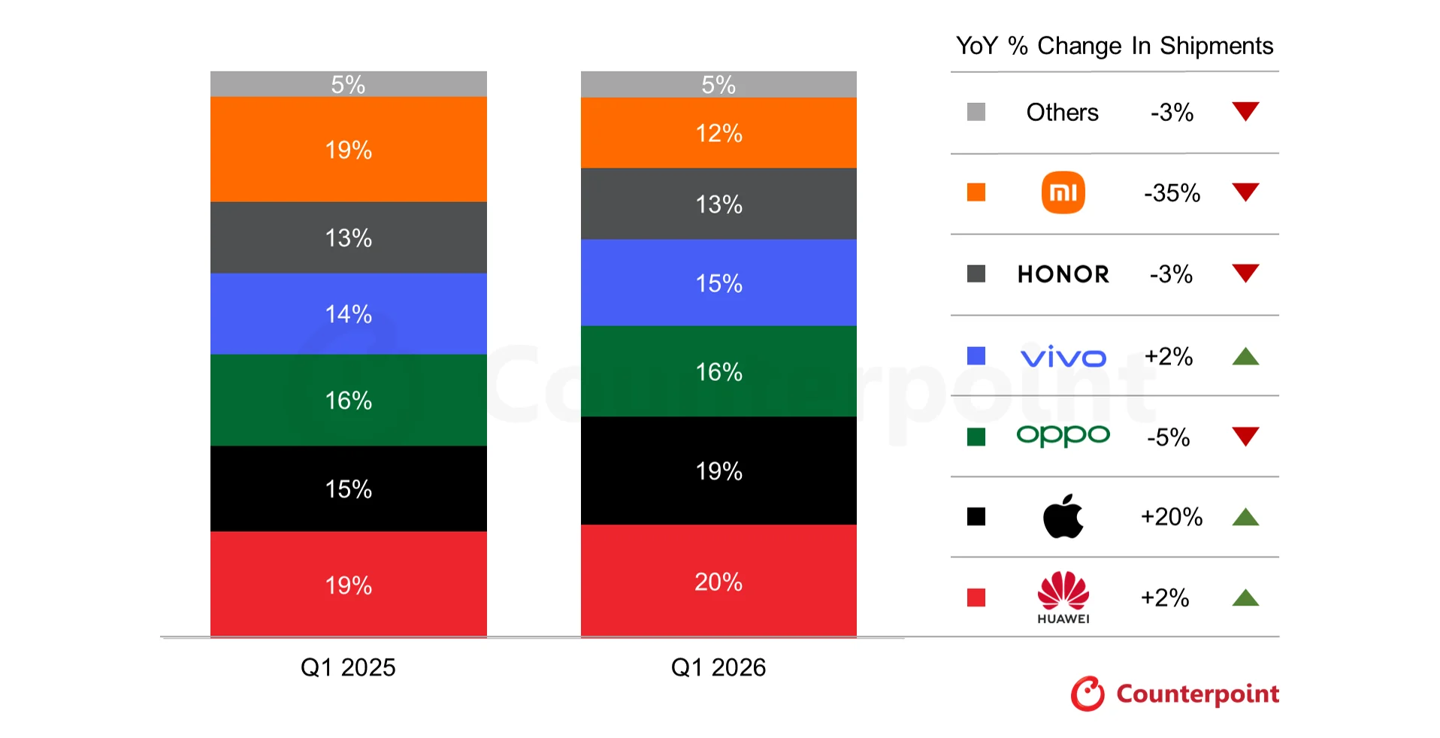
시장 조사 기관 CounterPoint Research가 4월 17일 발표한 보고서에 따르면, 2026년 1분기 중국 스마트폰 시장 출하량은 전년 대비 4% 감소한 것으로 나타났습니다. 이는 정부 보조금 정책으로 인한 높은 기준점(high base)과 메모리 등 핵심 부품의 원가 상승이 주요 원인으로 지적되었습니다.
주요 브랜드별 시장 점유율 및 성장세
브랜드별로 살펴보면, 시장은 뚜렷한 양극화 현상을 보였습니다. 일부 브랜드는 강력한 판매 동력을 바탕으로 성장세를 유지한 반면, 일부 브랜드는 시장 침체에 어려움을 겪었습니다.
Huawei
- 시장 점유율 20%를 기록하며 시장을 선도했습니다.
- 이는 2020년 4분기 이후 최고 분기 점유율을 달성한 수치입니다.
- Mate 80 시리즈의 생산량 증가와 설 연휴 프로모션이 입지를 공고히 했으며, 90 시리즈의 판매 호조가 이러한 우위를 더욱 강화했습니다.
Apple
- 출하량이 전년 대비 20% 급증하며, 상위 6개 브랜드 중 가장 빠른 성장률을 기록했습니다.
- iPhone 17 시리즈의 지속적인 인기, 가격 인하 프로모션, 그리고 정부 보조금의 복합적인 영향으로 2위 자리를 공고히 했습니다.
- 해당 기관은 Apple이 메모리 및 스토리지 부족에 대응하는 과정에서, 플래그십 제품군을 중심으로 한 고급 제품 구성과 강력한 공급망 관리 능력을 바탕으로 경쟁에서 뛰어난 역량을 보여주었다고 분석했습니다.
OnePlus
- 출하량이 전년 대비 53% 급증하며 높은 성장세를 보였습니다.
vivo
- 출하량은 2% 소폭 증가에 그쳤으며, 주로 Y50, S50과 같은 중저가 모델 판매에 의존했습니다.
Honor
- X70과 Magic V6 폴더블 디스플레이 모델을 통해 성장세를 유지했습니다.
- 대용량 배터리와 높은 내구성이 핵심 판매 포인트로 작용했습니다.
Xiaomi
- 출하량은 전년 대비 35% 감소했습니다.
- 해당 기관은 Xiaomi가 핵심 모델의 판매 부진과 보수적인 가격 책정 전략으로 인해 비용 압박 속에서 시장을 효과적으로 자극하지 못했다고 평가했습니다.
총평
2026년 1분기 중국 스마트폰 시장은 전반적인 출하량 감소세 속에서, Apple과 Huawei를 중심으로 시장 주도권이 재편되는 양상을 보였습니다. Apple은 강력한 브랜드 파워와 공급망 관리 능력으로 높은 성장률을 기록했으며, Huawei는 제품 라인업과 프로모션을 통해 시장 리더십을 공고히 했습니다. 반면, Xiaomi와 같은 일부 브랜드는 시장의 전반적인 침체와 경쟁 심화 속에서 어려움을 겪으며, 시장의 구조적 변화가 예상됩니다.
市场整体概况
根据 CounterPoint Research 的报告,受国补政策带来的高基期数据影响以及内存等组件成本上涨的影响,2026 年第 1 季度中国智能手机市场出货量同比下降 4%。
核心品牌表现
在主要品牌的竞争中,Huawei 和 Apple 展现出显著的领先优势:
- Huawei:以 20% 的市场份额位居第一,创下自 2020 年第 4 季度以来的最高季度份额。核心驱动力包括 Mate 80 系列产能爬坡、春节促销以及畅享 90 系列的贡献。
- Apple:出货量同比大幅增长 20%,成为前六大品牌中增速最快的厂商。得益于 iPhone 17 系列持续热销、降价促销及政府补贴,其排名升至第二。此外,Apple 在应对内存和存储短缺方面表现稳健。
其他品牌动态
其他品牌的市场表现呈现出差异化的趋势:
- OPPO:位列第三,正处于产品线调整期;其中 OnePlus 出货量同比激增 53%。
- vivo:出货量微增 2%,主要依靠 Y50、S50 等中低端机型支撑。
- Honor:凭借 X70 与 Magic V6 折叠屏机型维持增长,主打大电池与耐用性卖点。
- Xiaomi:出货量同比下降 35%,受限于核心机型表现疲软及定价策略保守。
总结
2026 年第一季度中国智能手机市场因高基期和成本压力导致整体出货量微降,但 Huawei 与 Apple 凭借强劲的产品布局与供应链管理稳居前列。与此同时,OPPO、vivo 和 Honor 在不同细分领域表现各异,而 Xiaomi 则面临明显的增长挑战。
2026年第1四半期 中国スマートフォン市場分析
調査機関CounterPoint Researchが4月17日に発表したレポートによると、2026年第1四半期の中国スマートフォン出荷量は前年同期比で4%減少しました。この要因として、政府の補助金政策による高水準なベース(high base)や、メモリなど主要部品のコスト上昇が挙げられています。
主要ブランド別市場シェアと成長動向
ブランド別の動向を見ると、市場は顕著な二極化の傾向を示しました。強力な販売動力を背景に成長を維持したブランドがある一方で、市場の停滞により苦戦するブランドも存在します。
Huawei
- 市場シェア20%を記録し、市場を牽引しました。
- これは2020年第4四半期以降、最高となる四半期のシェアです。
- Mate 80シリーズの生産量増加と旧正月(春節)期間中のプロモーションが地盤を固め、90シリーズの好調な販売がこの優位性をさらに強固なものにしました。
Apple
- 出荷量が前年比で20%急増し、上位6ブランドの中で最も高い成長率を記録しました。
- iPhone 17シリーズの継続的な人気、価格引き下げプロモーション、そして政府の補助金による複合的な影響により、第2位の座を固めました。
- 同機関は、Appleがメモリおよびストレージ不足への対応において、フラッグシップ製品を中心とした高級な製品構成と強力なサプライチェーン管理能力を武器に、競争において優れた実力を示したと分析しています。
OnePlus
- 出荷量が前年比で53%急増し、高い成長を見せました。
vivo
- 出荷量は2%の微増にとどまり、主にY50やS50といった中低価格モデルの販売に依存しました。
Honor
- X70およびMagic V6の折りたたみ式ディスプレイモデルを通じて成長を維持しました。
- 大容量バッテリーと高い耐久性が主要なセールスポイントとなりました。
Xiaomi
- 出荷量は前年比で35%減少しました。
- 同機関は、Xiaomiが主要モデルの販売不振と保守的な価格設定戦略により、コスト圧力の中で市場を効果的に活性化できなかったと評価しています。
まとめ
2026年第1四半期の中国スマートフォン市場は、全体の出荷量減少にもかかわらず、AppleとHuaweiを中心に主導権が再編される動きを見せました。Appleはブランド力とサプライチェーン管理により高い成長を遂げ、Huaweiは製品ラインナップとプロモーションを通じて優位性を確立した一方、Xiaomiを含む一部のブランドは競争の激化や市場の停滞の中で苦戦しています。
Q1 2026 China Smartphone Market Analysis
According to a report released by CounterPoint Research on April 17, smartphone shipments in the Chinese market during the first quarter of 2026 decreased by 4% year-on-year. This decline is attributed to a high base caused by government subsidy policies and rising costs for core components, such as memory.
Market Share and Growth Trends by Major Brands
The market exhibited clear polarization among brands. While some brands maintained growth through strong sales momentum, others struggled to navigate the market downturn.
Huawei
- Recorded a 20% market share, leading the market.
- This represents the highest quarterly market share since the fourth quarter of 2020.
- The position was solidified by increased production of the Mate 80 series, Lunar New Year promotions, and strong sales of the 90 series.
Apple
- Shipments surged by 20% year-on-year, recording the fastest growth among the top six brands.
- The brand secured its second-place position through a combination of sustained popularity for the iPhone 17 series, price reduction promotions, and government subsidies.
- The report analyzed that Apple demonstrated superior capabilities in competition by focusing on a premium product mix and robust supply chain management while navigating memory and storage shortages.
OnePlus
- Shipments surged by 53% year-on-year, showing high growth.
vivo
- Shipments saw only a slight increase of 2%, primarily relying on the sale of mid-to-low range models such as the Y50 and S50.
Honor
- Maintained growth through the X70 and Magic V6 foldable display models.
- Large battery capacity and high durability served as key selling points.
Xiaomi
- Shipments decreased by 35% year-on-year.
- The report noted that Xiaomi failed to effectively stimulate the market due to sluggish sales of core models and a conservative pricing strategy amid cost pressures.
Overall Outlook
Despite an overall decline in shipments during the first quarter of 2026, the Chinese smartphone market saw a reshuffling of leadership centered on Apple and Huawei. Apple achieved high growth through strong brand power and supply chain management, while Huawei solidified its leadership through strategic product lineups and promotions. Conversely, brands like Xiaomi faced difficulties due to market stagnation and intensifying competition, suggesting structural changes within the market.
Summary
The Chinese smartphone market in Q1 2026 saw a slight overall decline in shipments but experienced significant polarization among major manufacturers. While Apple and Huawei strengthened their dominance through supply chain management and strategic promotions, brands like Xiaomi struggled with cost pressures and competition. These trends indicate a period of structural change as the market reacts to shifting economic conditions and brand positioning.
市场整体概况
CounterPoint Research 发布报告称,受国补政策带来的高基期数据以及内存等组件成本上涨的影响,2026 年第 1 季度中国智能手机市场出货量同比下降 4%。
核心品牌表现
在主要厂商中,Huawei 与 Apple 的表现尤为突出:
- Huawei:以 20% 的市场份额领跑市场,创下自 2020 年第 4 季度以来的最高季度份额。其优势源于 Mate 80 系列的产能爬坡、春节促销以及畅享 90 系列的出货贡献。
- Apple:出货量同比大幅增长 20%,成为前六大品牌中增速最快的厂商。得益于 iPhone 17 系列的热销、降价促销及政府补贴,其排名升至第二。此外,Apple 在应对内存和存储短缺方面展现了强大的供应链管理能力。
其他品牌动态
其他主要品牌的市场表现如下:
- OPPO:位居第三,其中 OnePlus 出货量同比激增 53%。
- vivo:出货量微增 2%,主要依靠 Y50、S50 等中低端机型走量。
- Honor:凭借 X70 与 Magic V6 折叠屏机型维持增长势头,核心卖点为大电池与耐用性。
- Xiaomi:出货量同比下降 35%,主要原因是核心机型表现疲软且定价策略保守,在成本压力下未能有效刺激市场。
总结
2026 年第一季度中国智能手机市场受高基期和成本上涨影响整体微降,但 Huawei 和 Apple 凭借强劲产品线与供应链优势占据领先地位。与此同时,OPPO、vivo 与 Honor 在不同细分领域表现各异,而 Xiaomi 则因核心机型乏力面临显著下滑。
2026年第1四半期 中国スマートフォン市場分析
調査機関CounterPoint Researchが4月17日に発表したレポートによると、2026年第1四半期の中国スマートフォン出荷量は前年同期比で4%減少しました。この要因として、政府の補助金政策による高水準なベース(high base)や、メモリなど主要部品のコスト上昇が挙げられています。
主要ブランド別の市場シェアと成長動向
ブランド別の動向を見ると、市場は顕著な二極化の傾向を示しています。強力な販売動力を背景に成長を維持したブランドがある一方で、市場の停滞により苦戦するブランドも存在します。
Huawei
- 市場シェア20%を記録し、市場を牽引しました。
- これは2020年第4四半期以降、最高となる四半期のシェアです。
- Mate 80シリーズの生産量増加と旧正月(春節)期間中のプロモーションが地盤を固め、90シリーズの好調な販売がこの優位性をさらに強固なものにしました。
Apple
- 出荷量が前年比で20%急増し、上位6ブランドの中で最も高い成長率を記録しました。
- iPhone 17シリーズの継続的な人気、価格引き下げプロモーション、そして政府の補助金による複合的な影響により、第2位の座を固めました。
- 同機関は、Appleがメモリおよびストレージ不足への対応において、フラッグシップ製品を中心とした高級な製品構成と強力なサプライチェーン管理能力を武器に、競争において優れた実力を示したと分析しています。
OnePlus
- 出荷量が前年比で53%急増し、高い成長を見せました。
vivo
- 出荷量は2%の微増にとどまり、主にY50やS50といった中低価格モデルの販売に依存しました。
Honor
- X70およびMagic V6の折りたたみ式ディスプレイモデルを通じて成長を維持しました。
- 大容量バッテリーと高い耐久性が主要なセールスポイントとなりました。
Xiaomi
- 出荷量は前年比で35%減少しました。
- 同機関は、Xiaomiが主要モデルの販売不振と保守的な価格設定戦略により、コスト圧力の中で市場を効果的に活性化できなかったと評価しています。
まとめ
2026年第1四半期の中国スマートフォン市場は、全体の出荷量減少にもかかわらず、AppleとHuaweiが強力な製品展開とサプライチェーン管理により主導権を確立しました。一方で、Xiaomiを含む一部のブランドは競争の激化や戦略的な課題から苦戦しており、市場構造の変化が進んでいます。
Q1 2026 China Smartphone Market Analysis
According to a report released by CounterPoint Research on April 17, smartphone shipments in the Chinese market during the first quarter of 2026 decreased by 4% year-on-year. This decline is attributed to a high base caused by government subsidy policies and rising costs for core components, such as memory.
Market Share and Growth Trends among Major Brands
The market exhibited significant polarization among brands. While some brands maintained growth through strong sales momentum, others struggled to navigate the broader market stagnation.
Huawei
- Recorded a 20% market share, leading the market.
- This represents the highest quarterly market share since the fourth quarter of 2020.
- The position was solidified by increased production of the Mate 80 series, Lunar New Year promotions, and strong sales of the 90 series.
Apple
- Shipments surged by 20% year-on-year, recording the fastest growth among the top six brands.
- The brand secured its second-place position through a combination of sustained popularity for the iPhone 17 series, price reduction promotions, and government subsidies.
- Analysis suggests Apple demonstrated superior capabilities in competition by focusing on a premium product mix and robust supply chain management while navigating memory and storage shortages.
Other Brand Performance
OnePlus
- Shipments surged by 53% year-on-year, showing high growth.
vivo
- Shipments saw a slight increase of only 2%, primarily relying on the sale of mid-to-low range models such as the Y50 and S50.
Honor
- Maintained growth through the X70 and Magic V6 foldable display models.
- Large battery capacity and high durability served as key selling points for these devices.
Xiaomi
- Shipments decreased by 35% year-on-year.
- The decline was attributed to weak performance of core models and a conservative pricing strategy, which failed to effectively stimulate the market under cost pressures.
Summary
The Chinese smartphone market in Q1 2026 saw an overall shipment decline due to high base effects and rising component costs, leading to a polarized landscape among manufacturers. While Huawei and Apple solidified their leadership through strong product lineups and supply chain management, brands like Xiaomi struggled with pricing and demand. Other brands showed varied results, with OnePlus experiencing significant growth while vivo remained steady in the mid-to-low range segment.